
- Factors That Determine Cat Feeding Frequency
- Feeding Schedules by Cat Life Stage
- Scheduled Feeding vs. Free Feeding: Which Is Better?
- How Much Food Per Meal and Daily Portions
- Signs You’re Feeding Your Cat Too Often or Not Enough
- Common Cat Feeding Mistakes to Avoid
- Cat Feeding Schedule by Age: Quick Reference
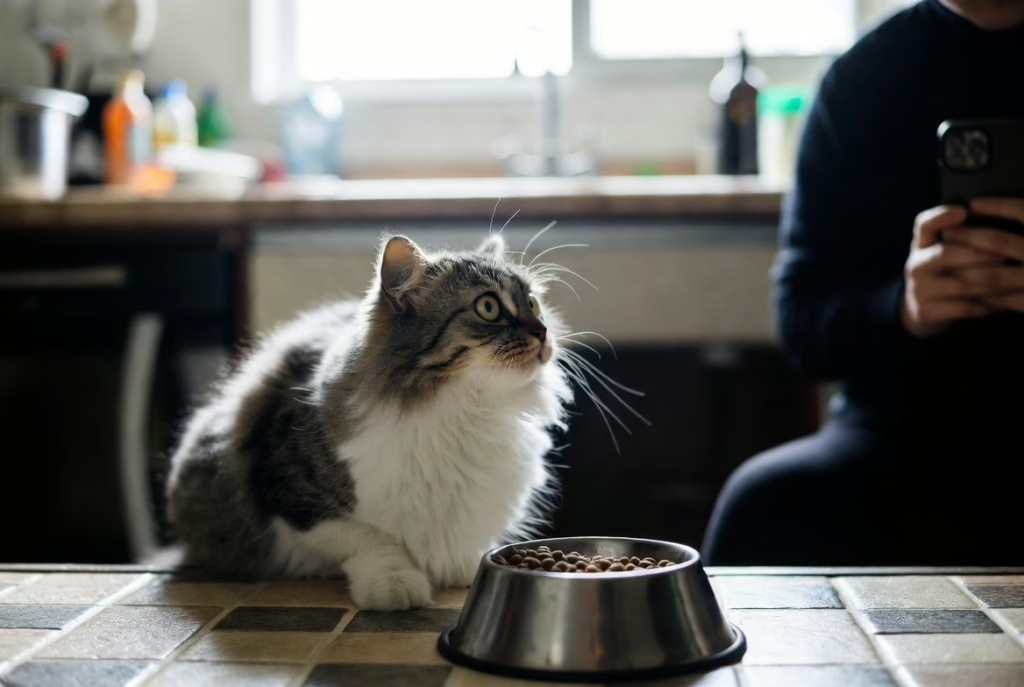
Cats are creatures of habit, and their digestive systems evolved to handle multiple small meals throughout the day. Wild felines hunt and eat 10-20 small prey items daily, consuming small portions whenever they catch something. Domestic cats retain this biological programming, which means the timing and frequency of meals matter more than many owners realize.
Getting the feeding schedule right affects everything from your cat’s weight to their behavior and long-term health. Feed too frequently with large portions, and you risk obesity and diabetes. Feed too infrequently, and you might see vomiting, begging, or metabolic issues. The right approach depends on several individual factors unique to your cat.
Factors That Determine Cat Feeding Frequency
No universal feeding frequency cats thrive on exists because each animal has different needs. Several variables shape the ideal schedule:
Age is the primary factor. Kittens need frequent meals to fuel rapid growth—their stomachs are small but their calorie requirements per pound are massive. Adults can handle longer gaps between meals. Senior cats often benefit from smaller, more frequent portions as their metabolism and digestive efficiency change.
Weight status dictates adjustments. An overweight cat might do better with controlled portions spread across more frequent small meals to prevent hunger-driven begging. Underweight cats may need calorie-dense food offered more often.
Health conditions override standard recommendations. Diabetic cats typically need meals timed with insulin injections, usually twice daily. Cats with hyperthyroidism burn calories rapidly and may need more frequent feeding. Those with gastrointestinal issues might vomit if meals are too large or spaced too far apart.
Activity level matters more than owners think. Indoor cats with limited exercise need fewer calories than outdoor cats or those in active multi-cat households. A sedentary apartment cat and a barn cat of the same age require completely different cat nutrition schedules.
Pregnancy and nursing dramatically increase needs. Pregnant cats require up to 25% more calories, and nursing mothers may need two to three times their normal intake, necessitating free access to food during lactation.
Medication schedules sometimes require coordination with meals. Certain medications work best on a full or empty stomach, forcing adjustments to natural feeding patterns.
Feeding Schedules by Cat Life Stage
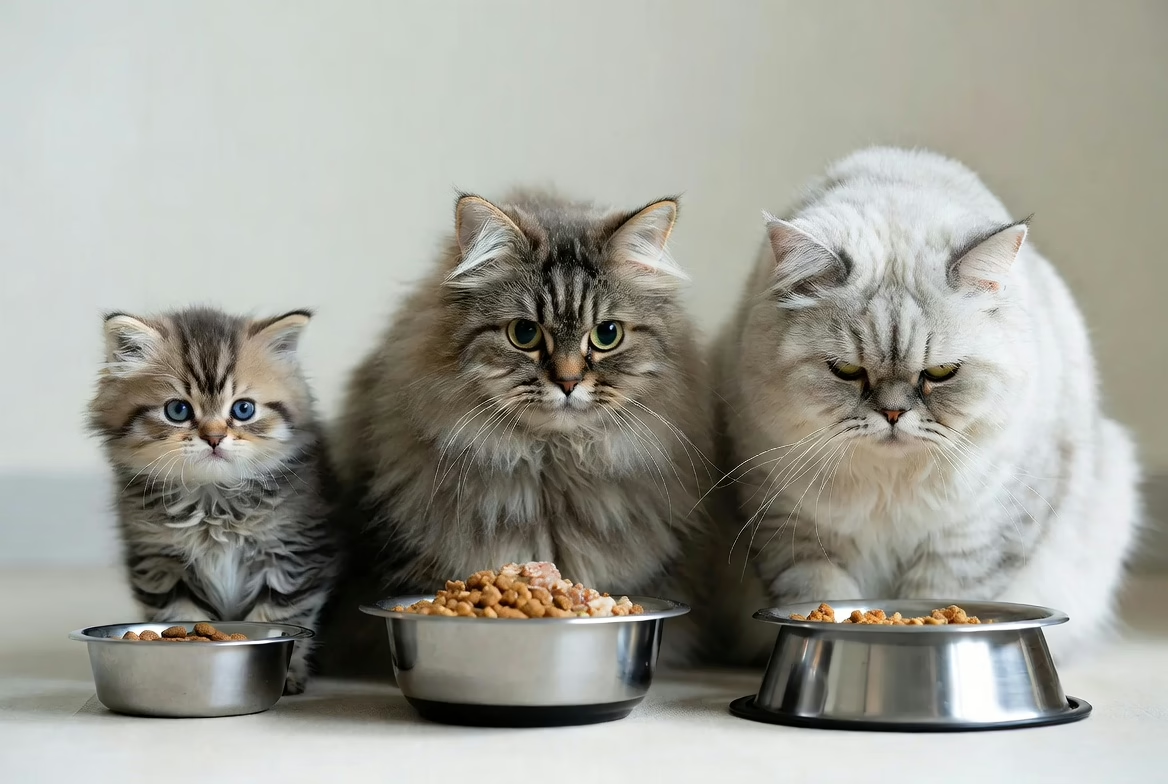
The cat feeding schedule that works for a kitten will harm an adult, and what suits a healthy young cat may not work for a senior. Here’s how to adjust frequency as cats age.
Kitten Feeding Schedule (Birth to 12 Months)
Kittens under four weeks nurse from their mother or receive bottle feeding every 2-4 hours, including overnight. This isn’t practical advice for most owners—you’ll typically get kittens after weaning begins around four weeks.
From 4-8 weeks, kittens transition to solid food but still need four meals daily. Their stomachs hold roughly a tablespoon of food, so frequent small meals prevent hypoglycemia while supporting explosive growth rates. A kitten might double their weight in a week during this phase.
Between 8 weeks and 6 months, maintain four meals daily if possible, or at minimum three. Morning, midday, early evening, and before bed works well. Each meal should be small enough that the kitten finishes within 20-30 minutes. Leaving food out invites spoilage and makes monitoring intake impossible.
From 6-12 months, transition to three meals daily, then down to two as they approach their first birthday. This gradual reduction prevents digestive upset. A 10-month-old cat can typically handle the same twice-daily schedule as an adult, though some benefit from keeping that midday meal until full maturity.
Kittens burn roughly twice the calories per pound compared to adults. Missing a meal can cause dangerous blood sugar drops, especially in smaller breeds. Consistency matters—feed at the same times daily to establish routine.
Adult Cat Feeding Schedule (1–7 Years)
Most adult cats thrive on two meals daily, spaced 8-12 hours apart. This mimics a natural cat meal routine without requiring midday feeding, which fits most work schedules. Morning and evening feeding works for the majority of households.
Two meals prevent the excessive hunger that leads to vomiting bile, scarf-and-barf episodes, and aggressive food-seeking behavior. Cats fed once daily often wake owners at 4 AM demanding food or knock items off counters out of hunger-driven frustration.
Some adult cats do well with three smaller meals if their owners are home during the day. This can help with weight management—smaller, more frequent portions may boost metabolism slightly and reduce begging between meals. The total daily calories remain the same, just divided differently.
The “how many times feed cat” question for adults has some flexibility. Two meals is the minimum for most cats. Three is better if practical. More than three usually isn’t necessary unless dealing with specific medical issues.
Cats fed at consistent times develop internal clocks remarkably accurate to within 15-20 minutes. They’ll appear at their feeding spot right on schedule. This predictability helps with medication administration and makes it easier to notice when something’s wrong—a cat that misses their usual enthusiastic meal greeting likely feels unwell.
Senior Cat Feeding Schedule (7+ Years)
Cats over seven years old often benefit from adjustments to feeding frequency, though many remain healthy on their adult schedule. The key is monitoring and adapting as individual needs change.
Senior cats may develop dental disease making it painful to eat large meals. Smaller portions offered three times daily can help. They’re also prone to constipation—more frequent small meals can encourage regular bowel movements better than one or two large meals.
Kidney disease affects roughly 30-40% of cats over ten years old. These cats often feel nauseous and have reduced appetites. Offering small amounts of food more frequently—three to four times daily—improves total intake compared to presenting large portions they can’t finish.
Hyperthyroidism, common in seniors, increases metabolism dramatically. Affected cats may need free access to food or very frequent meals to maintain weight. Conversely, senior cats with reduced activity may need careful portion control even if meal frequency stays at two or three times daily.
Cognitive decline can affect eating patterns. Some senior cats forget they’ve eaten and beg constantly. Others forget where their food is located. Maintaining a strict schedule with meals offered in the same location helps cats with feline cognitive dysfunction.
Scheduled Feeding vs. Free Feeding: Which Is Better?
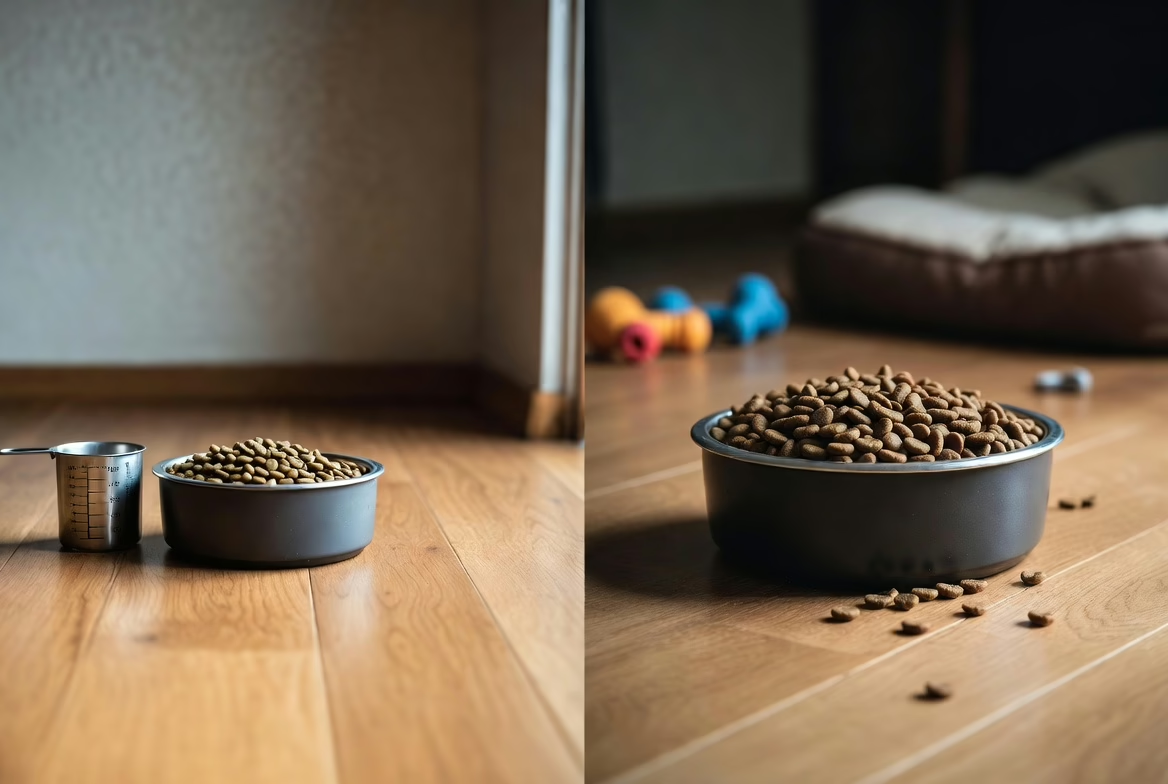
The debate between scheduled meals and leaving food available all day has strong advocates on both sides. Each method has distinct advantages and situations where it works best.
Scheduled feeding means offering food at specific times, leaving it down for 20-30 minutes, then removing uneaten portions. This approach offers several benefits:
You can monitor intake precisely, noticing immediately if your cat skips a meal—often the first sign of illness. It prevents obesity better than free feeding since you control portions exactly. Scheduled feeding works well in multi-cat households where you need to ensure each cat gets their share and any prescription diets stay separate. It also accommodates wet food, which spoils if left out.
The downsides include less flexibility for owners with irregular schedules and potential for food-guarding aggression in multi-cat homes. Some cats adapt poorly, becoming obsessive about meal times or vomiting bile between meals.
Free feeding means keeping dry food available at all times. Cats eat multiple small meals on their own schedule, which aligns with natural grazing behavior. This works for some cats—particularly those who self-regulate well and maintain healthy weights without overeating.
Free feeding suits owners with unpredictable schedules and can reduce food-related anxiety in some cats. It’s nearly impossible to free-feed wet food safely, limiting diet options. The method makes monitoring intake difficult—you won’t notice if your cat stops eating until they’ve missed multiple meals. Most cats gradually overeat when free-fed, leading to weight gain over months or years.
The biggest issue with free feeding is that roughly 60% of US cats are overweight or obese. Free feeding contributes significantly to this epidemic. Cats evolved to gorge when food is available, storing calories for lean times that never come in domestic settings.
The middle ground involves using timed automatic feeders that dispense small portions throughout the day on a schedule. This combines scheduled feeding’s portion control with free feeding’s multiple small meals. It works particularly well for cats prone to vomiting from hunger but who need weight management.
For most cats, scheduled feeding twice daily produces the best outcomes. Free feeding works only for the minority of cats who demonstrate reliable self-regulation over months of monitoring.
How Much Food Per Meal and Daily Portions
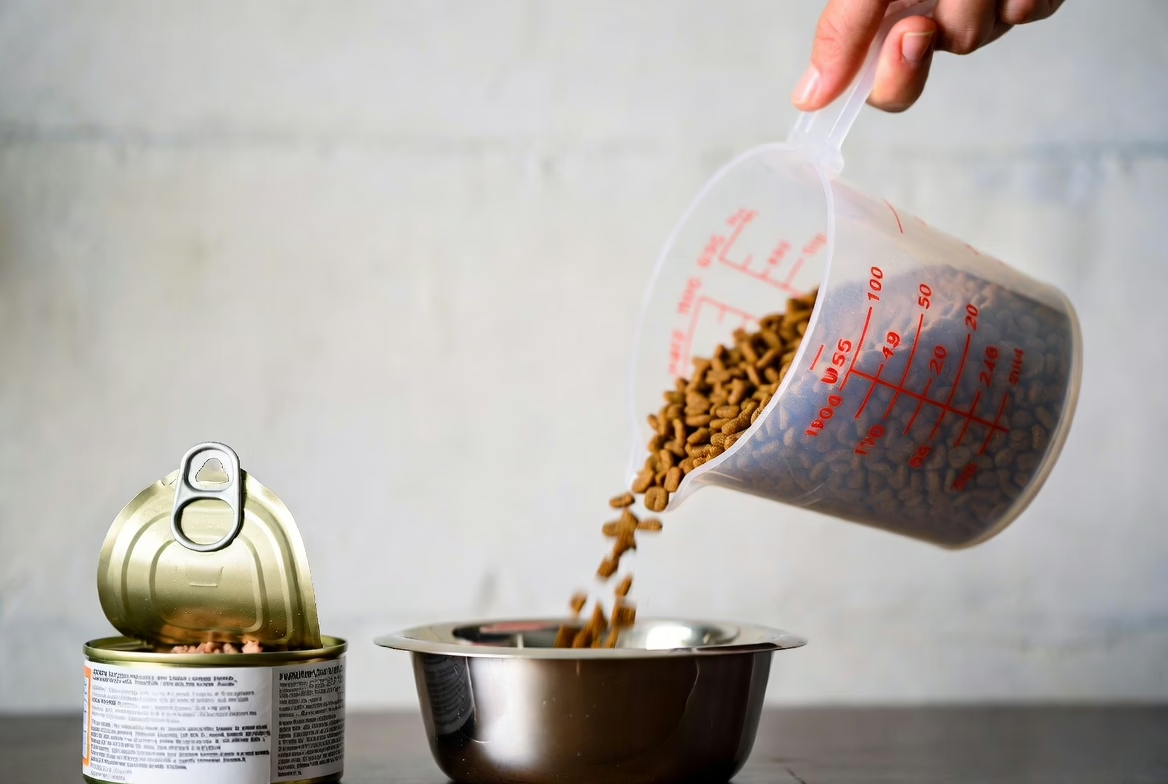
Feeding frequency cats require is only half the equation—portion size per meal matters equally. The two factors work together: more frequent meals mean smaller portions each time, while twice-daily feeding requires larger servings.
Calorie requirements vary by weight and activity level. A typical 10-pound adult cat needs roughly 200-250 calories daily. Active cats need the higher end, sedentary cats the lower. Kittens need about 200 calories per pound of body weight—a 2-pound kitten requires 400 calories daily, divided across four meals.
Wet versus dry food changes the math significantly. Dry food contains roughly 300-500 calories per cup, while wet food averages 70-100 calories per 3-ounce can. A cat eating exclusively wet food might need 2.5 cans daily, while the same cat on dry food might need only 1/2 cup.
Most feeding guides on cat food packages overestimate portions because manufacturers benefit from faster product consumption. Use package guidelines as a starting point, then adjust based on your cat’s body condition over several weeks.
Practical portioning for twice-daily feeding means splitting daily calories evenly. A cat needing 240 calories gets 120 per meal. If feeding dry food with 400 calories per cup, that’s roughly 1/4 cup plus 2 tablespoons per meal. Measure with actual measuring cups—eyeballing leads to gradual portion creep.
For three-times-daily feeding, divide total calories by three. The math is simple, but consistency requires measuring every meal. After a few weeks, you’ll recognize correct portions visually, but spot-check with measuring tools monthly.
Wet and dry combination feeding is popular but requires careful calculation. If feeding half wet and half dry, calculate each separately. A cat needing 200 calories might get one 3-ounce can (75 calories) plus roughly 1/4 cup dry food (125 calories) daily, split across two meals.
Treat calories count toward daily totals. Treats shouldn’t exceed 10% of daily calories—for a cat needing 200 calories, that’s 20 calories maximum in treats. Three standard cat treats typically contain 10-15 calories total.
Monitor body condition every two weeks. You should feel ribs easily but not see them prominently. Viewed from above, cats should have a visible waist. Adjust portions by 10% if weight trends wrong direction over two weeks.
Signs You’re Feeding Your Cat Too Often or Not Enough
Cats communicate feeding schedule problems through behavior and physical changes. Recognizing these signs early prevents health issues.
Signs of underfeeding or too-infrequent meals:
Vomiting clear or yellow liquid (bile) between meals indicates excessive stomach acid from hunger. This often happens in cats fed once daily or when the gap between meals exceeds 12 hours. Aggressive begging, especially waking owners hours before scheduled feeding, suggests genuine hunger rather than learned behavior. Weight loss over several weeks, visible ribs and spine, or loss of muscle mass along the back are serious indicators.
Some underfed cats become food-aggressive, growling over their bowl or eating so rapidly they vomit immediately after meals. Others show decreased energy—hunger affects activity levels before visible weight loss appears.
Signs of overfeeding or too-frequent meals:
The most obvious sign is weight gain. A cat gaining more than 1-2% of body weight monthly without growth (in kittens) is overfed. Leaving food in the bowl after meals suggests portions exceed appetite—healthy cats on appropriate schedules typically finish meals within 20 minutes.
Overweight cats develop a saggy belly pouch that sways when walking. They lose their waist when viewed from above, appearing oval rather than having an hourglass shape. Difficulty grooming, particularly the back and rear, indicates obesity limiting flexibility.
Behavioral changes include reduced playfulness, difficulty jumping to previously accessible heights, and excessive sleeping beyond normal cat napping. Some overweight cats become irritable when handled around the abdomen.
Begging behavior requires careful interpretation. Cats beg for reasons beyond hunger—boredom, learned behavior, or seeking attention. A cat at healthy weight who begs constantly likely needs environmental enrichment, not more food. However, a cat losing weight who begs may genuinely need more frequent meals or larger portions.
The most reliable indicator is body condition combined with weight trends over time. Monthly weigh-ins catch problems before they become serious. Home scales work fine—weigh yourself, then weigh yourself holding the cat, and subtract.
Common Cat Feeding Mistakes to Avoid
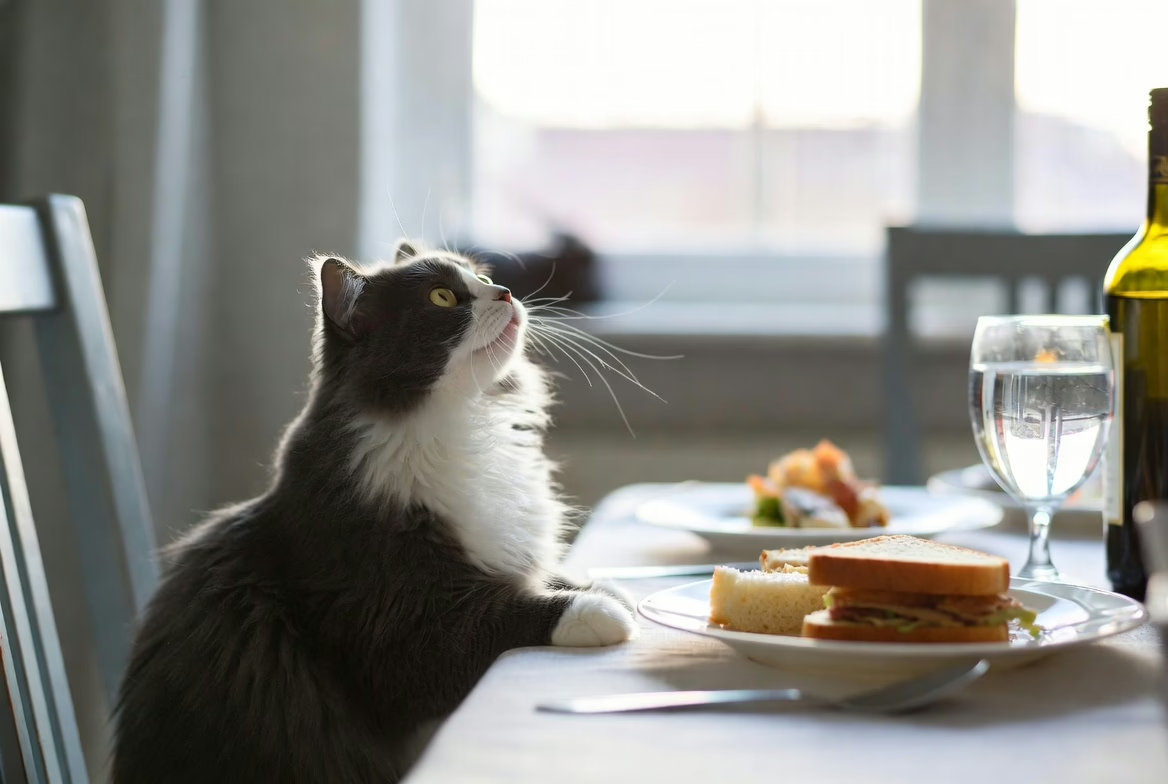
Even experienced cat owners make feeding errors that compromise their pet’s health. These mistakes appear harmless but create problems over time.
Inconsistent cat feeding timing confuses cats and disrupts their digestive rhythm. Feeding at 7 AM on weekdays but 10 AM on weekends causes stress. Cats develop strong circadian rhythms around meals—irregular timing can trigger anxiety-related behaviors and digestive upset. If your schedule varies, automatic feeders maintain consistency.
Ignoring life stage transitions means feeding kitten food too long or switching to adult food too early. Kitten food’s high calorie density causes obesity if continued past 12 months. Conversely, feeding adult food to kittens under one year deprives them of needed nutrients for growth. Senior cats often need different protein levels and calorie densities than adults.
Free feeding dry food while also serving wet meals doubles calorie intake without owners realizing it. The dry food “snacks” between wet meals add up quickly. If you feed scheduled wet meals, remove all dry food access, or account for dry food calories in daily totals.
Feeding human food regularly disrupts balanced nutrition and teaches begging. A few licks of plain chicken occasionally won’t harm, but regular table scraps add calories and unbalanced nutrients. Worse, some human foods (onions, garlic, grapes) are toxic to cats.
Sudden diet or schedule changes cause digestive upset. Switching food brands or changing from three meals to two overnight can trigger vomiting or diarrhea. Transition foods gradually over 7-10 days, mixing increasing amounts of new food with old. Adjust feeding frequency gradually over a week.
Not adjusting for treats and extras is common. Owners feed measured meals but give multiple treats daily without reducing meal portions. Those treats can add 20-30% more calories. Either account for treat calories by reducing meals slightly or limit treats to special occasions.
Feeding all cats in multi-cat homes the same amount ignores individual needs. A 15-pound cat and an 8-pound cat need different portions. Separate feeding stations or timed feeders prevent food stealing and ensure each cat gets appropriate amounts.
Relying solely on package feeding guides without monitoring body condition leads to gradual weight gain. Those guides provide starting points, not gospel. Your cat’s actual needs depend on metabolism, activity, and individual factors.
The single most important aspect of feline nutrition isn’t what you feed, but how consistently and appropriately you feed it. Cats thrive on routine, and irregular feeding schedules contribute to obesity, behavioral issues, and stress-related health problems. I see far more health issues from poor feeding schedules than from less-than-optimal food choices.
Dr. Jennifer Coates
Cat Feeding Schedule by Age: Quick Reference
| Age Group | Meals Per Day | Portion Size Guidance | Special Considerations |
|---|---|---|---|
| 0-4 weeks | 6-8 (nursing or bottle) | As much as they’ll consume | Requires mother’s milk or kitten formula; never cow’s milk |
| 4-8 weeks | 4 meals | 1-2 tablespoons per meal | Transition to solid food; kitten formula available between meals |
| 2-6 months | 3-4 meals | Follow package guidelines for kitten food; adjust to maintain growth | High calorie needs; free feeding acceptable if weight appropriate |
| 6-12 months | 2-3 meals | Gradually reduce to adult portions | Transition to adult food around 12 months; monitor for overfeeding |
| 1-7 years (adult) | 2 meals (minimum) | 1/4 to 1/3 cup dry food per meal, or 1 can wet food daily (split) | Adjust portions based on body condition; active cats need more |
| 7+ years (senior) | 2-3 meals | May need reduced calories unless underweight; smaller portions more frequently | Monitor for kidney disease, hyperthyroidism; adjust for health conditions |
| Pregnant/nursing | Free feeding or 3-4 meals | Up to 2-3x normal intake during nursing | High-quality kitten food provides needed nutrients and calories |
FAQs
Adult cats do best with two meals daily at minimum, spaced 8-12 hours apart. Three meals work well if your schedule allows it. Kittens under six months need three to four meals daily due to their small stomach capacity and high energy needs. Senior cats often benefit from three smaller meals, especially if they have dental issues or reduced appetite. The key is consistency—feeding at the same times daily matters more than the exact number of meals within these ranges.
Once-daily feeding works poorly for most cats. The 24-hour gap between meals causes excessive hunger, often leading to vomiting bile, aggressive food-seeking behavior, and scarf-and-barf episodes where cats eat too quickly and immediately vomit. Some cats develop behavioral problems including waking owners at night or early morning demanding food. While a few cats tolerate once-daily feeding without issues, twice daily is the recommended minimum for adult cats. The only exception might be specific medical conditions where a veterinarian recommends once-daily feeding, which is rare.
Free feeding works only for the minority of cats who self-regulate effectively. Most cats gradually overeat when food is constantly available, leading to obesity over time. Free feeding also makes it impossible to monitor intake—you won’t notice if your cat stops eating until they’ve missed multiple meals worth of food. In multi-cat households, free feeding prevents you from ensuring each cat gets their appropriate share. Scheduled meals at specific times work better for most cats, allowing portion control and intake monitoring. If you’re rarely home, automatic timed feeders provide a middle ground.
The specific times matter less than consistency. Most owners find morning and evening feeding fits their schedule—feeding before work and after returning home. Spacing meals 8-12 hours apart prevents excessive hunger between feedings. Cats develop strong internal clocks, so feeding at 7 AM and 6 PM daily works better than feeding at 7 AM one day and 9 AM the next. If you feed three times daily, morning, midday, and evening with roughly equal spacing works well. Avoid feeding right before bed if your cat tends to vomit after meals—give at least an hour for digestion.
Monitor body condition and weight trends rather than relying on your cat’s begging behavior—many cats beg out of habit or boredom, not hunger. You should feel your cat’s ribs easily when running hands along their sides, but not see ribs prominently. From above, cats should have a visible waist between ribs and hips. Weigh your cat monthly on the same scale—weight should remain stable in adults, with kittens showing steady growth. Sudden weight loss, visible spine or hip bones, or loss of muscle mass indicates underfeeding. Consult your veterinarian if you’re unsure—they can assess body condition objectively and recommend portion adjustments.
The right feeding schedule for your cat depends on their age, health status, and individual needs rather than a one-size-fits-all approach. Adult cats typically thrive on two to three meals daily, while kittens need more frequent feeding to support growth. Senior cats often benefit from smaller, more frequent portions that accommodate changing metabolism and potential health issues.
Scheduled feeding at consistent times provides better portion control and intake monitoring than free feeding for most cats. Pay attention to your cat’s body condition, weight trends, and behavior to determine if your current schedule works. Adjust gradually when changes are needed, and consult your veterinarian when dealing with health conditions that might require specialized feeding approaches.
Establishing and maintaining a consistent feeding routine does more than prevent obesity—it provides structure that reduces stress, makes illness easier to detect, and strengthens the bond between you and your cat. The time invested in measuring portions and feeding at regular intervals pays dividends in your cat’s long-term health and quality of life.