
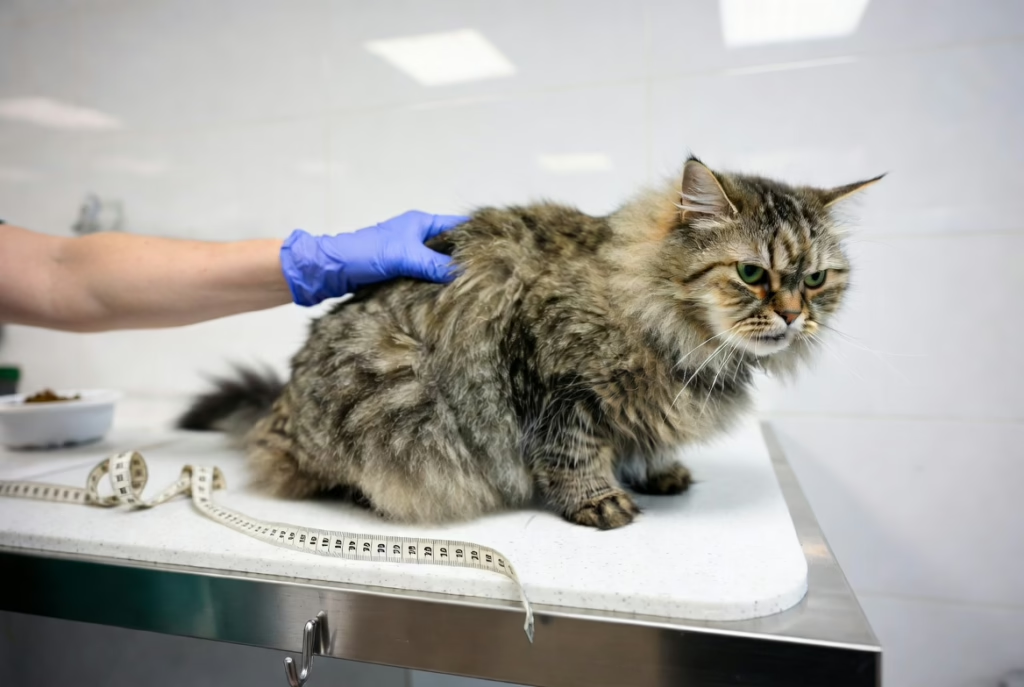
A 12-pound tabby named Charlie visited the clinic three times in six months before his owner realized the real problem wasn’t laziness—it was a feeding routine that treated him like a 20-pound Maine Coon. His story mirrors thousands of cats whose weight creeps up unnoticed until mobility becomes difficult and health issues emerge.
Managing your cat’s weight requires understanding their unique metabolic needs, recognizing early warning signs, and implementing sustainable changes that work for both of you. This guide walks through evidence-based strategies that veterinary professionals recommend for safe, effective feline weight control.
Why Cats Gain Weight and How to Recognize It
Cats gain excess weight when calorie intake consistently exceeds energy expenditure. Unlike dogs, cats have evolved as obligate carnivores with specific metabolic pathways that make them particularly susceptible to weight gain in domestic environments.
Common causes of feline weight gain:
Overfeeding remains the primary culprit. Many owners fill bowls based on package recommendations designed for active outdoor cats, not sedentary indoor companions. A single extra tablespoon of dry food daily adds roughly 50 calories—enough to cause a 10-pound cat to gain nearly a pound in three months.
Neutering reduces metabolic rate by approximately 20-30% while simultaneously increasing appetite. Without adjusting portions post-surgery, weight gain becomes almost inevitable. This doesn’t mean neutering causes obesity, but it does require immediate dietary recalibration.
Age-related muscle loss decreases calorie requirements. A seven-year-old cat burns fewer calories than their three-year-old self, even with identical activity levels. Owners who maintain the same feeding schedule for years inadvertently overfeed aging cats.
Indoor confinement eliminates the calorie-burning activities outdoor cats perform naturally—climbing, hunting, territorial patrolling. A strictly indoor cat may need 20-40% fewer calories than their outdoor counterparts.
Recognizing excess weight:
Your cat is overweight when you cannot easily feel their ribs with light finger pressure, or when viewing from above reveals no visible waist taper between ribs and hips. Obesity presents as a sagging belly that swings when walking, complete absence of waist definition, and fat deposits over the lower back and tail base.
Health consequences escalate quickly:
Diabetes mellitus develops in overweight cats at rates 3-5 times higher than healthy-weight cats. Excess fat tissue produces inflammatory compounds that interfere with insulin function.
Hepatic lipidosis—a potentially fatal liver condition—can develop within days if an obese cat stops eating. Fat mobilizes too rapidly, overwhelming the liver’s processing capacity.
Joint stress accelerates arthritis development. Each extra pound places roughly four pounds of additional pressure on joints during movement. A 15-pound cat carrying just two excess pounds experiences joint stress equivalent to an additional eight pounds of force.
Determining Your Cat’s Ideal Weight and Calorie Needs
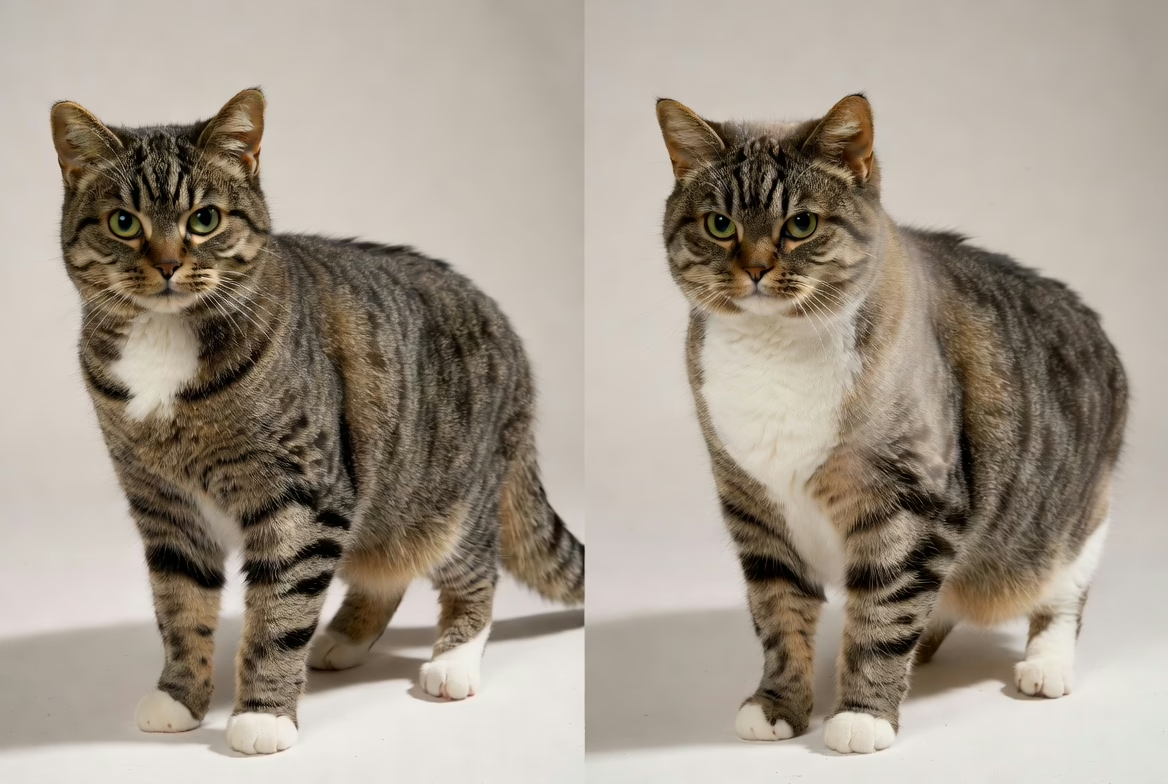
Body condition scoring provides more accurate assessment than weight alone, since a healthy 6-pound Siamese and 6-pound Persian represent vastly different conditions.
Body condition scoring basics:
A healthy-weight cat shows ribs that are easily palpable without pressing hard, a visible waist when viewed from above, and minimal abdominal fat. The abdomen should tuck up slightly when viewed from the side.
Average weight ranges vary significantly:
Siamese and Oriental breeds typically maintain healthy weights between 6-10 pounds. Domestic shorthairs generally range from 8-12 pounds. Maine Coons and other large breeds may reach 15-20 pounds without being overweight. These ranges represent healthy adults; individual targets depend on bone structure and muscle mass.
Calculating daily calorie requirements:
Resting energy requirement (RER) forms the baseline calculation: RER = 70 × (body weight in kg)^0.75
For a 10-pound (4.5 kg) cat: RER = 70 × (4.5)^0.75 = approximately 200 calories
Multiply RER by activity factors:
– Sedentary indoor cats: RER × 1.2 = 240 calories
– Moderately active cats: RER × 1.4 = 280 calories
– Active cats: RER × 1.6 = 320 calories
For weight loss, veterinarians typically recommend feeding 80% of the calories needed to maintain ideal weight, not current weight. A 15-pound cat with an ideal weight of 11 pounds should receive calories based on maintaining 11 pounds, then reduced by 20%.
| Cat’s Ideal Weight | Sedentary (calories/day) | Moderate Activity (calories/day) | Active (calories/day) |
|---|---|---|---|
| 5 lbs (2.3 kg) | 120 | 140 | 160 |
| 8 lbs (3.6 kg) | 170 | 200 | 230 |
| 10 lbs (4.5 kg) | 200 | 240 | 270 |
| 12 lbs (5.4 kg) | 230 | 270 | 310 |
| 15 lbs (6.8 kg) | 280 | 320 | 370 |
| 20 lbs (9.1 kg) | 350 | 410 | 470 |
These values represent maintenance calories at ideal weight for cats with normal metabolism. Weight loss requires reducing these amounts by 15-20%.
Creating a Safe Weight Loss Plan for Your Cat
Rapid weight loss triggers hepatic lipidosis in cats—a critical difference from canine or human weight management. Cats should lose no more than 1-2% of body weight weekly, translating to roughly 2-4 ounces monthly for a 12-pound cat.
Safe weight loss timeline:
A cat needing to lose 3 pounds requires 3-6 months minimum. This gradual approach prevents metabolic complications while preserving lean muscle mass. Owners expecting dog-like or human-like weight loss rates often reduce calories too drastically, creating dangerous conditions.
Setting realistic goals:
Aim for returning to ideal adult weight, not arbitrary numbers. A cat who weighed 9 pounds at two years old before gradual weight gain should target that 9-pound benchmark, not a breed-average weight that may not suit their frame.
Track weekly weights using the same scale at the same time of day. Weight fluctuates 2-4 ounces daily due to hydration and elimination, so weekly measurements provide clearer trends than daily checks.
When veterinary consultation becomes mandatory:
Before starting any weight loss program, schedule a veterinary exam to rule out hypothyroidism, diabetes, or other conditions that affect metabolism. Some cats gain weight because of illness, not just excess calories.
If your cat loses no weight after four weeks of calorie restriction, return for metabolic evaluation. Continuing to reduce calories without professional guidance risks malnutrition.
If your cat refuses food for more than 24 hours during calorie restriction, seek immediate veterinary care. Cats cannot safely fast the way other species can.
Monitoring progress safely:
Weekly weigh-ins should show steady 0.5-1% decreases. Faster losses require calorie increase to slow the rate. No weight loss after three weeks indicates insufficient calorie restriction or metabolic issues requiring veterinary assessment.
Monitor energy levels and litter box habits. Decreased activity or changes in urination/defecation patterns may signal excessive calorie restriction or emerging health issues.
Feeding Strategies for Weight Control

How you feed matters as much as what you feed. Even premium weight management formulas fail when served in unlimited quantities.
Portion control techniques:
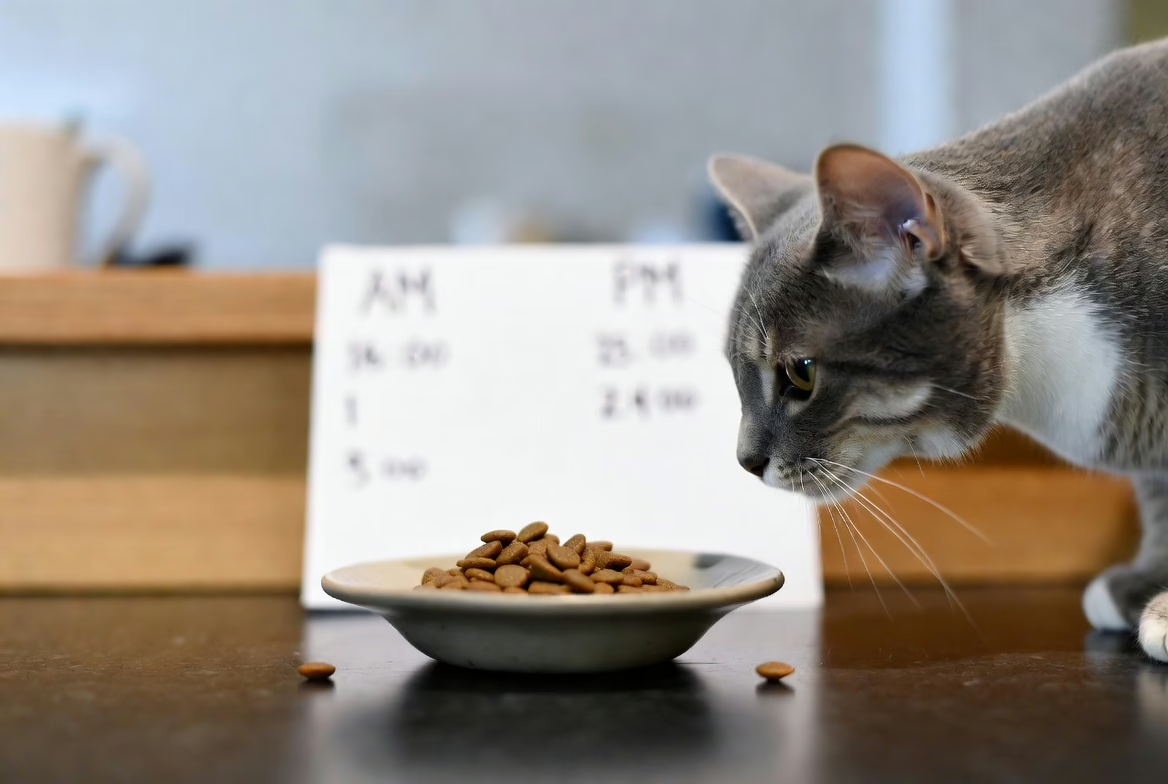
Measure food with a standard measuring cup or kitchen scale—never eyeball portions. Kibble density varies dramatically between brands; a cup of one food may contain 350 calories while another contains 450.
Divide daily calories into 2-4 meals rather than one large feeding. Multiple smaller meals better match feline natural feeding patterns and help prevent hunger-driven begging.
Use feeding puzzles that slow consumption and provide mental stimulation. A cat who works for food burns calories during the feeding process and experiences greater satiety from the same portion.
Meal frequency recommendations:
Two meals daily works for most cats and fits human schedules. Three or four meals better suit cats with persistent begging behaviors or those prone to vomiting from eating too quickly.
Avoid free-feeding (leaving food available constantly) during weight loss. Even with measured daily amounts, cats who graze tend to consume more calories than those fed discrete meals.
Choosing weight management cat food:
Look for formulas with increased protein (40%+ dry matter basis) and fiber (8%+ dry matter basis) while maintaining reduced fat (8-12% dry matter basis). High protein preserves muscle during calorie restriction; fiber increases satiety.
Prescription weight loss diets offer precisely formulated macronutrient ratios but cost significantly more than over-the-counter options. For cats needing to lose 20%+ of body weight, prescription formulas often justify the expense through faster, safer results.
Treats and their calorie impact:
Treats should comprise no more than 10% of daily calories—roughly 20-25 calories for a cat eating 200-250 calories daily. Three standard cat treats typically contain 8-12 calories, leaving little room for additional snacks.
Substitute low-calorie options: a teaspoon of plain canned pumpkin (4 calories), small pieces of cooked chicken breast (8 calories per ounce), or freeze-dried meat treats (2-3 calories each).
Increasing Your Cat’s Activity Level
Cats evolved as burst hunters, not endurance athletes. Effective exercise programs work with this physiology rather than against it.
Indoor exercise ideas:
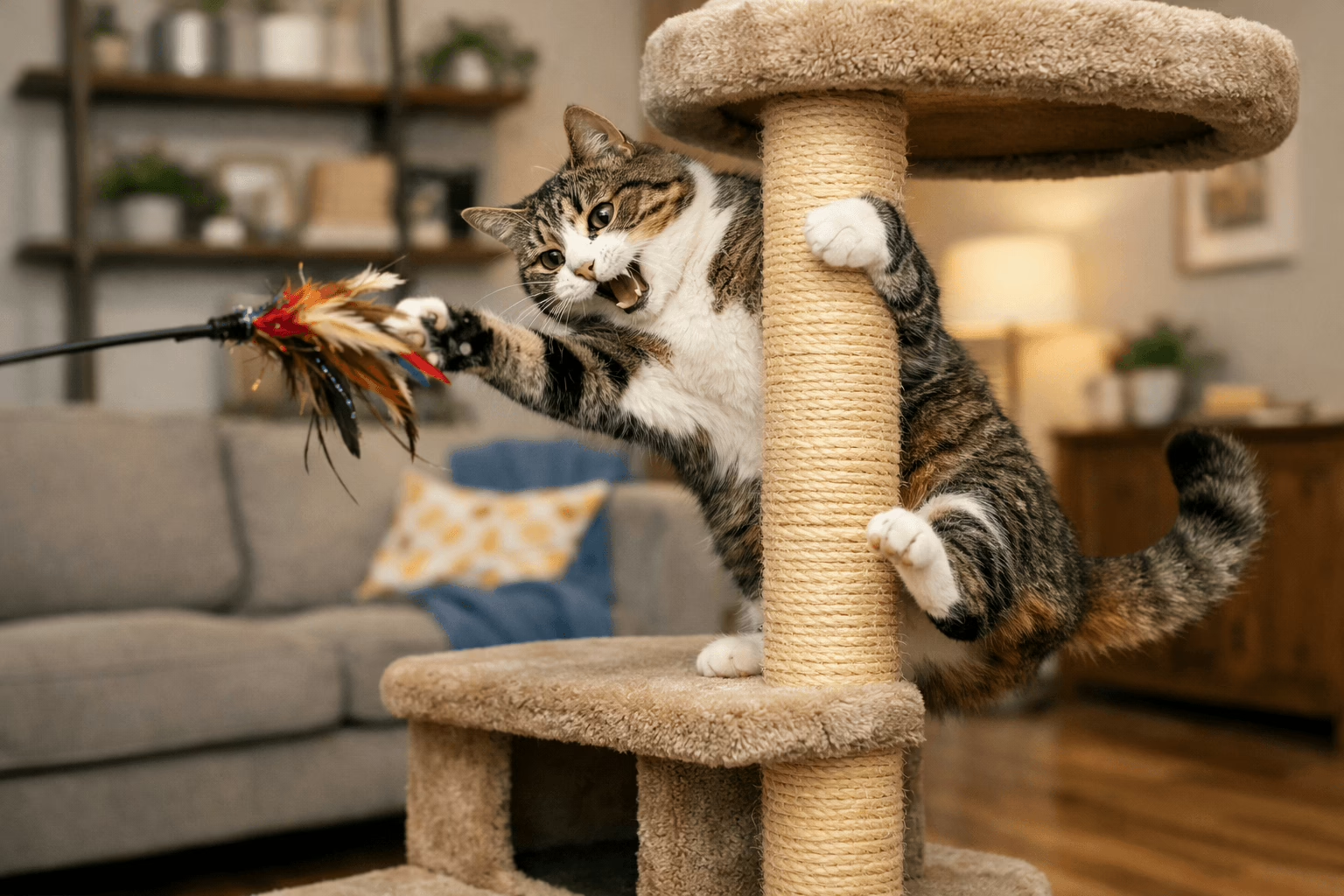
Create vertical territory with cat trees, wall-mounted shelves, and window perches. Climbing burns calories while satisfying natural behavioral needs. A cat who climbs to a 6-foot perch five times daily burns an extra 15-20 calories.
Rotate toys weekly to maintain novelty. Cats habituate to constant stimuli; toys left out continuously become invisible. Store half the toy collection and swap weekly.
Interactive play sessions:
Two 10-minute sessions daily using wand toys triggers hunting behaviors that burn calories and build muscle. Move toys like prey—erratic movements, hiding behind furniture, occasional pauses. Letting your cat “catch” the toy every few minutes prevents frustration.
Laser pointers provide cardiovascular exercise but should end with a catchable toy to prevent obsessive behaviors. Always finish laser play with a physical toy the cat can capture.
Environmental enrichment for movement:
Place food bowls on different floors or in varying locations to encourage movement between meals. Hide small portions around the house for cats to “hunt.”
Install bird feeders outside windows to create “cat TV” that encourages position changes and stalking behaviors, even without actual prey access.
Addressing senior cat limitations:
Cats over 12 years often have undiagnosed arthritis that limits activity. Provide ramps to favorite perches, lower-sided litter boxes, and orthopedic beds.
Gentle play sessions with slower-moving toys accommodate reduced mobility. Focus on mental stimulation through puzzle feeders rather than intense physical activity.
Common Cat Weight Management Mistakes to Avoid
Well-intentioned owners frequently sabotage weight loss through predictable errors that seem logical but contradict feline physiology.
Cutting calories too drastically:
Reducing food by 50% or more triggers starvation metabolism. The cat’s body responds by slowing metabolic rate and breaking down muscle for energy—exactly the opposite of healthy weight loss. As Dr. Jennifer Coates, veterinary advisor and nutrition specialist, notes:
Cats losing more than 2% of body weight weekly face significant risk of hepatic lipidosis. Slow, steady weight loss isn’t just preferable—it’s physiologically necessary for feline patients.
Dr. Jennifer Coates
Ignoring muscle loss:
Weight loss should reduce fat, not muscle. Cats losing weight on low-protein diets often lose significant muscle mass, appearing smaller but maintaining unhealthy body composition. Ensure protein comprises at least 35-40% of calories during weight reduction.
Using dog diet strategies:
Dogs tolerate fasting and rapid weight loss; cats do not. Skipping meals, dramatic calorie cuts, and high-carbohydrate “diet” foods work for canines but harm felines. Species-specific approaches aren’t optional—they’re essential.
Inconsistent feeding schedules:
Feeding at random times or varying portion sizes confuses metabolic regulation and increases begging behaviors. Cats thrive on routine; irregular feeding creates stress that can actually promote weight retention through cortisol elevation.
Allowing different family members to feed without coordination leads to double-feeding. Designate one person as primary feeder or use a shared feeding log.
FAQs
Expect 3-6 months for every 2-3 pounds of excess weight. A cat needing to lose 4 pounds requires 6-12 months of consistent calorie control. Faster timelines risk hepatic lipidosis and muscle loss. Patience isn’t just virtue—it’s medical necessity for feline weight loss.
Reducing calories by 10-15% without veterinary consultation carries minimal risk for healthy adult cats, but any greater restriction warrants professional guidance. Cats with unknown health conditions may experience complications from calorie reduction. A pre-diet exam costs less than treating hepatic lipidosis.
“Light” formulas contain fewer calories per cup than regular formulas (typically 10-15% reduction) and suit weight maintenance or minor weight loss. “Weight management” or prescription weight loss formulas offer greater calorie reduction (20-30%+) with increased protein and fiber specifically formulated for significant weight loss. Light foods work for prevention; weight management foods address existing obesity.
Feed cats in separate rooms with closed doors, or use microchip-activated feeders that only open for designated cats. Scheduled feeding times allow supervision to ensure each cat eats only their portion. Free-feeding makes multi-cat weight management nearly impossible.
Neutering doesn’t cause weight gain—failure to reduce calories post-surgery does. Reduce portions by 20-30% immediately after neutering to account for decreased metabolic rate. Cats neutered before six months old need particularly careful monitoring since owners may not recognize they’ve reached adult size requiring reduced portions.
Successful cat weight management combines accurate calorie calculation, gradual reduction timelines, and environmental modifications that increase natural activity. The difference between failure and success often lies not in the chosen food brand or specific diet plan, but in consistent portion control and realistic expectations.
Your cat didn’t gain excess weight in weeks, and they won’t lose it that quickly either. The 12-pound cat who should weigh 10 pounds needs 4-6 months of measured portions and increased play sessions. That timeline feels long compared to human or canine weight loss, but it reflects feline metabolic reality.
Start with a veterinary exam to establish baseline health and ideal weight targets. Calculate calorie needs based on that ideal weight, not current weight. Measure every meal, schedule feeding times, and track weekly progress. When weight loss stalls, resist the urge to drastically cut calories—consult your veterinarian instead.
The investment in proper cat weight control pays dividends in reduced diabetes risk, improved mobility, and potentially years of additional healthy life. Your cat won’t thank you for smaller portions, but their joints, liver, and pancreas will function better for it.