
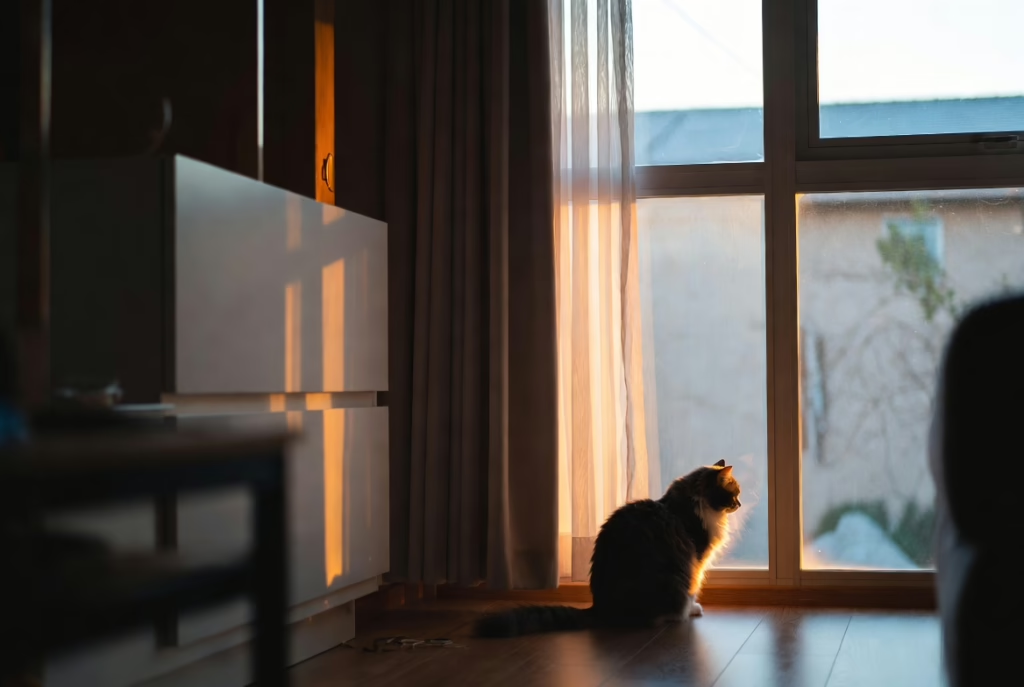
Your cat might act like they run on pure chaos, but here’s the truth: they’re secretly obsessed with routine. I’ve seen countless cats who seem utterly random until you track their behavior for a week—suddenly patterns emerge. That 3 AM zoomie session? Happens every night at 3:07. The demanding meow at your bedroom door? Always 6:23 AM.
Cats actually crave predictability, even if they’d never admit it. When you build a schedule around their biological needs—not just your convenience—you’ll notice fewer behavioral hiccups, less anxiety, and a generally more pleasant roommate situation. Let’s dig into how feline bodies actually work and build routines that make sense for both of you.
How Cats Structure Their Day Naturally
Here’s something most people get wrong: cats aren’t nocturnal. They’re crepuscular, which is a fancy term meaning they go absolutely bonkers at sunrise and sunset. This comes straight from their wildcat DNA—small prey like mice and songbirds are vulnerable during those twilight hours, making dawn and dusk prime hunting time.
Your house cat inherited this programming. Even though the most dangerous thing in your living room is probably the vacuum cleaner, your cat’s internal clock still says “time to hunt” around 5:30 AM and again at 7 PM. This explains the pre-breakfast sprinting laps and the sudden toy obsession right when you’re trying to make dinner.
Sleep dominates most of a cat’s day—we’re talking 12 to 16 hours for adults. But it’s not like human sleep. Cats don’t crash for eight straight hours. They take dozens of short naps, alternating between light dozing (where their ears still swivel toward every sound) and deep REM sleep (when you see those adorable paw twitches). Kittens and elderly cats can push 20 hours of sleep daily, which seems excessive until you remember kittens are basically running on rocket fuel when awake.
Watch your cat after they catch a toy mouse. They’ll “kill” it, maybe nibble it, then immediately start grooming. Within 20 minutes, they’re napping. This hunt-eat-groom-sleep sequence is hardwired. Wild cats must follow this pattern—expend huge energy hunting, refuel quickly, clean up (because smelling like prey is dangerous), then conserve energy for the next hunt.
Indoor cats experience something vets call “circadian disruption.” We blast artificial lights until midnight, then expect cats to sleep through the night. Meanwhile, their biology is screaming “it’s dark, time to hunt!” Understanding cat habits daily means accepting you can’t completely override millions of years of evolution—but you can work with it.

Creating a Feeding Schedule for Your Cat
The feeding and play schedule cat owners establish becomes the backbone of everything else. Get this right, and half your behavioral problems disappear.
Most healthy adult cats thrive on breakfast and dinner, served about 10 to 12 hours apart. This mirrors how wild cats might catch 2-3 good meals across a day. The timing flexibility matters because strict 8-hour gaps don’t account for human sleep needs.
Here’s a stat that shocked me: the average 10-pound indoor cat needs only 180 to 220 calories per day. That’s roughly one 5.5-ounce can of wet food or about half a cup of decent dry food. Yet somehow, 61% of U.S. cats are overweight (according to the Association for Pet Obesity Prevention’s latest data). We’re accidentally killing them with kindness.
Smart timing makes cats less demanding. Try feeding the smaller portion at breakfast and the bigger meal at night. Many cat behaviorists swear by feeding the day’s largest portion right before you go to bed—like 10 PM if you sleep at 10:30. The cat eats, grooms, and then sleeps for six hours instead of screaming at your door at 4 AM.

Morning and Evening Feeding Windows
Your cat’s internal alarm clock rivals any Swiss watch. If you feed breakfast at 6:45 AM on Monday, expect your cat positioned by their bowl at 6:40 every single day. The problem comes when people feed at 7 AM weekdays but sleep until 9 AM on Saturdays. Guess who’s getting paw-tapped at 6:58 on Saturday?
Pick a morning window you can actually maintain seven days a week—somewhere between 6 and 8 AM usually works. Your cat will adjust to reasonable schedules (they’re not going to hold out for exactly sunrise), but consistency beats everything.
Evening meals work well between 6 and 8 PM for most households. But if you’re battling nighttime terrors (your cat racing across your face at 2 AM), push dinner later. A 9:30 PM feeding triggers that hunt-eat-groom-sleep cycle right when you need it, buying you uninterrupted sleep until morning.
Free-Feeding vs. Scheduled Meals
The “bowl always full” approach works for maybe 20% of cats—the ones with supernatural self-control. The other 80% will absolutely overeat when bored, stressed, or just because the food exists.
Scheduled feeding times create structure. You’ll instantly notice if your cat skips a meal (early illness warning sign). Multi-cat homes become manageable since you can monitor who’s eating what. The downside? Some cats turn into raging food tyrants 30 minutes before dinner, yowling like they’re being murdered.
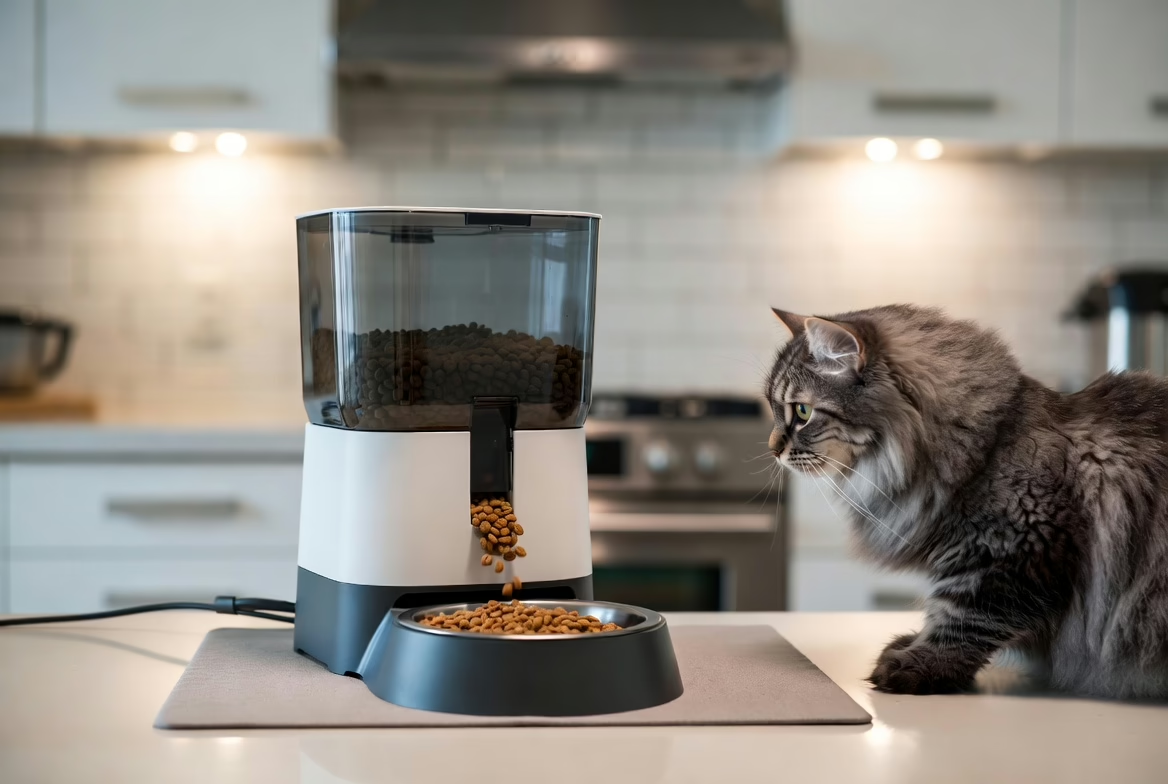
Automatic feeders solve the “blame game.” Cats figure out pretty quickly that the plastic robot dispenses food, not you. I’ve seen this eliminate 90% of pre-breakfast whining in under a week.
Transitioning from free-feeding to scheduled meals takes patience. Don’t just remove the food bowl one day—your cat will lose their mind. Gradually reduce the available food over 10 to 14 days while introducing fixed feeding times. Expect some dramatic protests. Cats are basically tiny furry toddlers, and toddlers don’t love new rules.
Building a Play and Activity Routine
Most cats need somewhere between 20 and 40 minutes of genuine active play each day. Not passive batting at a toy while half-asleep—real hunting simulation that gets their heart rate up.
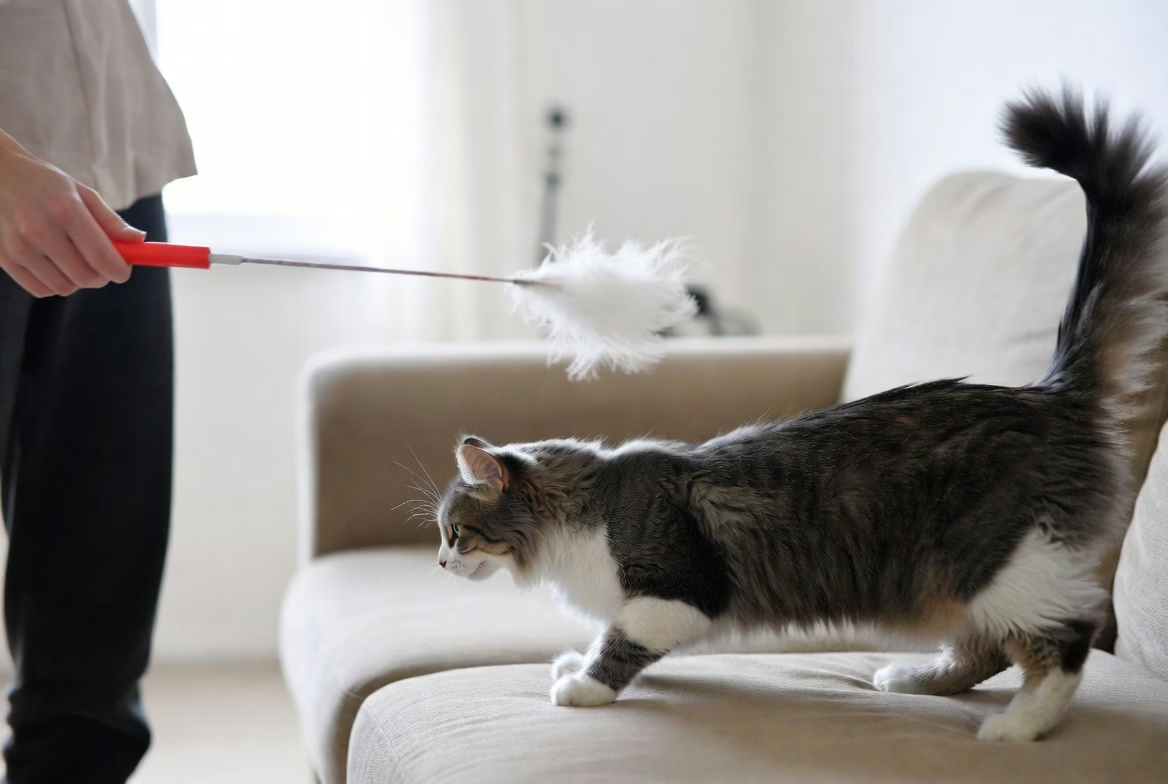
Split this into two sessions minimum. Morning play burns off that crepuscular energy surge. Evening play, scheduled about an hour before dinner, taps into the hunt-eat-sleep sequence. A proper 15-minute wand toy session before their final meal often produces a blissfully exhausted cat who’ll actually let you watch TV in peace.
The hunt sequence matters: stalk (slow movement, cat gets low), chase (fast erratic movement), pounce (cat leaps), catch (cat grabs toy). Laser pointers are controversial because cats never “catch” the prey—always end laser play by transitioning to a physical toy they can grab and “kill.”
Toy rotation prevents the feline version of boredom. Keep six different toy types and only leave out two at a time. Swap every three to four days. Suddenly that feather wand they ignored last week becomes the most exciting thing ever invented.
Age transforms play needs dramatically. Kittens are maniacs—they need 5 to 10 minutes of play every couple hours because they’ve got endless energy but tire fast. Adult cats (1-7 years) need consistent moderate activity. Senior cats still want to play but can’t jump like they used to—think slow-moving toys at ground level rather than ceiling-high feather attacks.
Enrichment goes beyond scheduled play sessions. Window perches overlooking bird feeders provide hours of “cat TV.” Puzzle feeders turn meals into mental challenges. Vertical cat trees satisfy climbing instincts. Cats lacking adequate stimulation either become destructive (hello, shredded couch) or depressingly lethargic.
Daily Cat Routine by Life Stage
Kittens operate in organized chaos mode. From 8 weeks to about 12 months, they sleep more total hours than adults but in much shorter bursts. You’ll see 90 minutes of absolute mayhem followed by a 2-hour crash. Feed kittens three to four times daily until they hit six months, then drop to twice daily.
Kitten socialization windows are critical. Daily gentle handling, exposure to household sounds (vacuum, doorbell, TV), and appropriate play (no teaching them your hands are toys) shapes their adult personality. Miss this window, and you might end up with a skittish adult cat who hides from visitors.
Adult cats from ages 1 to 7 settle into predictable rhythms. This is your golden age for establishing rock-solid routines. Two meals, two play sessions, 14 hours of strategic napping. Working folks should maximize morning and evening interaction—your cat won’t love the 9-hour solo stretch, but puzzle feeders and window entertainment help.
Senior cats (7 and older, though many cats live to 15+) need schedule modifications. Arthritis makes jumping painful, so relocate food bowls and litter boxes to ground-level accessible spots. Three smaller meals often work better than two large ones as digestion slows. They still need play for mental sharpness and muscle maintenance, but gentler sessions—think 10 minutes of slow feather toy action versus intense chase games.
The research shows that environmental predictability significantly reduces cortisol levels in domestic cats.When cats can anticipate their daily patterns—feeding times, play sessions, quiet periods—we see measurably lower stress markers in bloodwork. This becomes especially critical during household changes. Cats with established routines adapt to disruptions like moves or new family members far more successfully than cats living in chaotic environments.
Dr. Jennifer Martinez, DVM, who’s board-certified in veterinary behavior at the Animal Behavior Clinic of San Diego.
Common Cat Routine Mistakes to Avoid
Inconsistent meal timing creates monsters. Feed at 7 AM weekdays but 10 AM weekends? Congratulations, you’ve trained your cat to start bothering you at 6:45 AM on Saturday because they know breakfast “should” happen soon. Cats have internal clocks accurate to within about 15 minutes—messing with their expectations produces anxiety and demanding behavior.
Understimulation ruins lives (yours and theirs). I can’t count how many “my cat is crazy at night” problems vanish after owners add two proper play sessions daily. Twenty minutes of real interaction isn’t optional for indoor cats—it’s mandatory for their mental health. Cats stuck alone for 12 hours with zero enrichment will absolutely save their energy for 2 AM parkour.
Sleep interruption makes cats cranky. Would you be pleasant if someone kept waking you during deep sleep? Cats need dark, quiet spaces for quality rest. Kids constantly bothering a sleeping cat, or owners who keep waking them for cuddles, create irritable cats who might become aggressive or hyperactive when actually awake.
Fighting biology never works. Trying to force cats into human schedules—expecting dead silence from 10 PM to 7 AM, zero activity at dawn—just creates frustration on both sides. Successful cat routine planning works with feline instincts, not against them. You can shift timing slightly (making breakfast 7:30 instead of sunrise), but you can’t eliminate crepuscular behavior.
Sudden schedule changes trigger stress responses. Starting a new job with a 5 AM wake-up when you’ve been sleeping until 8? Don’t shift your cat’s breakfast three hours earlier overnight. Adjust by 15 to 20 minutes every few days. Most cats adapt within two weeks if transitions are gradual—but abrupt changes can cause stress-related behaviors like inappropriate urination or aggression.
Sample Daily Schedules for Cats
Real cat schedule examples help translate theory into practice. These represent realistic starting points—your individual cat’s personality, age, and your household setup will require adjustments.
| Time Slot | Single Indoor Cat | Multi-Cat Household | Cat with Working Owner |
|---|---|---|---|
| 6:00-7:00 AM | Wakes naturally, receives breakfast, 15-minute interactive play | Feed cats separately (different rooms if needed), quick joint play session | Automatic feeder releases breakfast, owner provides brief 5-minute play before leaving |
| 7:00 AM-Noon | Self-grooming, chooses sunny napping spot, watches birds through window | Cats claim individual territories for napping, may rotate through shared favorite spots | Solo time: puzzle feeder snacks, window watching, extended nap period |
| Noon-1:00 PM | Optional small snack if on three-meal plan, brief toy interaction | Midday feeding if needed, water refresh, supervised shared space time | Continues solo routine: sleeping, may interact with puzzle toys |
| 1:00-5:00 PM | Deeper sleep cycles, intermittent grooming sessions | Individual cats maintain separate rest areas, minimal territorial checking | More solo time: primarily sleeping, some independent toy play |
| 5:00-6:00 PM | Natural wake-up, activity level rises noticeably | Cats become more energetic, may require separation if tensions escalate | Owner arrives home: enthusiastic greeting, initial 10-minute play session |
| 6:00-7:00 PM | Receives dinner, post-meal grooming ritual | Dinner in separate feeding areas, controlled supervised interaction time | Dinner served, quality owner interaction period |
| 7:00-9:00 PM | Main evening play session (15 minutes), cuddles with owner during TV time | Individual rotating play sessions ensuring each cat gets attention, group activities | Extended play session (15-20 minutes), possible training exercises, bonding time |
| 9:00-10:00 PM | Small evening treat, begins settling into sleep mode | Final litter box availability check, cats select preferred sleeping territories | Late evening snack, gentle wind-down play |
| 10:00 PM-6:00 AM | Sleeps near owner or favorite spot, brief wake periods for repositioning | Cats sleep in established territories, usually minimal nighttime interaction | Sleeps through night (when evening routine meets exercise needs) |
The single cat schedule offers maximum flexibility—no resource competition, all spaces freely accessible, undivided attention during interaction periods. This cat essentially owns the house and can structure their day however they prefer within your routine framework.
Multi-cat households demand more cat routine planning. Separate feeding zones prevent food aggression (some cats need completely different rooms). Individual play sessions ensure each cat receives adequate exercise and bonding. Some multi-cat homes benefit from scheduled “alone time” where cats get separated for a few hours daily, especially if personalities clash.
Working owner schedules face the reality of long solo stretches. This makes morning and evening interaction absolutely critical—those 30-minute windows before and after work become your cat’s entire social world. Automatic feeders, varied puzzle toys, and environmental enrichment (cat shelves, window perches, rotating toys) transform from nice extras to essential equipment.
FAQs
Do cats need a daily routine?Absolutely, though not for the reasons you might think. Cats are adaptable and can survive schedule chaos, but they genuinely thrive when they can predict their day’s structure. Research measuring stress hormones in cats shows that those with consistent feeding times, regular play periods, and predictable sleep environments have lower anxiety markers. Cats with established routines also maintain healthier body weights, show fewer destructive behaviors, and adjust more successfully when life throws curveballs like household moves or new pets. The routine doesn’t require military precision—30-minute flexibility works fine—but patterns matter to cats more than most owners realize.
How much playtime does a cat need daily?Plan for 20 to 30 minutes minimum of active play for adult cats, split across two or three sessions. Kittens need more frequent but shorter bursts—maybe 5 to 10 minutes every few hours since they have wild energy but burn out quickly. Senior cats might only manage 10 to 15 minutes of gentler play. Quality beats quantity here: 15 minutes of intense interactive play with a wand toy accomplishes more than an hour of your cat lazily watching a ball roll by. Watch for signs your cat needs more activity: midnight zoomies, destructive scratching, play-biting aggression toward you, or gradual weight gain despite normal eating.
Do indoor cats have different routines than outdoor cats?Indoor cats absolutely need more deliberately structured routines since they lack the natural stimulation outdoor access provides. Outdoor cats self-regulate activity through actual hunting, territorial patrolling, social interactions with neighborhood cats, and environmental exploration. Indoor cats need their humans to compensate—dedicated play sessions mimicking hunting, environmental enrichment like cat trees and window perches, and mental stimulation through puzzle feeders or training. That said, most veterinarians strongly recommend keeping cats indoors given the serious risks outdoor cats face: cars (leading cause of outdoor cat deaths), predators, diseases like FIV, and fights with other cats. Better to keep cats inside and build robust routines than risk the outdoor dangers.
The perfect cat routine isn’t some complex formula—it’s built on consistency, respect for feline biology, and willingness to adjust based on what actually works for your specific cat. Start simple: two meals at the same times daily, two play sessions aligned with their natural activity peaks, and acknowledgment that they’ll sleep 14+ hours whether you like it or not.
Observation beats guesswork. Track your cat’s behavior for five to seven days. When do they naturally get energetic? When do they seem hungry? When do they prefer undisturbed sleep? Build your schedule around their existing preferences rather than fighting their nature. The goal is working with your cat’s personality, not forcing them into an arbitrary plan.
These routines benefit you just as much as your cat. Predictable schedules make planning easier, help you spot health issues immediately (skipped meal = vet visit), and eliminate frustrating behaviors like midnight concerts or dawn wake-up calls. Cats who understand their day’s structure are noticeably calmer, more affectionate, and better adjusted.
Life changes—new jobs happen, babies arrive, you move across the country—but maintaining routine elements during transitions helps cats cope with stress. Even when exact times must shift, preserving the sequence (play-feed-groom-sleep) provides comfort. Your cat doesn’t need perfection. They need predictability, your attention to their biological rhythms, and patience while they learn household patterns. Give them that foundation, and you’ll build a routine that works for both of you—creating a happier cat and a more harmonious home.