
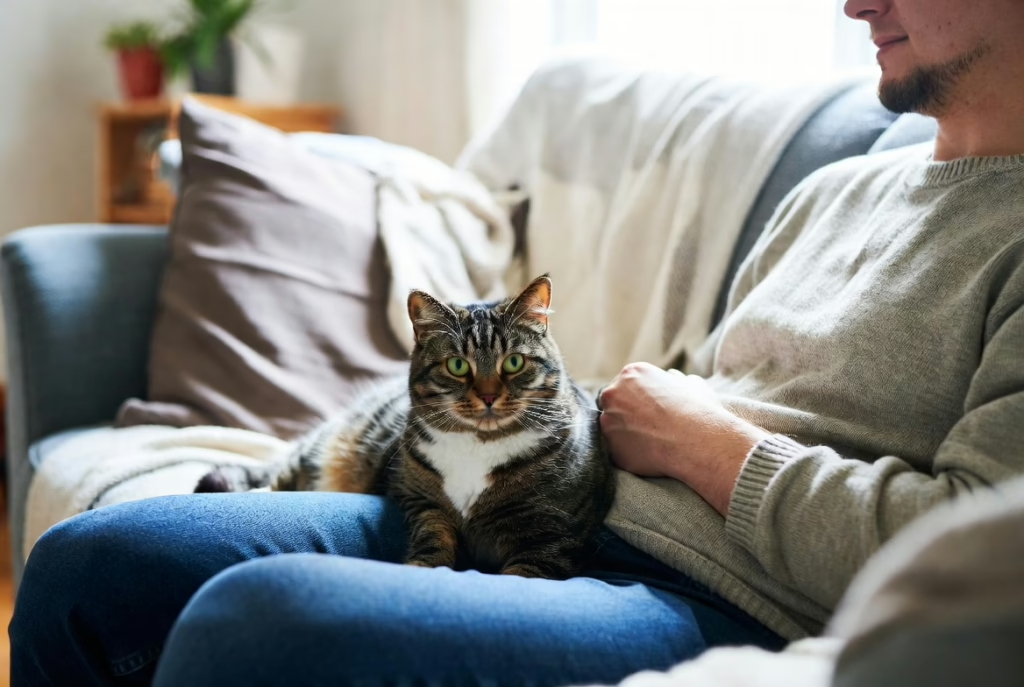
Ever wondered how old your feline friend really is? Most cat owners still cling to that outdated “multiply by seven” calculation, but here’s the truth: your cat’s aging process is way more complex than simple multiplication. In their first year alone, cats zoom from helpless newborn to sexually mature young adult—imagine cramming 15 years of human development into just 12 months. After reading this guide, you’ll know exactly where your cat stands developmentally, what health changes to watch for, and how to adjust your care routine as they grow from tiny kitten to distinguished senior.
How Cat Years Compare to Human Years
Here’s where that old seven-year formula completely falls apart. If you actually multiplied your one-year-old cat’s age by seven, you’d get seven—but your cat is already hitting puberty and capable of having kittens. That’s not a seven-year-old child. That’s a teenager.
During those first twelve months, kittens undergo absolutely explosive development. A six-month-old kitten has already reached roughly the same developmental stage as a ten-year-old child. Hit that first birthday? Your cat just became a fifteen-year-old human equivalent, complete with all that teenage attitude and independence.
Year two brings another dramatic leap—add nine more human years. So when your cat celebrates their second birthday, they’re essentially a 24-year-old human in terms of maturity. After that second year, the aging process finally settles down. From age two onward, each calendar year equals about four human years. A cat celebrating their fifth birthday? That’s like turning 36 for humans. Your ten-year-old feline? They’re pushing 56.
Why such rapid early aging? Wild cat populations face constant threats—predators, disease, starvation, injury. Evolution favored cats who could reproduce quickly before something killed them. Your pampered house cat inherited this accelerated development timeline even though the biggest threat they face is running out of their favorite treats.

Cat Age Stages from Birth to Senior
Veterinary scientists break down feline life into six distinct phases. Each stage brings different physical capabilities, behavioral quirks, and health concerns that every cat owner should recognize.
Kitten Stage (0–6 months)
Newborn kittens arrive completely helpless—blind, deaf, unable to regulate their own body temperature. Those sealed eyes pop open around day ten. By week three, they’re wobbling around on unsteady legs like tiny drunken sailors.
Week four kicks off weaning as kittens start sampling solid food alongside nursing. Those needle-sharp baby teeth? They emerge now. Around week eight, most kittens finish weaning completely and reach adoption age, though many behaviorists recommend waiting until twelve weeks for better socialization.
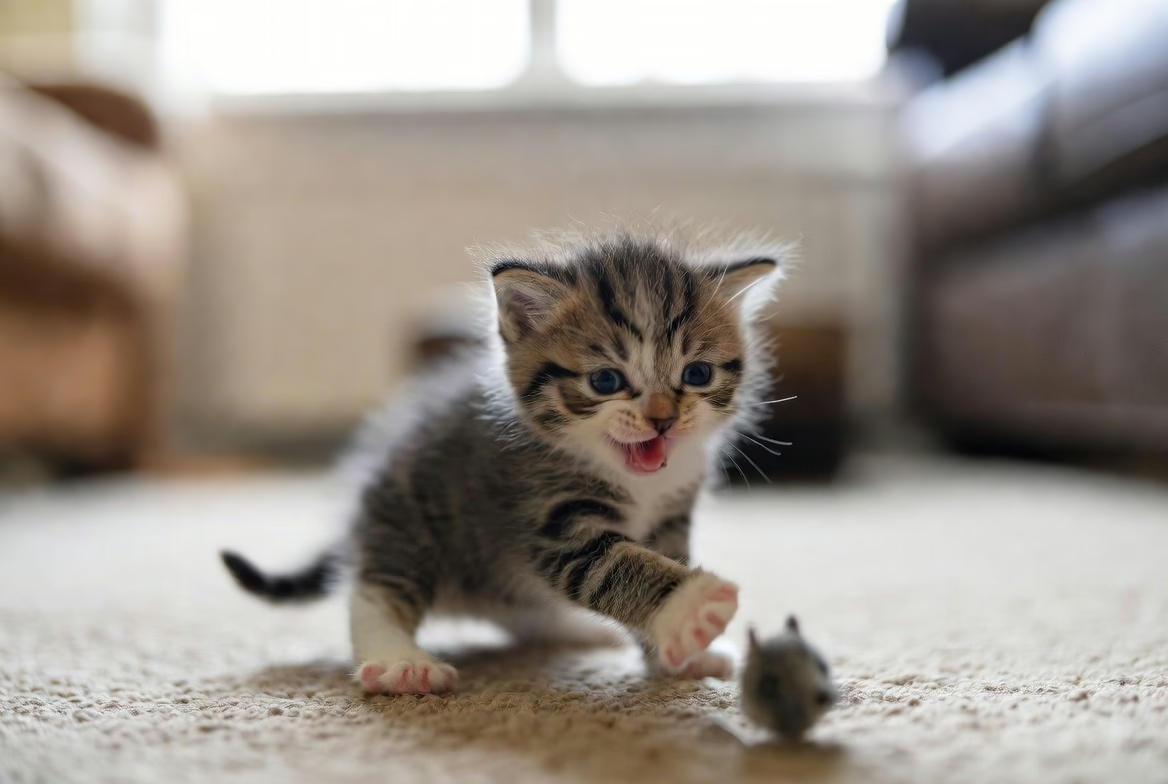
Months three through six bring massive growth spurts. Kittens turn into fearless little daredevils, investigating everything, climbing everything, attacking everything. Baby teeth fall out during months three and four, replaced by permanent chompers. Female kittens can experience their first heat cycle as early as four months—yes, that early—though six months is more common. This catches countless new owners completely off guard.
The energy level? Off the charts. Kittens careen between intense play sessions and dead-to-the-world naps. They’re not just playing—they’re learning essential hunting skills and social boundaries through all that pouncing, wrestling, and climbing. Whatever experiences they have now shape their adult personality permanently.
Junior Stage (7 months–2 years)
Junior cats bridge that awkward gap between kittenhood and full maturity. Most reach their adult size by month twelve, though giant breeds like Maine Coons keep growing until year three or four. They look fully grown, but behaviorally? Still got plenty of kitten crazy left.
Sexual maturity is complete. Unspayed females cycle regularly through heat. Intact males start spraying territory markers and picking fights with other males. Adult personality traits crystallize during this period—a shy junior cat will probably stay cautious forever, while bold youngsters typically remain confident throughout life.
Junior cats still test boundaries constantly. They’re deciding their place in your household pecking order. Play drive remains high but attention spans lengthen. Hunting behaviors intensify, whether they’re stalking toy mice, real bugs, or your unsuspecting ankles at three in the morning.
Many owners panic when their affectionate kitten suddenly turns aloof during this stage. Relax—this is normal. They’re establishing their adult independence and personal boundaries, not rejecting you.
Adult Stage (3–6 years)
Welcome to the prime years. Adult cats have reached peak physical condition and behavioral stability. They’ve settled into whatever personality and daily routines will define them for the foreseeable future.
Energy levels stabilize, though individual cats vary wildly. Some adults maintain kitten-level playfulness for years. Others adopt a more “I’m too dignified for this nonsense” lifestyle. Most adults sleep twelve to sixteen hours daily, broken up by bursts of activity.
Health problems remain relatively rare during these prime years, though dental disease can start developing if you’ve skipped preventive care. Weight management becomes crucial now—metabolism starts slowing while appetites often stay kitten-sized. Adult cats who pack on extra pounds face dramatically higher risks of diabetes, arthritis, and other chronic diseases later.
These years are perfect for establishing solid veterinary care habits. Annual checkups catch emerging problems before they explode into crises. Adult cats hide illness remarkably well—an evolutionary survival tactic that unfortunately delays diagnosis in cushy domestic settings.
Mature Stage (7–10 years)
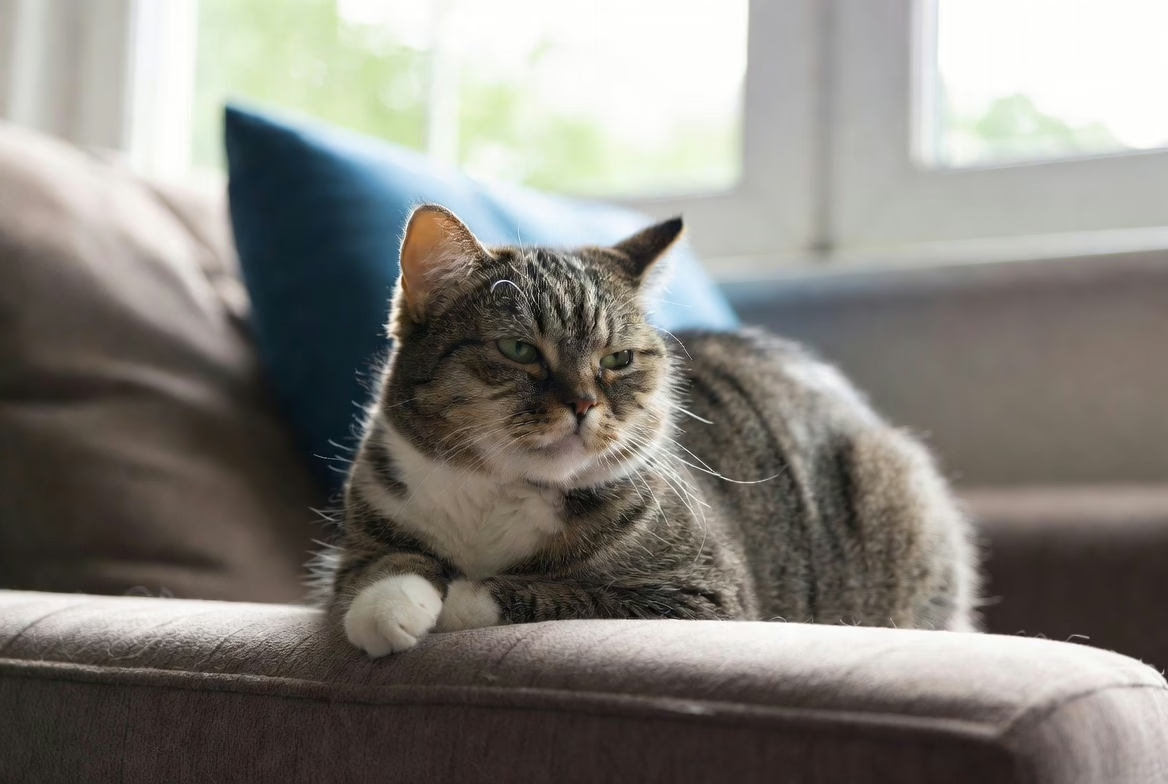
Middle age has arrived. Many cats remain active and healthy throughout these years, but subtle shifts start appearing. You might notice your cat warming up more slowly before play sessions. Maybe they choose the couch over the refrigerator top now.
Metabolism keeps slowing, making weight gain easier and weight loss harder. Some cats actually start losing muscle mass, especially less active ones. Joint stiffness may develop, though cats hide arthritis pain until it’s fairly advanced. Watch for sneaky signs: hesitating before jumps, avoiding stairs, or neglecting hard-to-reach grooming spots.
Dental disease becomes common without preventive care. Bad breath, excessive drooling, or suddenly refusing crunchy kibble can all indicate painful tooth problems. Many mature cats need professional dental cleaning under anesthesia.
Behavioral shifts stay subtle. Your cat might become slightly less tolerant when their routine gets disrupted, or pickier about social interactions. Don’t dismiss this as cranky aging—legitimate physical changes affect their comfort and energy.
Senior and Geriatric Stages (11+ years)
Cats hit senior status at age eleven and geriatric at fifteen. Better nutrition and veterinary advances mean many cats now sail into their late teens or early twenties. A fifteen-year-old cat matches a seventy-six-year-old human, while a twenty-year-old cat has reached the impressive human equivalent of ninety-six years.
Senior cats face elevated risks of chronic diseases: kidney failure, overactive thyroid, diabetes, and various cancers. Regular veterinary monitoring becomes absolutely essential—many vets recommend twice-yearly senior exams instead of annual checkups. Catching these diseases early dramatically improves treatment outcomes.
Physical changes become obvious. Cats might lose weight despite normal eating, or conversely, gain weight from decreased activity. Coat quality often deteriorates as grooming becomes uncomfortable. Vision and hearing may fade, though cats adapt remarkably well to sensory loss in familiar environments.
Cognitive decline can develop, similar to human dementia. Affected cats might yowl excessively at night, seem confused in familiar rooms, or forget litter box habits. Not every senior develops cognitive problems, but knowing the possibility exists helps you respond appropriately instead of punishing “misbehavior.”
Despite these challenges, countless senior cats enjoy excellent quality of life with proper care adjustments. Many become more affectionate and appreciative of quiet companionship. The bond with a senior cat can be profoundly rewarding.
Physical and Behavioral Changes by Age
Tracking physical growth from birth through old age helps distinguish normal development from worrying symptoms. Most dramatic growth happens during year one—by six months, kittens typically weigh seventy-five to eighty percent of their adult weight and reach full size by twelve months.
Weight usually stabilizes during adult years, though many cats gradually gain between ages three and seven if you don’t adjust portions for decreased activity. After age ten, weight trends often reverse. Many senior cats gradually lose muscle mass even if overall weight stays stable. This age-related muscle loss matters because it affects mobility, metabolism, and overall resilience.
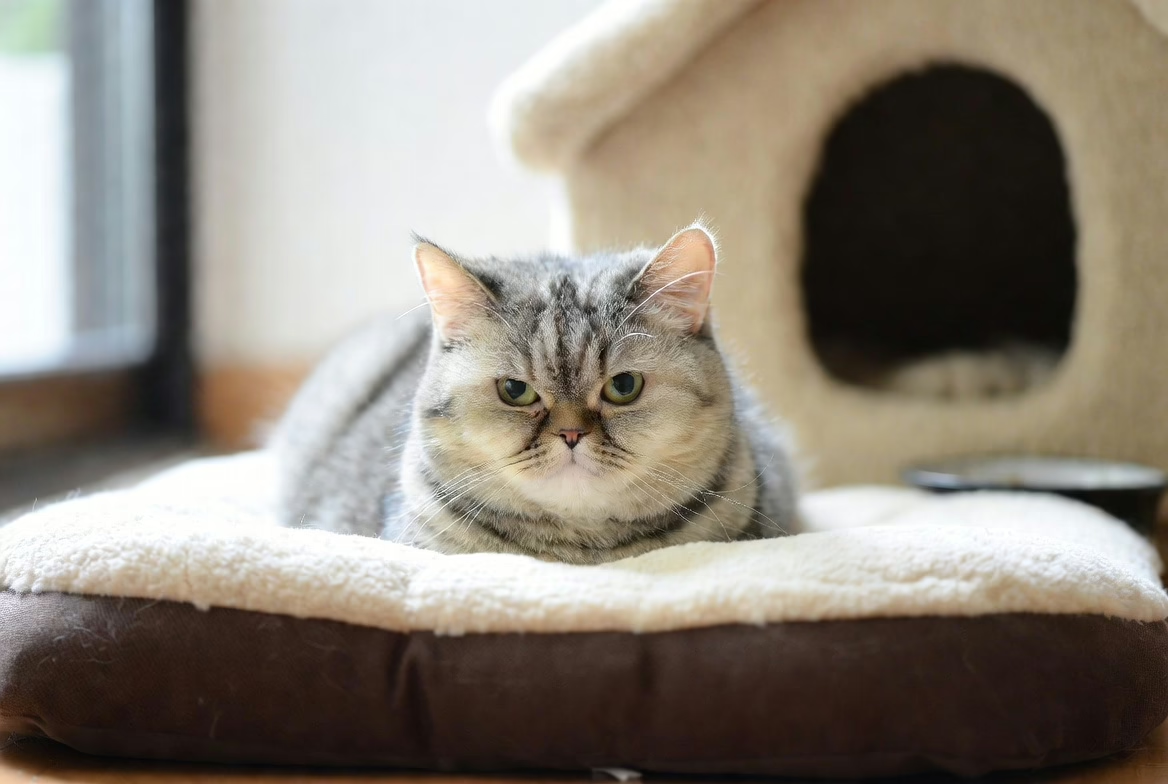
Coat quality transforms throughout life. Kitten fur feels softer and sometimes displays different colors than adult coat. Healthy adults maintain sleek, glossy fur with minimal grooming effort. Senior cats often develop coarser, duller fur, sometimes sprouting white hairs around their face and body. Arthritis or dental pain that makes grooming uncomfortable worsens coat problems.
Activity patterns shift predictably across life phases. Kittens alternate between frenetic zoom sessions and coma-like sleep. Junior cats stay highly active but develop longer attention spans. Adults settle into individual activity patterns. Mature cats show gradual activity reduction, while seniors may sleep eighteen to twenty hours daily.
Behavioral changes frequently indicate health problems rather than simple aging. A formerly social cat who suddenly hides might be hurting. Increased nighttime yowling can signal overactive thyroid, cognitive dysfunction, or sensory loss. Litter box accidents might reflect arthritis making box entry painful, kidney disease, or cognitive changes.
One commonly missed change involves claw care. Young cats naturally shed outer claw sheaths through scratching. Older cats often need frequent nail trims because reduced activity and circulation cause thicker, more brittle claws that don’t shed properly. Neglected claws sometimes grow in circles until they pierce paw pads, creating painful infected wounds.
Factors That Affect Cat Aging
Not all cats age identically. Several major factors influence feline longevity and how gracefully cats navigate their later years.
Indoor versus outdoor lifestyle creates the most shocking difference in lifespan. Indoor cats average fifteen to twenty years, with many hitting their early twenties. Outdoor cats? Just two to five years on average. That massive gap reflects exposure to cars, predators, infectious diseases, poisoning, and weather extremes. Even well-fed outdoor cats face dangers that indoor cats never encounter.
Breed influences aging patterns, though less dramatically than lifestyle. Purebred cats may inherit predispositions to specific conditions. Persians often carry genes for polycystic kidney disease, where fluid-filled cysts gradually destroy kidney tissue. Maine Coons face elevated risks of a heart condition called hypertrophic cardiomyopathy. Siamese cats develop certain cancers at higher rates. Mixed-breed cats benefit from broader genetic diversity, typically exhibiting fewer inherited problems.
Nutrition profoundly impacts aging trajectory. Cats fed high-quality, meat-based diets throughout life typically age more gracefully than those eating cheap fillers. Obesity accelerates aging by triggering inflammation, stressing joints, and spiking diabetes and heart disease risks. Conversely, inadequate nutrition—particularly insufficient protein in seniors—accelerates muscle wasting and frailty.
Preventive healthcare dramatically affects both longevity and quality of life. Cats receiving regular veterinary care, appropriate vaccines, parasite prevention, and dental attention live longer, healthier lives. Early detection of conditions like kidney disease or hyperthyroidism enables management that can add multiple quality years.
Genetics matter beyond breed-specific conditions. Some individual cats inherit naturally robust constitutions while others are simply more fragile. However, genetics interact heavily with environment and care—even genetically blessed cats won’t thrive without proper nutrition and healthcare.
Chronic stress levels throughout life affect aging. Persistent stress suppresses immune function, increases systemic inflammation, and may accelerate cognitive decline. Cats in stable, enriched environments with predictable routines generally age better than those in chaotic or stressful situations.
Reproductive status matters more than many realize. Spayed and neutered cats live longer on average than intact animals. Altered cats avoid reproduction-related health risks and territorial behaviors that increase injury risk. They’re also less driven to roam, reducing exposure to outdoor dangers.
How to Care for Your Cat at Each Life Stage
Optimal care strategies shift dramatically as cats progress through developmental stages. Tailoring your approach to your cat’s current phase maximizes health and longevity.
Kitten care priorities center on proper nutrition, thorough socialization, and establishing lifelong healthy habits. Feed kitten-specific formulas designed for growth—adult food lacks adequate calories and nutrients for developing bodies. Schedule the initial vaccine series and discuss spay/neuter timing with your vet. Most experts now favor pediatric sterilization between eight and sixteen weeks, which offers health and behavioral benefits without documented downsides.
Socialization during that critical window between three and nine weeks shapes lifelong behavior patterns. Kittens need positive exposure to various people, gentle daily handling, and different household experiences. Start nail trimming, tooth brushing, and carrier training immediately so these become routine rather than traumatic battles.
Junior cat care focuses on completing development and preventing problem behaviors from becoming entrenched. Continue high-quality nutrition but monitor portions carefully—many cats pack on excess weight during this stage. Provide substantial environmental enrichment including vertical climbing space, multiple scratching surfaces, and daily interactive play. Bored junior cats develop destructive habits that persist for life.
Schedule that first adult wellness exam around age one. This establishes baseline health parameters useful for future comparison. Complete spaying or neutering if not already done. Maintain dental care through daily brushing or dental treats.
Adult cat care emphasizes maintaining ideal body condition and preventing disease. Most adults thrive on twice-daily measured portions rather than free-feeding. Monitor weight monthly—even small gains accumulate quickly. An adult cat gaining just one pound is equivalent to a human gaining ten to fifteen pounds.
Continue annual wellness exams including bloodwork every one to two years to establish normal baseline values. Maintain dental care through regular brushing and professional cleanings when needed. Provide daily interactive play even if your cat acts disinterested—preserving muscle mass and healthy weight becomes increasingly important.
Mature cat care involves increased monitoring for emerging health issues. Transition to twice-yearly veterinary visits if your budget allows. Annual bloodwork catches kidney disease, hyperthyroidism, and diabetes in early stages when treatment works best. Watch for subtle behavior changes signaling pain or illness.
Consider switching to senior-formulated food, which typically features modified protein levels and joint-supporting supplements. If your cat shows any stiffness, discuss pain management with your vet immediately—cats suffer arthritis just like humans but instinctively hide it. Provide easier access to favorite high perches using ramps or pet stairs.
Senior and geriatric care demands the most attentive monitoring. Twice-yearly exams with comprehensive bloodwork are essential. Many senior cats benefit from prescription diets formulated for specific conditions. Discuss pain management proactively—there’s zero reason for cats to suffer arthritis pain when safe, effective medications exist.
Modify your home environment to accommodate declining mobility. Provide litter boxes with low entry sides or cut-out openings. Place food, water, and beds on the main living level to minimize stair climbing. Add extra litter boxes since seniors may get less warning before needing to eliminate. Increase soft bedding in favorite spots, preferably with orthopedic memory foam support.
Groom senior cats regularly since they often struggle maintaining their coat. Check claws monthly and trim as needed. Monitor food and water consumption closely—changes frequently signal health problems. Be patient with nighttime vocalization or confusion, and consult your vet about potential causes and management strategies.
Cat Age to Human Age Conversion Chart
| Cat Age | Human Age Equivalent | Life Stage |
|---|---|---|
| 1 month | 1 year | Kitten |
| 2 months | 2 years | Kitten |
| 3 months | 4 years | Kitten |
| 4 months | 6 years | Kitten |
| 5 months | 8 years | Kitten |
| 6 months | 10 years | Kitten |
| 7 months | 12 years | Junior |
| 8 months | 13 years | Junior |
| 12 months | 15 years | Junior |
| 18 months | 21 years | Junior |
| 2 years | 24 years | Junior |
| 3 years | 28 years | Adult |
| 4 years | 32 years | Adult |
| 5 years | 36 years | Adult |
| 6 years | 40 years | Adult |
| 7 years | 44 years | Mature |
| 8 years | 48 years | Mature |
| 9 years | 52 years | Mature |
| 10 years | 56 years | Mature |
| 11 years | 60 years | Senior |
| 12 years | 64 years | Senior |
| 13 years | 68 years | Senior |
| 14 years | 72 years | Senior |
| 15 years | 76 years | Geriatric |
| 16 years | 80 years | Geriatric |
| 17 years | 84 years | Geriatric |
| 18 years | 88 years | Geriatric |
| 19 years | 92 years | Geriatric |
| 20 years | 96 years | Geriatric |
| 21 years | 100 years | Geriatric |
Expert Perspective:
Dr. Sarah Chen, DVM, DABVP (Feline Practice), Director of Feline Medicine at the Cornell University Hospital for Animals, emphasizes:
The biggest mistake I encounter in practice is owners treating their eight-year-old cats like they’re still young adults. At eight years old, your cat has entered middle age and will benefit enormously from increased health monitoring and care modifications. Detecting age-related conditions early—before symptoms become obvious—can literally add multiple years of quality life to your cat’s lifespan.
Dr. Sarah Chen
FAQs
The calculation depends entirely on your cat’s current age. During the first year, cats develop at approximately fifteen human years. The second year adds another nine years, bringing a two-year-old cat to roughly twenty-four in human terms. After turning two, add approximately four human years for each calendar year that passes. So a five-year-old cat is about thirty-six in human years (24 + 12), while a ten-year-old cat is approximately fifty-six (24 + 32). This formula provides far more accuracy than that outdated “multiply by seven” rule that’s somehow still circulating.
Most veterinary organizations define senior cats as those reaching age eleven, though some set the threshold at ten. The geriatric stage begins around age fifteen. However, treat these as general guidelines rather than absolute rules. Some cats show aging signs earlier due to genetics or health issues, while others remain remarkably youthful into their teens. Breed, genetics, lifestyle, and overall health history influence when individual cats display age-related changes. Regardless of specific chronological age, most veterinarians recommend increasing health monitoring around age seven or eight to catch emerging issues early.
The biological aging process itself doesn’t differ between indoor and outdoor cats, but indoor cats live dramatically longer—typically fifteen to twenty years compared to just two to five years for outdoor cats. This extended lifespan means indoor cats actually experience senior and geriatric stages that outdoor cats rarely survive long enough to reach. Indoor cats also tend to age more gracefully overall because they avoid injuries, infectious diseases, and chronic stress that accelerate aging in outdoor cats. However, indoor cats face significantly higher obesity risks, which can accelerate certain aspects of aging like arthritis and diabetes. The key involves providing indoor cats with adequate environmental enrichment and appropriate portion-controlled nutrition to maximize their extended lifespan potential.
This depends on which aspect of maturity you’re measuring. Physically, most kittens reach adult size by twelve months, though large breeds may continue growing until age three or four. Sexually, cats mature shockingly early—females can enter heat as young as four months old. Behaviorally, cats are generally considered adults around age two to three when their personality fully stabilizes and that kitten-like hyperactivity finally diminishes. Veterinary life stage classifications typically label cats “junior” from seven months to two years, then “adult” from three to six years. For practical everyday purposes, most cats have completely transitioned from kittenhood to adulthood by their second birthday.
If you know your cat’s birth date or adoption age, you can determine their life stage using standard veterinary classifications: kitten (0-6 months), junior (7 months-2 years), adult (3-6 years), mature (7-10 years), senior (11-14 years), and geriatric (15+ years). If your cat’s age remains unknown, veterinarians can estimate based on teeth condition, eye clarity, coat quality, and muscle tone. Young adult cats display bright, clear eyes and pristine white teeth. Middle-aged cats may show slight dental tartar buildup and minor coat changes. Senior cats often have substantial dental wear, cloudier eye lenses, and decreased muscle mass. However, individual variation is significant—some exceptionally well-cared-for seniors appear much younger than their actual chronological age.
All cats follow essentially the same basic aging timeline, but breed can influence overall longevity and susceptibility to particular age-related conditions. Mixed-breed cats generally live longer and age more healthily than purebreds because of greater genetic diversity. Among purebreds, Siamese, Burmese, and Russian Blues frequently live into their late teens or even twenties, while some breeds like Persians may have shorter average lifespans due to breed-specific inherited health problems. Large breeds like Maine Coons take longer reaching physical maturity, sometimes not finishing growth until age three or four. However, lifestyle factors—indoor versus outdoor living, diet quality, and regular veterinary care—have far greater overall impact on aging trajectory than breed alone.
Cats progress through distinct life stages from birth through their senior years, each phase bringing unique characteristics and specific care requirements. That rapid development during the first two years means your one-year-old cat is already a teenager developmentally, while your ten-year-old has entered middle age. Recognizing these stages helps you provide age-appropriate nutrition, healthcare, and environmental modifications that maximize your cat’s quality of life and longevity potential.
This cat age chart provides a useful framework for understanding your feline companion’s development, but remember that individual cats age at vastly different rates based on genetics, lifestyle choices, and care quality. Indoor cats receiving excellent nutrition and preventive healthcare often remain active and healthy well into their teens, while cats facing chronic stress, poor nutrition, or inadequate veterinary attention may show premature aging signs.
Regular veterinary care becomes increasingly vital as cats mature and enter their senior years. The subtle changes signaling emerging health problems are easily overlooked by even the most attentive owners because cats instinctively hide illness and pain. Annual exams during adult years and twice-yearly visits for mature and senior cats enable early problem detection when treatment works most effectively.
Your cat’s needs will change significantly throughout their lifetime. That rambunctious kitten requiring multiple daily play sessions will eventually transform into a dignified senior preferring quiet companionship. By recognizing and thoughtfully adapting to each life stage, you give your cat the best possible opportunity for a long, healthy, and happy life. Whether your cat is a curious kitten or a wise geriatric companion, understanding where they fall on the feline development timeline empowers you to provide the absolute best care possible through every stage of their journey with you.