
- How Cats Communicate Without Meowing
- What Your Cat’s Tail Is Telling You
- Reading Cat Ear Positions and What They Mean
- Understanding Cat Posture and Stance
- Eye Contact and Pupil Changes in Cats
- Common Mistakes When Interpreting Cat Behavior
- When Cat Body Language Signals a Health Problem
- Table: Cat Tail Positions and Their Meanings
Cats speak volumes without making a sound. While a meow or purr might grab your attention, the real conversation happens through the subtle positioning of ears, the angle of a tail, or the dilation of pupils. Most cat owners miss these signals daily, leading to misunderstandings that can stress both human and feline. Learning to read your cat’s physical cues transforms your relationship from guesswork into genuine communication.
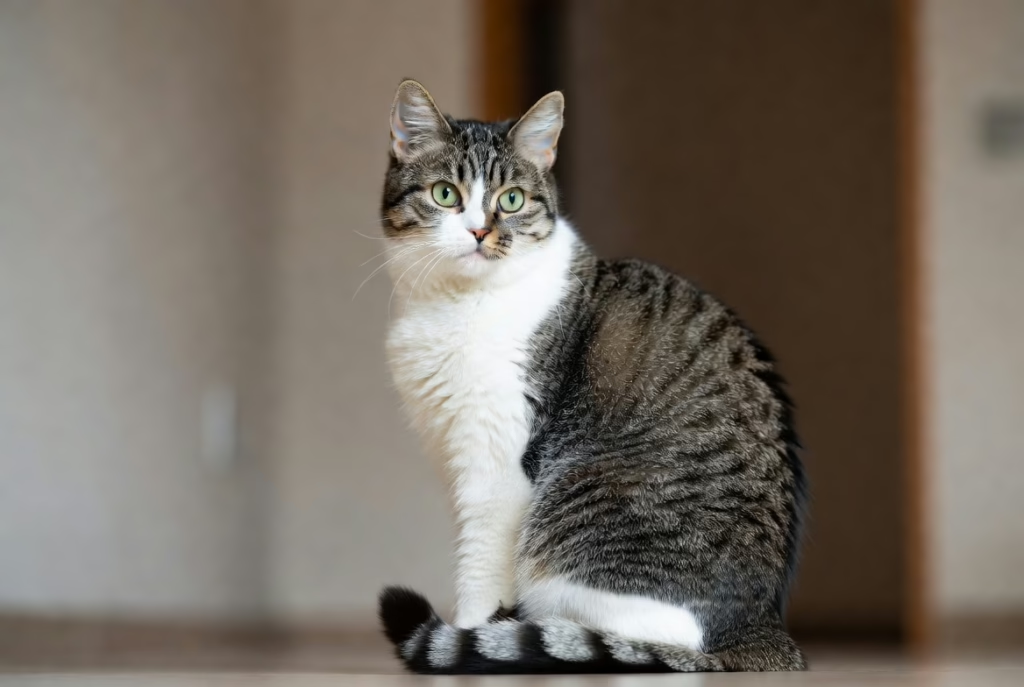
How Cats Communicate Without Meowing
Vocalizations represent only a fraction of how cats express themselves. Adult cats rarely meow at each other in the wild—they reserve vocal communication primarily for interactions with humans. The bulk of feline communication happens through cat communication signs that involve posture, movement, and positioning.
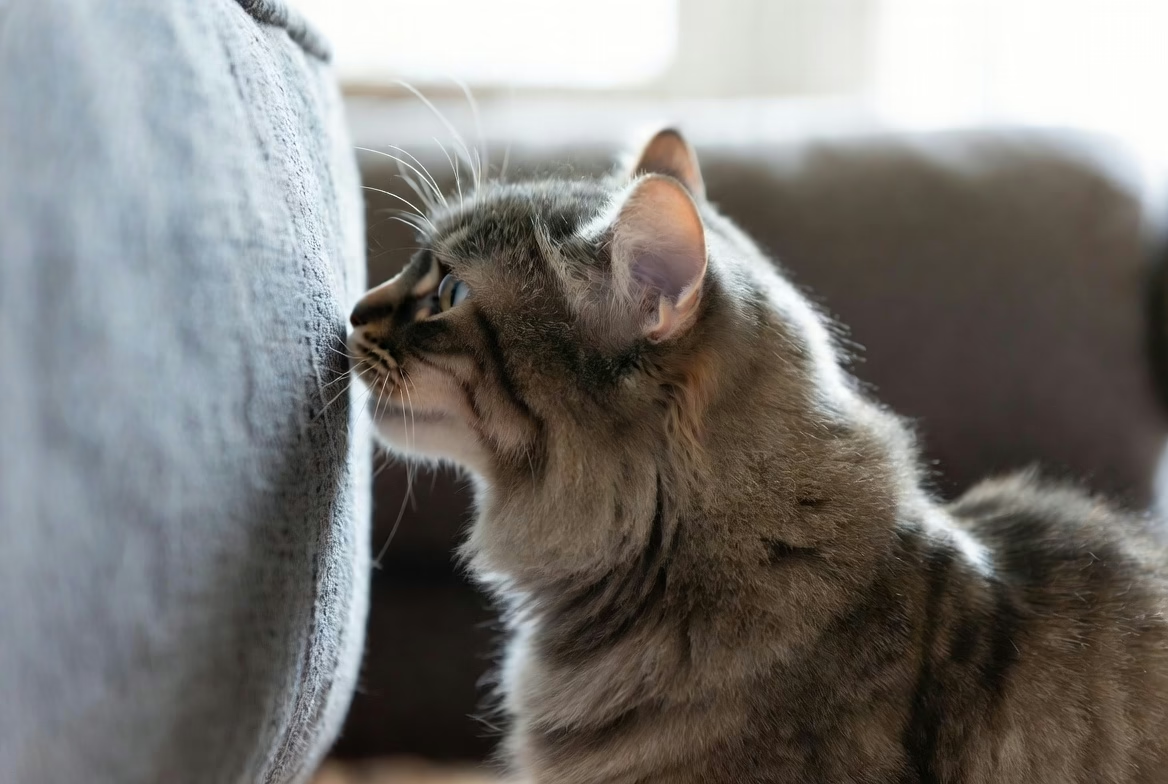
Scent marking through cheek rubbing and scratching establishes territory and familiarity. Visual displays communicate mood and intention from across a room. A cat entering a space reads the body language of other animals before deciding whether to approach, retreat, or hold position. These feline body signals evolved over thousands of years as survival mechanisms, allowing cats to assess threats, establish hierarchies, and coordinate social interactions without alerting prey or predators.
Your cat uses the same sophisticated system when interacting with you. The difference? You need to learn the language consciously, while other cats understand it instinctively. A flicking tail tip means something entirely different from a thrashing tail, yet both movements might look similar to an untrained eye. The context matters too—a signal that indicates playfulness in one situation might signal irritation in another.
What Your Cat’s Tail Is Telling You
The tail functions as your cat’s emotional barometer, broadcasting feelings with remarkable precision. Cat tail movements meaning varies based on position, speed, and the situation surrounding the behavior.
An upright tail with a slight curve at the tip resembles a question mark and signals a friendly, confident cat approaching for interaction. This is the greeting you’ll see when your cat walks toward you after you’ve been gone for hours. The vertical position shows comfort and openness to engagement.
A tail held low or tucked between the legs indicates fear, submission, or discomfort. Cats adopt this position when they feel threatened or uncertain about their environment. If your typically confident cat suddenly tucks their tail, something in the surroundings has triggered anxiety.
The puffed-up tail—where fur stands on end making the tail appear two or three times its normal size—signals extreme fear or aggression. This piloerection (technical term for hair standing up) makes the cat appear larger to potential threats. You might see this during a standoff with another animal or when your cat gets startled by an unexpected loud noise.
Swishing or thrashing movements tell a different story than gentle swaying. A tail whipping back and forth rapidly indicates agitation, overstimulation, or predatory focus. Many people mistake this for playfulness and continue petting, only to receive a bite or scratch moments later. The cat warned them clearly—they just didn’t recognize the signal.
A tail wrapped around the body while sitting or lying down suggests contentment and security, similar to how humans might cross their arms when relaxed. However, a tail wrapped tightly while the cat is alert often indicates the opposite—a defensive posture where the cat is making itself smaller.
Small twitches at the tail tip during otherwise calm moments usually mean your cat is focused intently on something, whether that’s a bird outside the window or a toy across the room. This controlled movement shows concentration rather than emotional distress.
Reading Cat Ear Positions and What They Mean
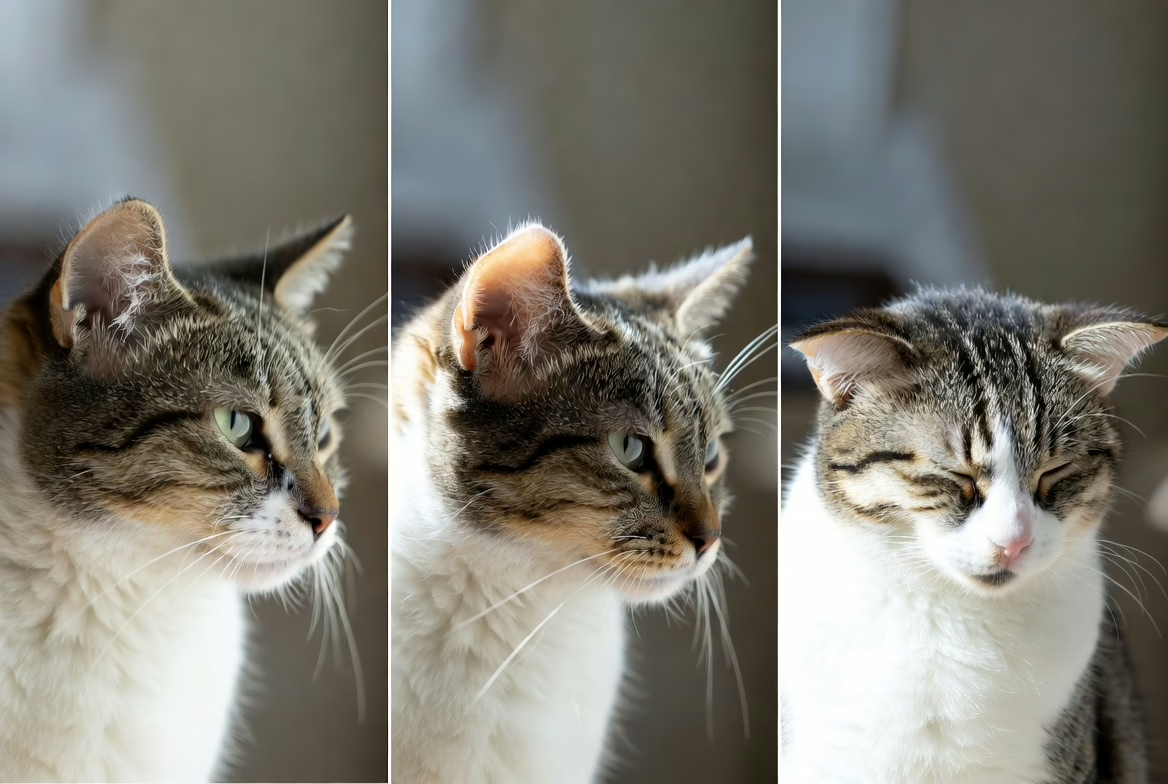
Cat ear signals provide a direct window into emotional state and awareness. Each ear can move independently through 180 degrees, controlled by approximately 32 muscles. This mobility allows cats to pinpoint sound sources and communicate nuanced feelings simultaneously.
Forward-facing ears indicate a relaxed, confident, or curious cat. When your cat’s ears point toward you during conversation, they’re actively engaged and interested in the interaction. This position represents the neutral, comfortable state for most cats.
Ears rotated backward—sometimes called “airplane ears” because they stick out to the sides—signal irritation, anxiety, or defensive mood. The further back the ears rotate, the more uncomfortable the cat feels. This often precedes more obvious signs of distress like hissing or swatting.
Flattened ears pressed tight against the head represent fear or preparation for aggression. A cat expecting a fight protects these delicate, exposed organs by pinning them down. If you see flattened ears combined with dilated pupils and a low body posture, the cat is terrified and may lash out defensively if cornered.
Swiveling or twitching ears show a cat processing multiple stimuli or feeling uncertain about their environment. One ear might face forward while the other rotates backward, indicating the cat is monitoring two different areas or sounds simultaneously. This split attention often happens when a cat is interested in something but not entirely sure it’s safe.
The speed of ear movement matters too. Rapid flicking suggests growing agitation or sensory overload, while slow, deliberate movements indicate thoughtful assessment of the surroundings.
Understanding Cat Posture and Stance
Full-body positioning reveals comfort levels and intentions more clearly than any single body part. Understanding cat posture requires looking at the complete picture—how all elements work together.
The classic arched back with puffed fur signals a cat trying to appear larger and more threatening. This Halloween cat pose indicates fear-based aggression. The cat feels threatened but hasn’t decided whether to fight or flee. Contrary to popular belief, this isn’t primarily an offensive posture—it’s defensive, designed to make predators think twice about attacking.
A crouched position with the body low to the ground and limbs tucked underneath serves multiple purposes. Cats crouch when stalking prey, preparing to pounce during play, or trying to appear smaller when frightened. The difference lies in other body language cats display simultaneously. Hunting crouch includes focused eyes and a wiggling rear end. Fear crouch involves flattened ears and dilated pupils.
Rolling over to expose the belly seems like an invitation for belly rubs, but it’s actually a sign of trust and comfort, not necessarily a request for touch. Many cats will roll to show they feel safe, then bite or scratch when you reach for their vulnerable underside. They’re saying “I trust you enough to be vulnerable,” not “Please touch my stomach.” Some cats do enjoy belly rubs, but you’ll know because they won’t react defensively.
The “loaf” position—where a cat sits with all four paws tucked underneath and tail wrapped around the body—indicates contentment and relaxation. A cat in loaf mode feels secure enough to settle in but remains alert. It’s the feline equivalent of sitting comfortably in your favorite chair.
Standing tall with weight distributed evenly and head held high shows confidence. A cat in this stance feels secure in their environment and isn’t anticipating threats. Conversely, shifting weight backward onto the rear legs while standing suggests the cat is preparing to retreat or defend themselves.
Rubbing against your legs or furniture combines scent marking with affection. Cats have scent glands on their cheeks, flanks, and the base of their tail. When they rub these areas against you, they’re claiming you as part of their territory and creating a familiar scent profile that makes them feel secure.
Eye Contact and Pupil Changes in Cats
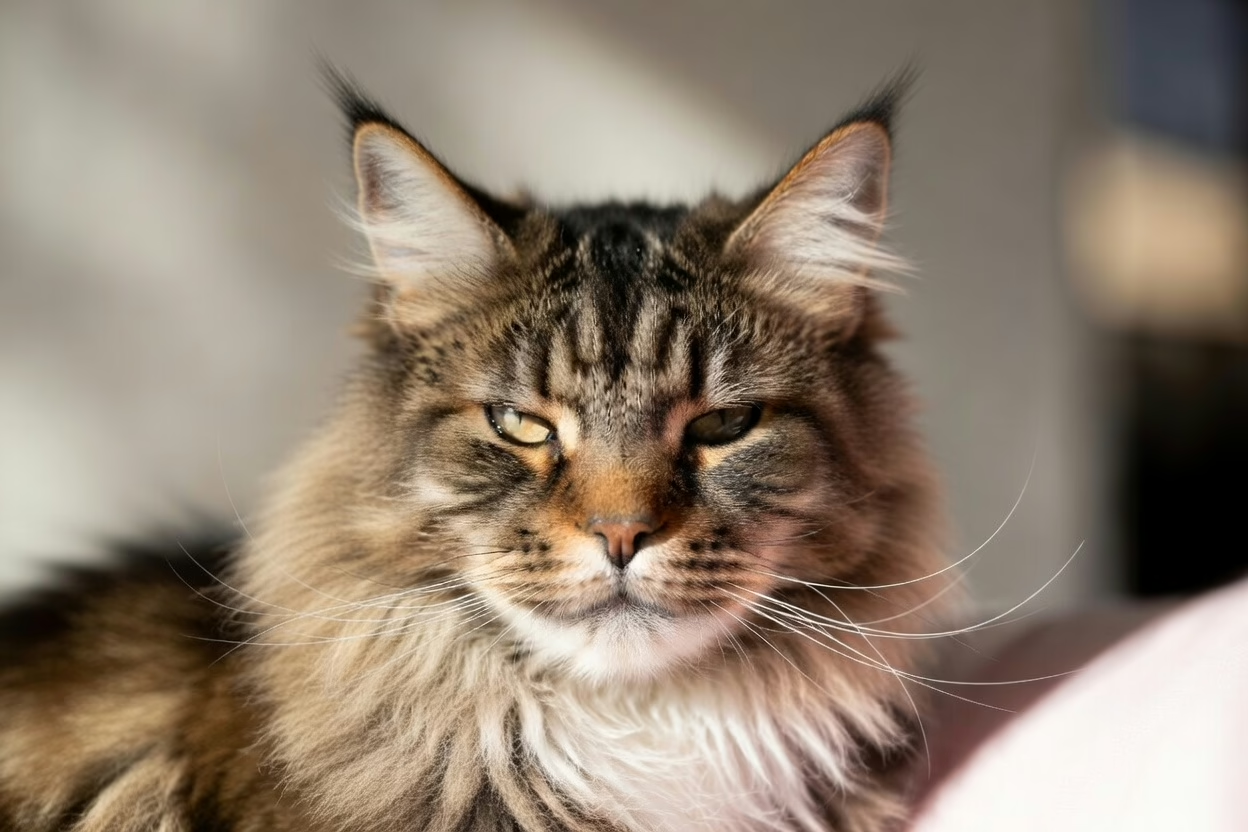
Feline eyes communicate trust, fear, aggression, and everything in between. The combination of gaze duration and pupil size creates a complex signaling system.
The slow blink—where a cat looks at you and deliberately closes their eyes slowly before opening them again—represents the highest form of feline affection and trust. Often called “cat kisses,” these slow blinks signal that your cat feels completely safe in your presence. You can return this gesture by slowly blinking back, which often prompts another slow blink from your cat, creating a bonding moment.
Direct, unblinking stares signal challenge or aggression in cat language. Cats view prolonged eye contact as threatening, which is why cats often gravitate toward the one person in a room who’s ignoring them—that person isn’t issuing a visual challenge. When two cats stare at each other without breaking eye contact, a confrontation is brewing.
Dilated pupils (large, round, dark eyes) indicate high arousal, which could mean excitement, fear, or aggression. Context determines which emotion is driving the dilation. A cat with dilated pupils, forward ears, and playful posture is excited. Dilated pupils combined with flattened ears and a low body position signal fear. The same dilation with an arched back and puffed tail indicates aggressive defense.
Constricted pupils (narrow slits) typically appear in bright light but can also signal focused aggression or irritation. A cat with slit pupils, ears back, and a tense body is displaying offensive aggression rather than defensive fear.
Half-closed, sleepy-looking eyes indicate relaxation and contentment. A cat lounging with partially closed eyes feels secure and comfortable. This differs from the slow blink—the eyes remain in a relaxed, half-lidded state rather than deliberately closing and opening.
Common Mistakes When Interpreting Cat Behavior
Even experienced cat owners regularly misread body language cats use to communicate, leading to preventable stress and injury.
The most frequent error is confusing overstimulation with enjoyment. Your cat purrs while you pet them, so you continue. Their tail starts swishing—you keep petting. Ears rotate backward—still petting. Suddenly, they bite or scratch, and you feel betrayed. The cat warned you multiple times. Many cats have a limited tolerance for petting, and the body language signals escalate from subtle to obvious before they resort to teeth or claws.
Anthropomorphizing—assigning human emotions and motivations to cat actions—creates false interpretations. A cat kneading with their paws isn’t “giving you a massage” out of gratitude; they’re displaying a comfort behavior retained from kittenhood when kneading stimulated milk flow. A cat knocking objects off tables isn’t being spiteful; they’re often testing object movement or seeking attention because they’ve learned this behavior gets a reaction.
Ignoring stress signals because they seem minor leads to chronic anxiety in cats. Frequent hiding, reduced grooming, changes in litter box habits, or decreased appetite often stem from environmental stressors that the cat has been signaling about through body language for weeks. By the time behavior changes become obvious, the cat has been uncomfortable for quite a while.
Assuming all friendly approaches mean the same thing overlooks important distinctions. A cat approaching with tail up and rubbing against you wants social interaction. A cat approaching with a low, tense body and focused stare might be redirecting aggression from something else or displaying territorial behavior.
Misinterpreting play aggression as real aggression causes some owners to punish normal kitten behavior. Young cats play-fight to develop hunting skills and social boundaries. Play aggression includes bouncy movements, taking turns being the “aggressor,” and inhibited bites. Real aggression involves serious intent to harm, no role-switching, and full-force attacks.
When Cat Body Language Signals a Health Problem
Sometimes what appears to be behavioral communication actually indicates pain or illness. Distinguishing between normal cat communication signs and distress signals that warrant veterinary attention can be lifesaving.
A cat who suddenly becomes aggressive when touched in specific areas might be experiencing pain rather than mood changes. Cats instinctively hide illness and injury as a survival mechanism—showing weakness in the wild makes animals vulnerable to predators. A cat with dental pain might become head-shy or bite when you touch their face. Arthritis can make a cat irritable when picked up or petted along their spine and hips.
Changes in posture that persist regardless of situation often indicate medical issues. A cat who consistently hunches with a tucked abdomen might have gastrointestinal pain. One who holds their head low and avoids jumping could be experiencing vision problems or neurological issues. A cat who suddenly stops grooming specific body areas might be unable to reach them due to pain or stiffness.
Pupil irregularities beyond normal dilation and constriction require immediate attention. Pupils that remain dilated in bright light, unequal pupil sizes, or pupils that don’t respond to light changes can indicate serious conditions including hypertension, neurological problems, or eye disease.
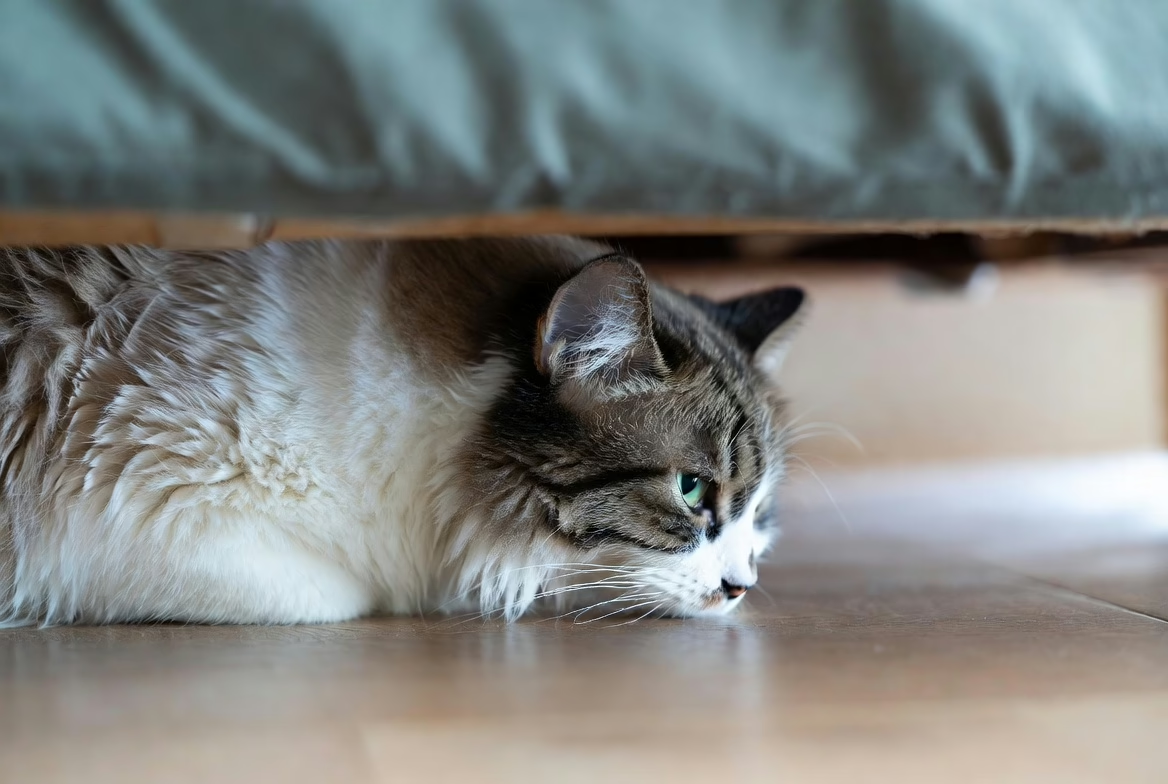
Excessive hiding represents a major red flag. While cats naturally seek enclosed spaces for naps, a cat who suddenly spends most of their time hidden and avoids normal activities is likely feeling unwell. Sick or injured cats isolate themselves, following instincts that tell them to find a safe place to recover away from potential threats.
Unusual vocalizations combined with specific body language warrant investigation. A cat who cries when using the litter box while holding their body in a tense, hunched position might have a urinary tract infection or blockage. A cat who vocalizes when jumping down from furniture could have joint pain.
Tail position changes that don’t match emotional context sometimes indicate neurological issues or injury. A tail that hangs limp, drags, or can’t be moved normally suggests nerve damage or spinal problems rather than emotional communication.
Table: Cat Tail Positions and Their Meanings
| Tail Position | Emotional State | Context & Notes |
|---|---|---|
| Upright with curved tip | Friendly, confident, happy | Greeting behavior; open to interaction |
| Low or tucked | Fearful, submissive, uncertain | Indicates anxiety or discomfort with situation |
| Puffed up (piloerection) | Frightened or aggressively defensive | Attempting to appear larger; highly aroused state |
| Rapid swishing/thrashing | Agitated, overstimulated, annoyed | Warning signal; often precedes defensive action |
| Gentle swaying | Mildly interested or slightly uncertain | Assessing situation; not distressed |
| Wrapped around body | Comfortable and settled | Contentment when relaxed; defensive when tense |
| Tip twitching | Focused concentration | Hunting mode or intense interest in stimulus |
Learning to read cat body language isn’t just about avoiding scratches—it’s about respecting your cat’s emotional experience and building trust. When we respond appropriately to their signals, cats learn that communication works, which actually makes them more likely to use subtle signals instead of resorting to aggression. The human-cat bond strengthens dramatically when cats feel heard and understood through their natural language.
Dr. Mikel Delgado
FAQs
Slow blinking represents trust and affection in cat communication. When a cat slowly closes and opens their eyes while looking at you, they’re signaling that they feel safe and comfortable in your presence. This behavior likely evolved because closing eyes around another creature requires trust—you can’t monitor for threats with your eyes closed. Returning a slow blink often prompts your cat to blink back, creating a positive bonding interaction.
A puffed tail indicates extreme fear or defensive aggression. The technical term is piloerection—involuntary hair standing on end controlled by tiny muscles at each hair follicle. This makes the cat appear larger and more threatening to potential predators or rivals. You’ll typically see this during intense fear situations like encountering a strange dog, hearing fireworks, or facing off with another cat. The puffed tail often accompanies an arched back, sideways stance, and flattened ears.
Context and body language combinations reveal the difference. A scared cat typically displays defensive signals: crouched or low body position, ears flattened against the head, dilated pupils, and attempts to retreat or hide. They’re trying to appear smaller and escape the threat. An angry or offensively aggressive cat shows forward-focused energy: body may be upright or in a forward lean, ears rotated back but not completely flattened, constricted pupils, direct stare, and standing ground rather than retreating. Some cats show fear-based aggression, combining elements of both—they’re scared but feel cornered and unable to escape, so they prepare to fight.
Core body language signals remain consistent across cats, but individual variation exists. Breed differences affect some signals—Scottish Folds with folded ears can’t position them as expressively as other cats, and tailless breeds like Manx obviously can’t use tail communication. Individual personality also plays a role; some cats are more expressive while others remain stoic. Socialization history matters too—cats raised with positive human interaction from kittenhood typically show clearer, more readable signals than poorly socialized cats. However, the fundamental language remains the same: puffed fur means arousal, flattened ears indicate discomfort, and slow blinks signal trust across nearly all cats.
Absolutely. Most cat aggression toward humans happens because people miss or ignore warning signals. Cats rarely attack without communicating their discomfort first. They escalate warnings progressively: subtle signals like tail tip flicking or ear rotation come first, followed by more obvious signs like tail thrashing or body tension, and finally overt warnings like growling or hissing. By recognizing and respecting early warning signals—stopping petting when the tail starts swishing, giving space when ears rotate backward—you allow your cat to communicate without resorting to claws or teeth. This actually reinforces their use of subtle signals because they learn that gentle communication works.
Several signals indicate a cat needs space: tail held low or thrashing, ears rotated backward or flattened, body turned away from you or moving away, tense muscles, dilated pupils, or ceasing to purr during interaction. A cat who gets up and walks away when you approach is clearly communicating the need for distance. Hiding or seeking elevated perches away from activity also signals a desire for solitude. Respect these signals—forcing interaction when a cat requests space damages trust and can lead to defensive aggression. Cats are semi-social animals who need regular alone time to feel balanced and secure.
Reading cat body language transforms your relationship from one-sided interpretation to genuine two-way communication. Your cat has been talking to you all along through tail position, ear angle, posture, and eye contact. The question is whether you’re listening.
Start by observing your cat during calm, positive moments to establish their baseline body language. Notice how they hold their tail when content, where their ears point when relaxed, and what their eyes look like during happy interactions. This baseline helps you recognize when something changes.
Pay attention to combinations of signals rather than isolated cues. A swishing tail means different things depending on whether it’s accompanied by forward ears and playful pouncing or backward ears and a tense body. Context always matters—the same signal in different situations carries different meanings.
Respect the signals your cat sends. When they communicate discomfort, overstimulation, or the need for space, honor those requests. Cats who feel heard through their body language become more communicative and trusting over time.
Watch for changes in typical patterns, as these often indicate stress, environmental issues, or health problems requiring attention. A normally social cat who suddenly displays defensive body language consistently needs either environmental adjustment or veterinary evaluation.
The investment you make in learning feline body signals pays dividends in reduced stress for both you and your cat, fewer behavioral problems, stronger bonding, and the ability to identify health issues early. Your cat has been trying to tell you things for years—now you finally understand the language.