
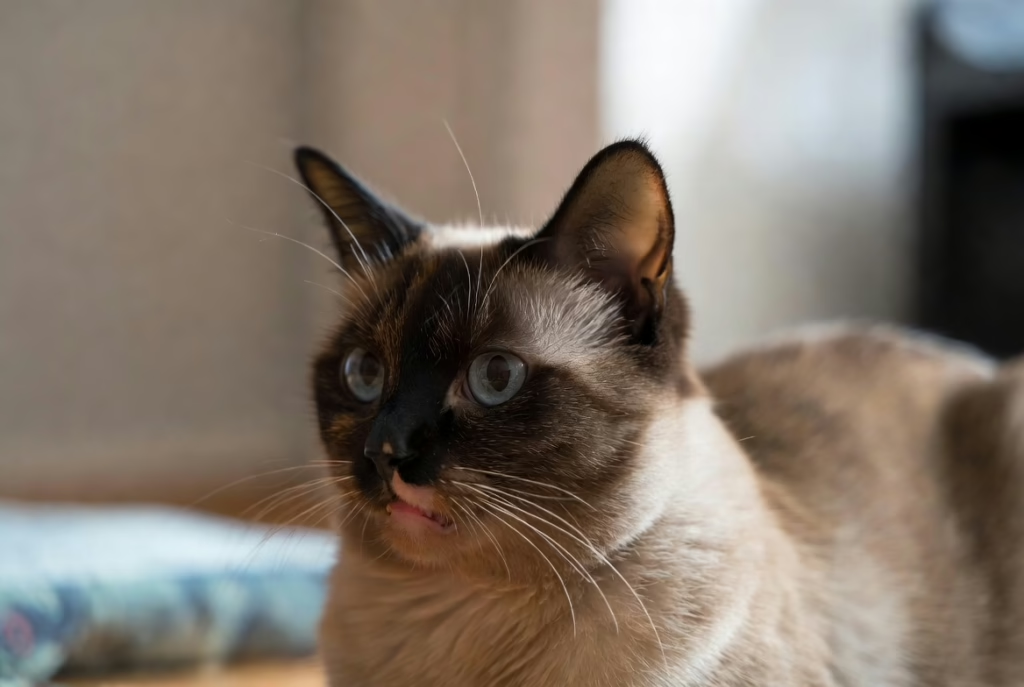
Cats rank among nature’s most acoustically gifted mammals. Their ears pick up frequencies humans cannot begin to perceive, swivel independently through nearly a full rotation, and decode sound information with astonishing speed. Learning the mechanics behind feline hearing clarifies why your cat responds to imperceptible noises and demonstrates seemingly odd reactions to everyday sounds.
How Cats Hear Sounds Differently Than Humans
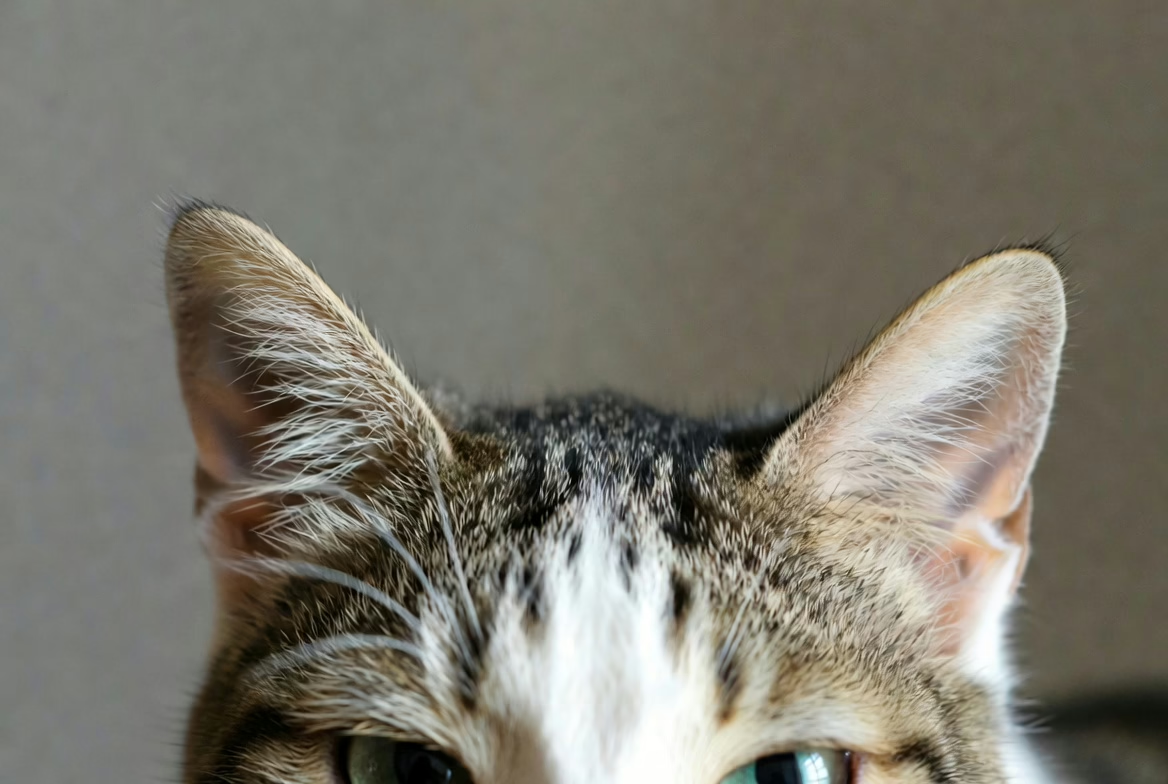
Sound processing in cats operates through mechanisms that diverge sharply from human auditory function. Where humans possess six muscles controlling each outer ear, cats command an impressive 32 muscles per ear. This muscular array permits each ear to sweep through 180-degree arcs without requiring head movement—essentially creating two independent radar dishes.
As sound waves enter the ear canal, they strike the tympanic membrane, causing it to vibrate at varying intensities. These vibrations transfer through three microscopic bones—the hammer, anvil, and stirrup—which multiply the signal’s strength before delivering it to the cochlea. Within a cat’s cochlea, approximately 25,000 specialized hair cells transform mechanical energy into neural impulses the brain decodes as recognizable sounds.
The feline brain’s processing velocity sets cats apart from humans. Cats parse incoming acoustic data roughly three times faster than people, distinguishing between two distinct sounds separated by merely one ten-thousandth of a second. This temporal precision explains your cat’s ear flicks at what sounds to you like a single noise.
Physical ear architecture plays an equally important role. The pinna’s conical design naturally boosts sound waves by 2-3 decibels before they penetrate deeper into the ear canal. This passive amplification works especially well for upper-register sounds—precisely where small prey animals produce most vocalizations.
Consider how this affects daily life: when you open a door, you hear one creak. Your cat processes that same event as multiple distinct acoustic elements—the initial wood-on-wood friction, the hinge mechanism’s metal slide, and the latch releasing—all parsed as separate informational units within milliseconds.
Cat Hearing Range and Frequency Detection
The feline auditory spectrum spans from roughly 48 Hz through 85,000 Hz. This range dwarfs human capacity and exceeds even the high-frequency detection of most canine breeds. Understanding this spectrum reveals what actually reaches your cat’s consciousness throughout the day.
Cats show moderate sensitivity at lower frequencies but don’t match human bass perception below 500 Hz. Your cat might sleep through a distant thunderstorm’s rumble yet spring to attention at an almost silent chirp. This trade-off reflects evolutionary priorities: cats descended from hunters of small rodents, not animals requiring early detection of large predators through ground vibrations.
Feline hearing dominance appears between 2,000 Hz and 65,000 Hz. Throughout this band, cats exhibit remarkable sensitivity—perceiving sounds two full octaves beyond human range and one octave above dogs. Mice generate ultrasonic communication signals between 30,000-110,000 Hz, placing significant portions of rodent “conversation” squarely within feline detection capability.
Compare the species:
| Species | Low Frequency (Hz) | High Frequency (Hz) | Directional Accuracy |
|---|---|---|---|
| Cats | 48 | 85,000 | Pinpoint within 5° |
| Humans | 20 | 20,000 | Locate within 20° |
| Dogs | 67 | 45,000 | Identify within 8° |
Ultrasonic Sound Detection in Cats
Ultrasonic perception serves critical hunting functions for cats. Small rodents emit ultrasonic calls during mating displays, territorial confrontations, and alarm situations. A cat stalking through dense vegetation depends on these upper-register frequencies to track prey hidden from view.
Studies performed at veterinary acoustic research facilities show cats orient toward ultrasonic sources with exceptional accuracy. When researchers broadcast a 50,000 Hz tone, test subjects pinpointed its origin within 5 degrees—a level of precision that converts to locating a mouse’s exact position within inches from several feet distant.
This ultrasonic sensitivity means cats perceive household sounds you’ll never detect. Electronic equipment generates high-frequency emissions as operational byproducts. Your phone charger’s faint whine, ultrasonic rodent deterrent devices, even the upper harmonics produced by LED bulbs—all register clearly in feline auditory awareness.
Imagine wearing hearing aids that amplify everything, including sounds you never knew existed. That approximates your cat’s acoustic experience in your home—a constant stream of high-pitched electronic chatter filling the “silent” spaces.
Why Cats Ignore Some Sounds
Despite exceptional hearing, cats routinely disregard sounds you’d assume would capture their attention. This selective response stems from neurological filtering, not hearing impairment. Specific auditory neurons in the feline brain activate only for particular frequency patterns and ranges.
Evolution tuned cats to prioritize acoustic signatures matching prey profiles: high-pitched, sporadic, originating near ground level. Sustained sounds, regardless of volume, fade into background through auditory habituation. Your voice registers in their neural pathways, but without matching the acoustic fingerprint of something meaningful (meal preparation, genuine threats, or prey indicators), they may consciously choose not to react.
This neurological reality explains the universal cat owner experience: calling your cat’s name produces no response, yet quietly cracking open a can of tuna brings immediate appearance. The metallic scraping sound combines high-frequency elements with learned food associations—creating an acoustic profile that overrides habituation filters.
Think of it as acoustic triage. Cats constantly process hundreds of sounds. Without filtering mechanisms, they’d experience overwhelming sensory bombardment. Ignoring your voice isn’t defiance—it’s efficient cognitive resource allocation.
Anatomy of the Cat Auditory System
The pinna, or outer ear, consists of cartilage wrapped in skin and fur, forming a funnel that collects and channels sound waves inward. Mobility comes from the previously mentioned 32 muscles, organized into functional groups managing forward tilt, backward rotation, and defensive flattening against the skull.
Cat ear canals follow an L-shaped pathway, descending vertically before angling horizontally toward the tympanic membrane. This configuration shields the delicate eardrum from direct impact trauma but simultaneously creates a pocket where debris and secretions accumulate. The canal’s interior produces cerumen—a waxy substance that traps foreign particles and contains antimicrobial compounds.
The middle ear cavity, positioned behind the eardrum, houses three diminutive bones forming a lever mechanism. These ossicles amplify sound pressure approximately twentyfold before transmission to the inner ear. A tube called the Eustachian tube connects this middle ear space to the nasopharynx, maintaining equal air pressure on both eardrum surfaces to preserve proper vibration.
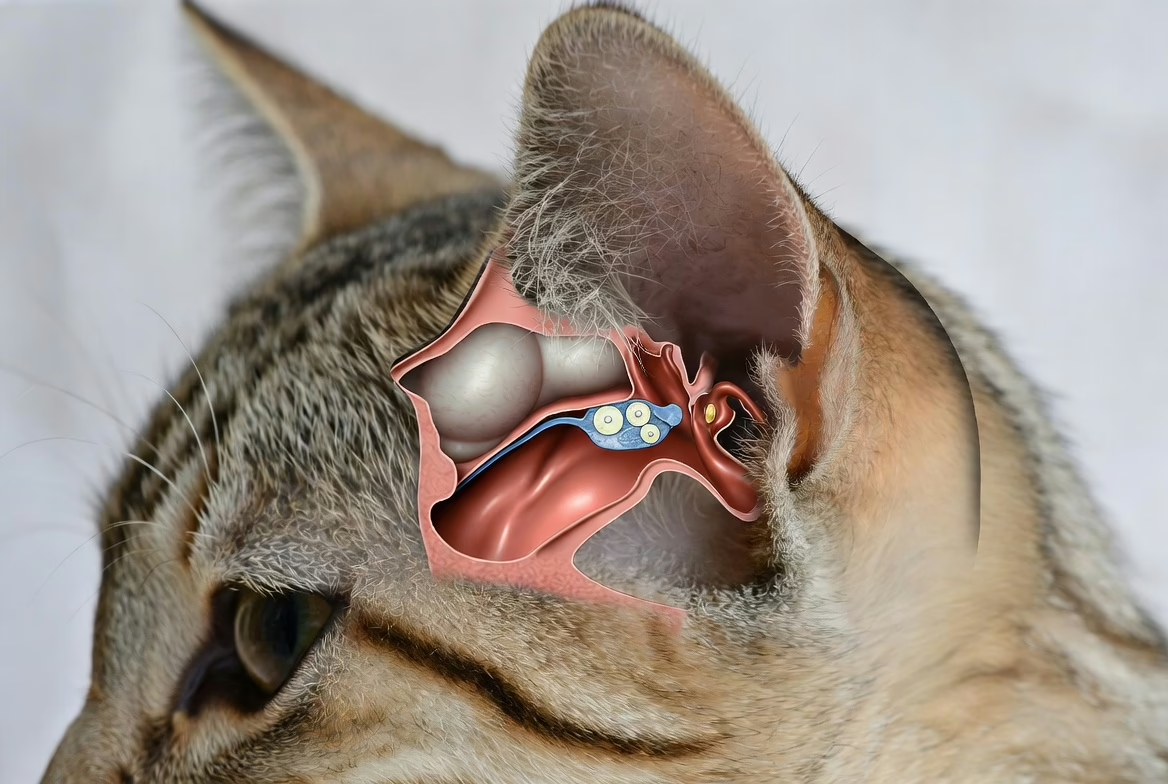
The cochlea, located in the inner ear, spirals like a snail shell and contains fluid plus those 25,000 hair cells. Various cochlear sections respond to different frequencies—the base detects treble while the apex captures bass. When hair cells bend from fluid pressure changes, they generate electrical signals that travel along the auditory nerve toward the brain’s processing centers.
The vestibular apparatus shares the inner ear space with auditory structures. This system governs balance and spatial awareness, explaining why ear infections frequently cause cats to circle repeatedly or maintain a persistent head tilt. Combining hearing and equilibrium in one anatomical location makes ear health essential for complete feline wellbeing.
Why Cats Hear Better Than Humans and Dogs
Evolutionary pressures shaped feline hearing through their ecological role as specialized small-prey hunters. Unlike cooperative pack hunters relying on visual signals between members, solitary cats required reliable prey detection in darkness and through visual barriers like undergrowth or tall grasses.
The feline auditory apparatus stands as an evolutionary triumph, precisely calibrated for capturing ultrasonic rodent communication. This integration of frequency breadth, directional precision, and neural processing velocity grants cats decisive advantages in the ongoing acoustic competition between predators and prey.
Dr. Sarah Jennings
Multiple specific modifications explain feline acoustic superiority over other mammals. The cat’s basilar membrane—the cochlear structure housing frequency-detecting hair cells—extends proportionally longer relative to body mass than human equivalents. This extended length enables finer frequency differentiation across broader ranges.
Neural connections from feline ears to auditory cortex incorporate more synaptic junctions than human pathways. Each synapse provides additional signal refinement and processing opportunities. Though counterintuitive—more connections typically slow transmission—the cat’s nervous system evolved to handle these signals with remarkable velocity.
Cats also dedicate proportionally more brain tissue to auditory processing than humans or dogs. The auditory cortex analyzes sound characteristics including frequency, volume, duration, and spatial origin. This expanded neural real estate allows simultaneous tracking of multiple sound sources while filtering signal from noise.
Physical ear canal structure contributes additional advantages. The L-shaped canal generates acoustic resonance that naturally amplifies the 2,000-6,000 Hz band—exactly where mouse vocalizations concentrate. This biological tuning occurs passively without requiring metabolic energy.
How Feline Ear Sensitivity Affects Behavior
Acute hearing shapes feline behavior in ways owners frequently misread. When your cat fixates on an apparently empty wall, they’re probably tracking insects or rodents moving within wall cavities—sounds residing completely outside your auditory range. This response isn’t mystical or random; it’s standard reaction to detected acoustic data.
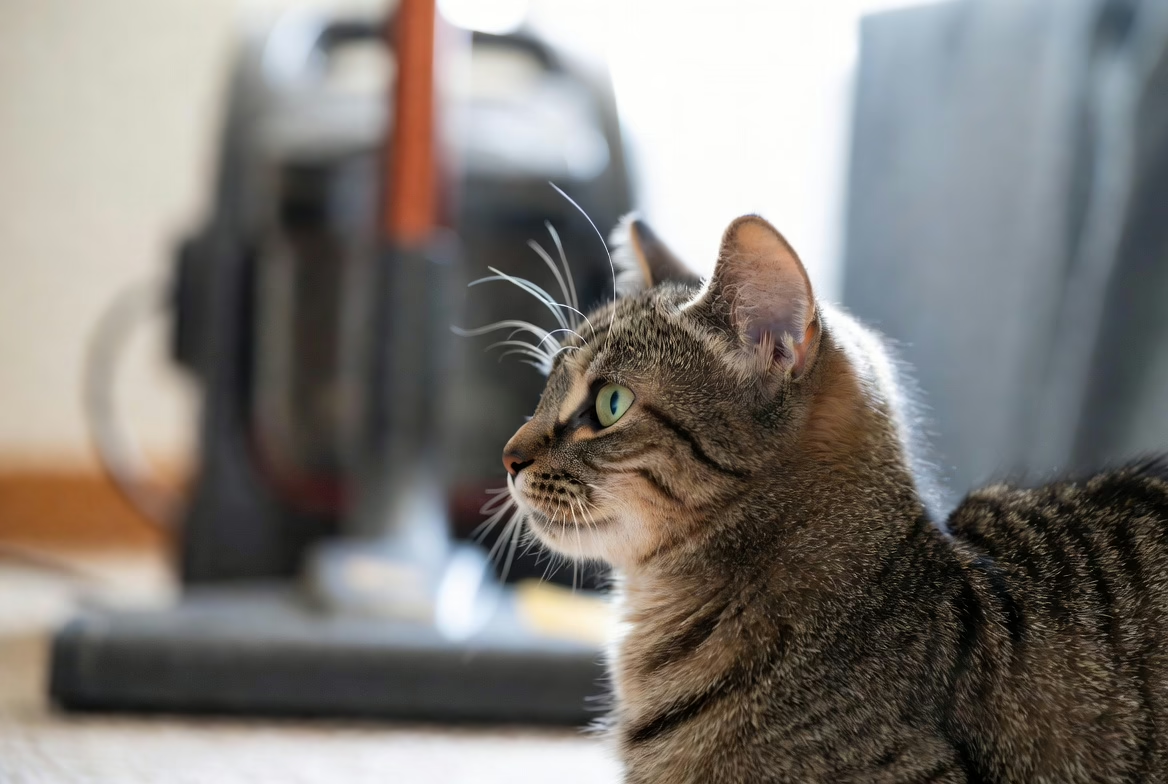
Common household sounds that register as mundane to humans genuinely stress cats. Vacuum cleaners generate 70-80 decibel sound pressure at frequencies where feline sensitivity peaks. From your cat’s acoustic perspective, the vacuum creates an overwhelming sensory assault triggering legitimate stress responses. Similar reactions occur with blenders, hair dryers, and comparable motorized appliances.
Cats frequently show increased activity near dawn and dusk partially because these periods match peak rodent activity cycles. Even strictly indoor cats retain instinctive hunting rhythms, and their hearing maintains attunement to ancestral prey movement patterns. When your indoor cat tears through the house at 5 AM, they’re responding to deeply programmed acoustic cues—despite no actual prey existing.
High-frequency hearing makes cats effective early-warning systems for certain household hazards. Cats often detect electrical problems before humans notice them, reacting to high-frequency buzzing from deteriorating electrical components. They similarly may hear ultrasonic indicators of developing gas leaks or pipes beginning to fail.
Feline social exchanges depend heavily on acoustic communication. While humans emphasize visible body language, cats transmit information through vocalizations spanning their complete hearing spectrum. A seemingly silent confrontation between two cats actually involves ultrasonic exchanges you cannot detect—threats, warnings, and status negotiations unfolding in acoustic dimensions beyond human access.
Picture attending a party where half the conversations occur at frequencies you cannot perceive. That approximates inter-cat communication from a human observer’s perspective—you’re witnessing only partial information exchange.
Signs Your Cat May Have Hearing Problems
Age-related hearing decline affects numerous cats beyond 10 years, though progression timelines vary dramatically between individuals. Unlike abrupt deafness, presbycusis advances gradually, complicating detection until substantial loss occurs. Monitor for cats no longer reacting to previously attention-grabbing sounds like treat bags crinkling or dinner preparation.
White cats with blue eyes carry genetic predisposition toward congenital deafness, affecting roughly 65-85% of cats displaying this color combination. The gene governing white fur and blue eyes sometimes disrupts proper inner ear development during gestation. These cats adapt impressively to deafness, compensating through enhanced vision and vibration sensitivity.
Ear infections generate observable symptoms extending beyond hearing changes. Infected cats often shake their heads vigorously, scratch persistently at ears, or maintain a head tilt. The ear might produce unusual odors, and you may observe discharge—waxy, bloody, or purulent. The ear flap might feel abnormally warm, signaling inflammation.
Behavioral shifts sometimes indicate hearing issues before physical symptoms manifest. A cat who suddenly becomes excessively vocal may be compensating for reduced ability to monitor their own voice volume. Conversely, a normally talkative cat turning silent might have developed painful ear conditions that hurt during vocalization.
Sudden hearing loss demands immediate veterinary evaluation. Potential causes include severe infections, blood clots affecting inner ear circulation, physical trauma, medication reactions, and neurological disorders. If your cat stops responding to familiar sounds abruptly or displays disorientation, vestibular dysfunction, or balance difficulties, obtain veterinary care within 24 hours.
Routine ear examinations help identify problems early. Healthy feline ears appear pink internally with minimal discharge—typically light brown and slightly tacky in texture. Excessive buildup, redness, swelling, or foul odors indicate problems. Never insert cotton swabs deep into ear canals; this forces debris further inward and risks tympanic membrane puncture.
FAQs
Cats perceive higher frequencies than dogs—reaching 85,000 Hz compared to dogs’ 45,000 Hz ceiling. However, dogs capture lower frequencies more effectively than cats and demonstrate superior directional accuracy in certain situations. Declaring one species “better” depends on which acoustic parameters matter most. For ultrasonic prey detection, cats excel. For identifying low-frequency distant threats, dogs hold advantages.
Scientific research suggests cats detect frequencies approaching 85,000 Hz, though sensitivity diminishes considerably above 65,000 Hz. Individual differences exist, and hearing capacity declines with aging. Young, healthy cats demonstrate optimal high-frequency detection, while senior cats may lose ultrasonic capabilities while maintaining normal hearing at lower frequencies.
Absolutely. Human hearing caps around 20,000 Hz, whereas cats perceive frequencies exceeding 85,000 Hz. This disparity means cats detect ultrasonic rodent communication, high-frequency electronic device emissions, and numerous sounds existing in complete silence from human perspective. Cats also distinguish sounds occurring microseconds apart—temporal resolution humans completely lack.
Cats can detect mice moving through shallow tunnels or beneath light ground covering, but not through substantial soil depth. Sound transmission through dense earth rapidly attenuates high frequencies. A mouse 6-8 inches down in loose soil might generate detectable sounds if moving actively, but deeper burrow inhabitants remain acoustically concealed. Cats depend more on hearing mice near tunnel openings or detecting vibrations through sensitive footpad receptors.
Most cats preserve functional hearing through ages 7-8, with gradual deterioration beginning around 10-12 years. However, individual variation proves substantial. Some cats maintain excellent hearing into late teens, while others exhibit significant loss by age 8. High-frequency perception typically declines first, followed by reduced sensitivity throughout the spectrum. Consistent veterinary checkups help track hearing status in aging cats.
Independent ear articulation allows cats to pinpoint sound origins without moving their head, preserving visual focus on one target while gathering acoustic intelligence from another direction. Each ear’s 32 muscles operate under separate neural control, enabling one ear to sweep forward while the other rotates backward. This capability helps cats monitor multiple potential threats or prey simultaneously—a vital survival mechanism for species functioning as both predator and prey.
Feline acoustic capability represents extraordinary evolutionary engineering that continues serving domestic cats in contemporary settings. Their capacity for ultrasonic frequency detection, lightning-fast sound processing, and precise acoustic source location explains behaviors that might otherwise appear nonsensical. Grasping how cats experience sound helps you design more comfortable living spaces, recognize emerging hearing problems, and appreciate the intricate sensory reality your cat navigates daily. Next time your cat reacts to seemingly nothing, remember they’re accessing acoustic information operating in frequencies forever beyond human biological capability—a compelling reminder that companion animals experience existence through dramatically different sensory frameworks than our own.