
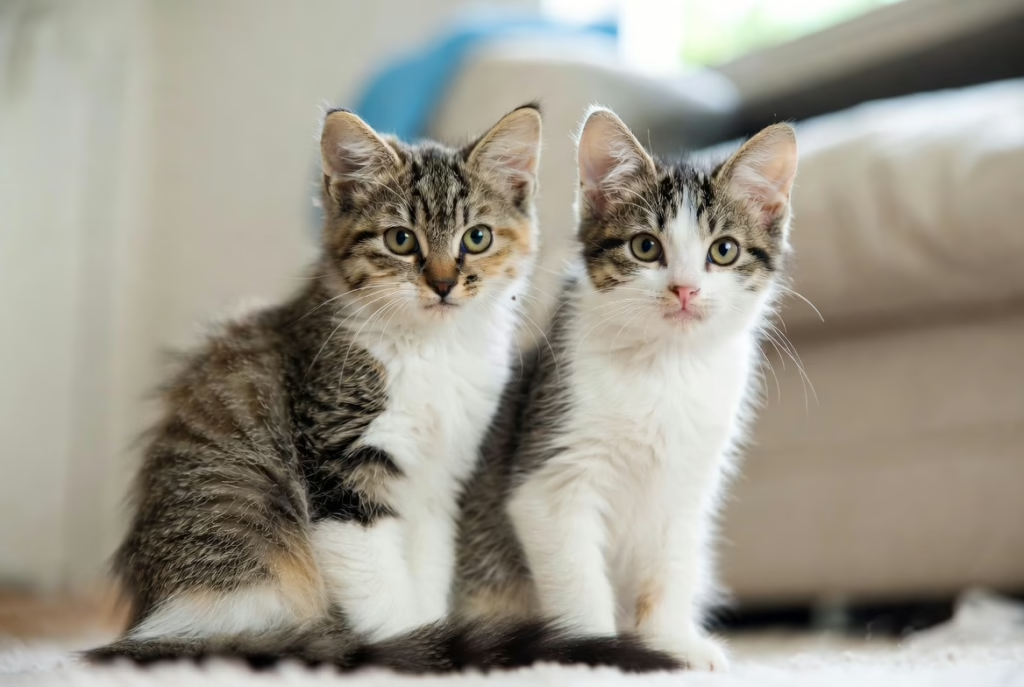
Cats have long been stereotyped as solitary creatures who prefer independence over companionship. While they certainly differ from pack animals like dogs, feline social dynamics are far more nuanced than most people realize. Understanding how cats interact with each other—and whether they even want to—can make the difference between a harmonious multi-cat household and a stressful environment for everyone involved.
The reality is that cat social behavior exists on a spectrum. Some cats actively seek out feline friends, while others guard their territory fiercely. Recognizing where your cat falls on this spectrum requires careful observation of their communication methods, personality traits, and behavioral cues.
How Cats Communicate With Each Other
Cats rely on a sophisticated combination of signals to convey intentions, establish boundaries, and maintain relationships with other felines. Unlike dogs, who often use overt displays, cat interaction behavior tends to be subtle and easily misread by humans.
Body Language Fundamentals
A cat’s posture reveals volumes about their comfort level and intentions. A relaxed cat approaching another feline will have a loose, fluid gait with their tail held in a neutral or slightly upright position. Their ears face forward or slightly to the side, indicating curiosity rather than defensiveness.
Conversely, a cat feeling threatened will make themselves appear larger—arched back, puffed tail, and piloerection (raised fur along the spine). Ears flatten against the head, and whiskers pull back tightly against the face. A cat crouched low with dilated pupils is preparing either to flee or attack, depending on whether escape routes are available.
The slow blink is one of the most misunderstood feline social habits. When one cat slowly closes and opens their eyes while looking at another, they’re signaling trust and non-aggression. Cats who are bonded often exchange these “cat kisses” before settling down together.

Vocalizations Beyond Meowing
Adult cats rarely meow at each other—that’s primarily reserved for human communication. Instead, they use chirps, trills, growls, hisses, and yowls to interact with fellow felines.
A short chirp or trill often serves as a friendly greeting between cats who know each other well. Mother cats use this sound to call kittens, and adult cats maintain it as a positive social signal. Growls and hisses are self-explanatory warnings that escalate in intensity based on the threat level perceived.
The caterwauling yowl heard during mating season or territorial disputes is designed to be heard from a distance. It’s a clear “stay away” message that can prevent physical confrontation when cats respect each other’s boundaries.
Scent Marking and Chemical Communication
Cats possess scent glands on their cheeks, paws, flanks, and tail base. When a cat rubs their face against furniture, doorways, or another cat, they’re depositing pheromones that create a communal scent profile. In multi-cat households, cats who get along will often rub against the same objects, creating a “colony odor” that identifies group members.
Scratching serves dual purposes: it maintains claw health and leaves visual and scent markers from glands in the paw pads. Cats who feel secure in their environment tend to scratch in common areas, while anxious cats may scratch near entry points or boundaries.
Tail Signals and What They Mean
A tail held high with a slight curve at the tip indicates confidence and friendliness. When cats approach each other with this tail position, they’re open to interaction. Tails wrapped around each other during walking or sitting suggest a strong bond.
A rapidly twitching or lashing tail signals irritation or overstimulation. If one cat’s tail starts this motion during an interaction, the other cat will usually back off if they’re reading signals correctly. A tail tucked between the legs indicates fear or submission—the cat is trying to appear smaller and less threatening.
Do Cats Like Other Cats
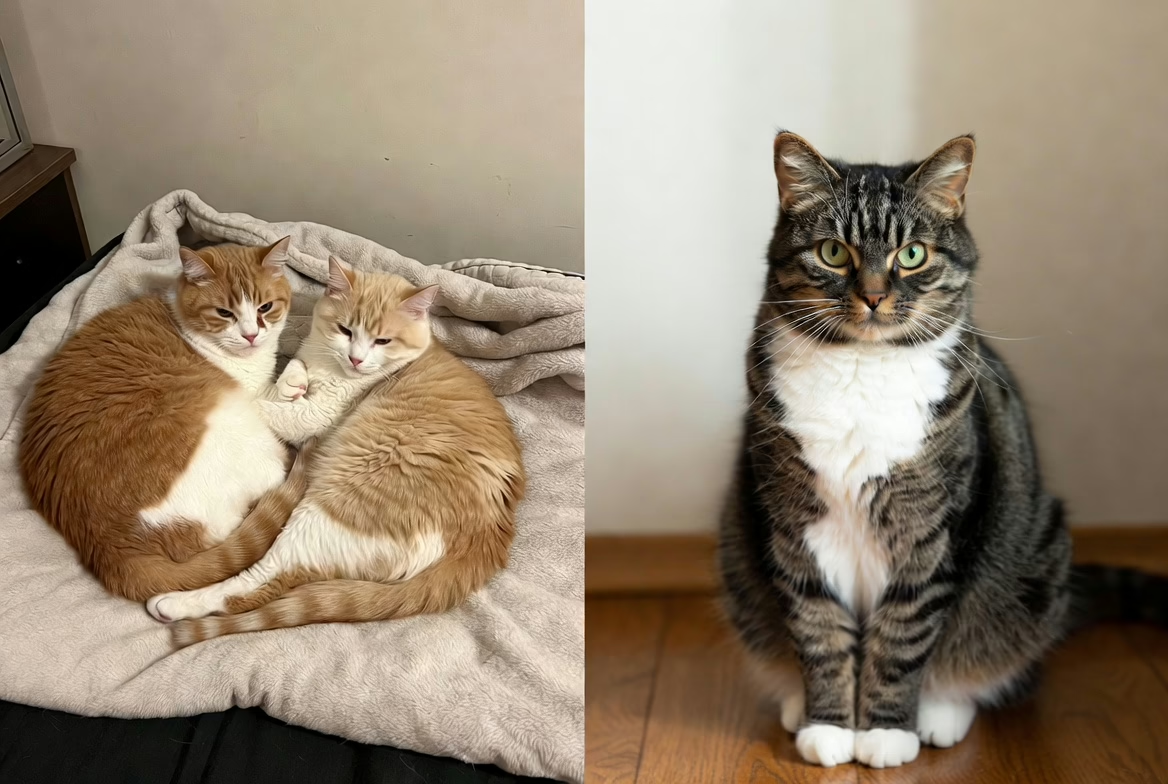
The question of whether cats enjoy feline companionship doesn’t have a universal answer. Domestic cats evolved from African wildcats, who are primarily solitary hunters. However, feral cat colonies demonstrate that cats can form complex social structures when resources are abundant.
Personality Trumps Species Tendencies
Just like humans, cats have distinct personalities that influence their social preferences. Some cats are naturally gregarious and seek out interaction with other felines. These cats often come from litters where they had positive experiences with siblings during the critical socialization period (2-7 weeks of age).
Other cats show clear preferences for being the only feline in the household. This isn’t necessarily due to aggression or fear—some cats simply find the presence of other cats stressful, even when no overt conflict occurs. They may have had limited exposure to other cats during their socialization window, or they may have inherent personality traits that favor independence.
Territorial Considerations
Cats are territorial by nature, though the intensity varies dramatically between individuals. A cat’s territory includes core areas (where they sleep and eat), home ranges (areas they patrol regularly), and hunting grounds (even if “hunting” means stalking toy mice).
When another cat enters this space, the resident cat must decide whether to defend, share, or avoid. Cats with flexible territorial boundaries adapt more easily to multi-cat living. Those with rigid territorial instincts may never fully accept another cat’s presence, though they might reach a détente where they simply avoid each other.
Resource availability plays a crucial role. Cats are more likely to tolerate each other when food, water, litter boxes, and resting spots are abundant. Competition for limited resources triggers stress responses and territorial behaviors even in otherwise social cats.
Age and Gender Dynamics
Kittens are generally more accepting of other cats because they haven’t fully developed territorial instincts. Introducing a kitten to an adult cat is often easier than introducing two adults, though the adult cat must have enough patience to tolerate kitten energy levels.
Gender can influence social dynamics, though spaying and neutering reduces hormone-driven behaviors significantly. Intact males are more likely to fight over territory and mating access. Two spayed females or a neutered male with a spayed female often coexist more peacefully than other combinations, though individual personality remains the strongest predictor.
Signs Your Cat Wants Feline Companionship

Not every cat needs a friend, but some show clear indicators that they’d benefit from cat companionship behavior. Recognizing these signs helps you make informed decisions about expanding your feline family.
Excessive Vocalization and Attention-Seeking
A cat who constantly meows, follows you from room to room, and demands interaction may be understimulated. If you’re away from home for long stretches, your cat might be lonely. This is particularly common in cats who were raised with littermates and then suddenly found themselves alone.
However, distinguish between social needs and medical issues. Hyperthyroidism, cognitive dysfunction, and other health problems can also cause increased vocalization. A veterinary checkup should precede any decision to add another cat.
Intense Play Behavior with No Appropriate Outlet
Cats who ambush your ankles, pounce on your hands, or engage in rough play may be trying to express natural hunting and wrestling behaviors that would normally be directed at other cats. If your cat becomes extremely excited when they see other cats through windows or on television, they might enjoy having a real feline playmate.
Watch for play bows (front end lowered, rear end up with tail raised), sideways hops, and the “Halloween cat” posture during solo play sessions. These are social play signals that cats typically direct toward other cats.
Depression or Lethargy
Some cats become withdrawn when they lack adequate social stimulation. They may sleep more than usual (beyond the typical 12-16 hours), show reduced interest in toys, or stop engaging in normal grooming behaviors. While many factors can cause these symptoms, cat socialization needs should be considered, especially for younger cats.
Gentle Behavior Toward Other Animals
If your cat has opportunities to interact with other cats—perhaps at a boarding facility or through a screened door with a neighbor’s cat—and shows relaxed, curious, or playful responses rather than fear or aggression, they’re likely candidates for successful multi-cat living.
How Cats Establish Hierarchy in Multi-Cat Homes
Unlike pack animals with clear alpha structures, multi cat behavior involves fluid hierarchies that shift based on context. A cat might control access to the favorite window perch but defer to another cat at feeding time.
Resource Control and Priority Access
The cat who typically eats first, claims the best sleeping spots, and moves through doorways ahead of others holds higher status in that particular context. This doesn’t mean they’re dominant in all situations—one cat might control food access while another controls the litter box area.
Resource guarding becomes problematic when one cat prevents others from accessing necessities. A cat who blocks the hallway to the litter boxes or guards the food bowls creates stress for subordinate cats, who may develop inappropriate elimination or eating issues.
Spatial Negotiations
Cats establish vertical and horizontal territories within the home. The cat who claims the highest perches often holds higher status, as elevation provides both safety and a vantage point for monitoring the environment. Lower-ranking cats may stick to ground level or mid-height furniture.
Preferred resting spots change throughout the day based on sunlight, temperature, and household activity. Cats negotiate these spaces through subtle signals—a stare, a slow approach, or simply walking into a space and waiting to see if the current occupant leaves.
Allogrooming and Social Bonding
When cats groom each other (allogrooming), it’s not always a sign of equal friendship. Often, the higher-status cat initiates grooming and focuses on the head and neck of the lower-status cat. The cat being groomed may tolerate rather than enjoy the interaction, though truly bonded cats engage in mutual grooming sessions.
Grooming sessions that suddenly turn into swats or chases typically occur when the cat being groomed has had enough. The groomer may have hit a sensitive spot, or the interaction simply became overstimulating.
Conflict Avoidance Strategies
Well-adjusted cats in multi-cat homes develop routines that minimize direct competition. They may use the litter box at different times, eat in shifts, or establish separate patrol routes through the house. This time-sharing arrangement allows cats who don’t particularly like each other to coexist peacefully.
Problems arise when the physical environment doesn’t support these avoidance strategies. Homes with long, narrow hallways or single-access rooms create forced encounters that increase stress.
Common Mistakes When Introducing Cats to Each Other
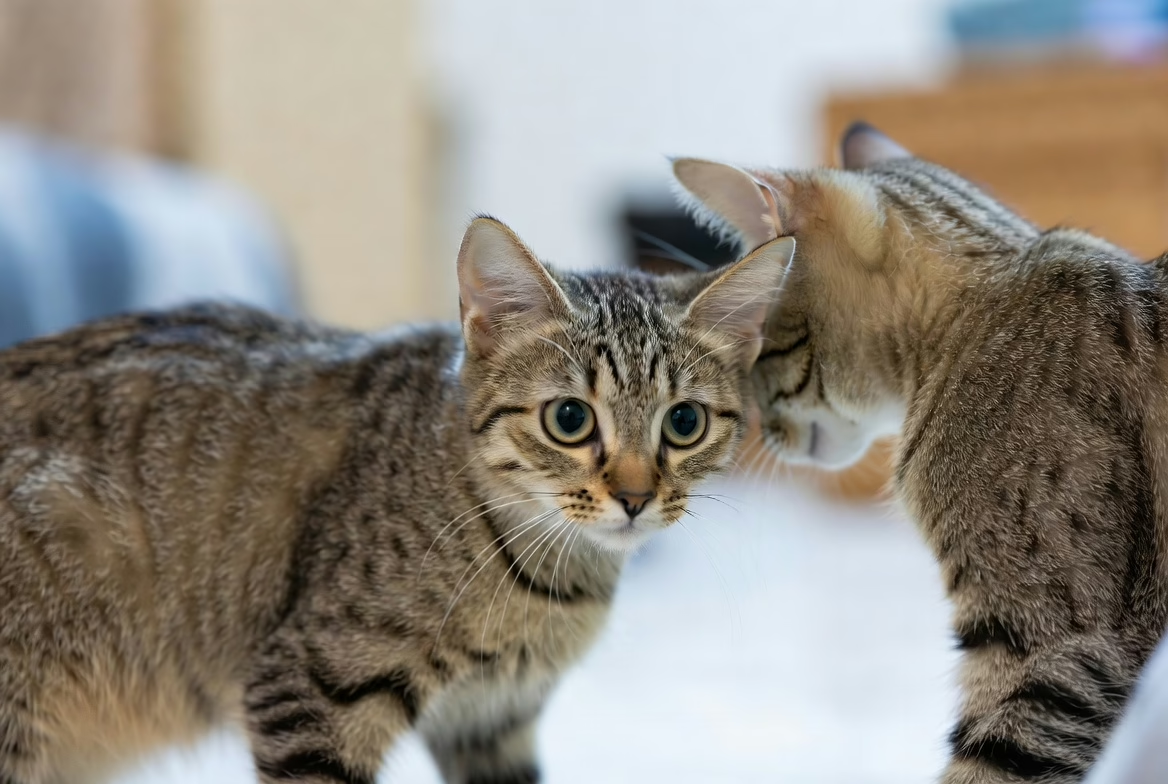
Failed cat introductions often result from rushing the process or misreading feline body language. These errors can create lasting negative associations that make future cat socialization nearly impossible.
Rushing the Timeline
The most frequent mistake is expecting cats to accept each other within days. Proper introductions take weeks or even months, depending on the cats’ personalities and past experiences. Pushing for face-to-face interaction before both cats are ready triggers defensive aggression and fear responses.
A proper introduction begins with complete separation. The new cat should have their own room with all necessary resources. Cats should smell each other under the door and hear each other before any visual contact occurs.
Skipping Scent Exchange
Cats rely heavily on scent for identification and comfort. Before visual introductions, swap bedding between cats so they become accustomed to each other’s smell. Rub a towel on one cat’s cheeks and let the other cat investigate it. Feed cats on opposite sides of a closed door so they associate each other’s scent with positive experiences.
Some people skip this step and immediately place cats in the same space, which overwhelms their sensory systems and triggers fight-or-flight responses.
Forcing Interaction
Holding cats near each other, placing them in carriers face-to-face, or preventing them from leaving an interaction causes trauma rather than bonding. Cats must always have the option to retreat. When escape is impossible, even non-aggressive cats may lash out defensively.
Positive cat interaction behavior develops when both cats choose to engage. Forced proximity teaches cats that the other cat’s presence predicts loss of control and safety.
Ignoring Warning Signs
Hissing, growling, prolonged staring, stalking, and blocking are all indicators that the introduction is progressing too quickly. These behaviors shouldn’t be dismissed as “they just need to work it out.” Without intervention, these tensions escalate into serious fights that injure cats and destroy any chance of future friendship.
Conversely, some people misinterpret normal play as aggression. Brief chases, wrestling without injury, and taking turns being the “chaser” are healthy play behaviors. The key difference is that playing cats have loose, bouncy body language and take breaks, while fighting cats have tense bodies and don’t disengage without intervention.
Inadequate Resources
The standard formula is one litter box per cat plus one extra, placed in different locations. Food and water bowls should be separated so cats don’t have to compete. Multiple scratching posts, beds, and perches prevent resource guarding.
Many people underestimate how much space and resources cats need to feel secure. Even cats who eventually become friends need the option to eat, eliminate, and rest separately.
When Cats Should Live Alone vs. With Other Cats
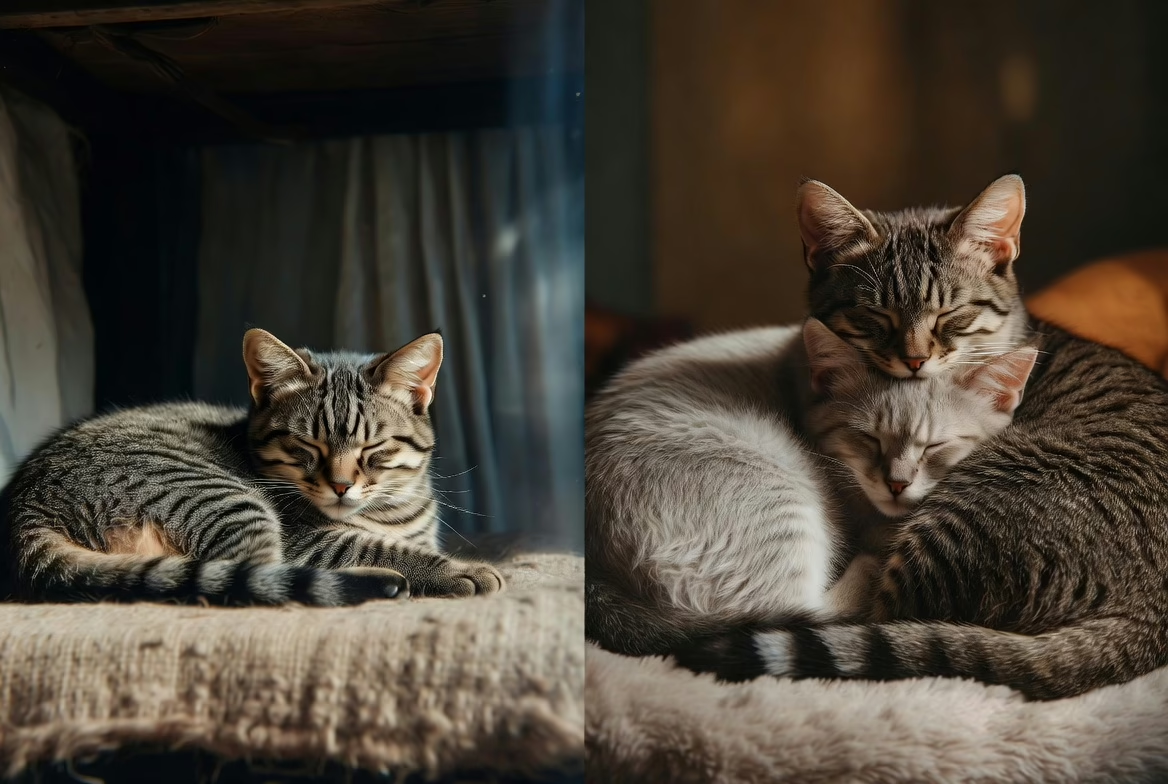
Determining whether your cat would thrive with a companion requires honest assessment of their personality, history, and your household environment.
Ideal Candidates for Solo Living
Cats who show consistent stress responses to other cats—even at a distance—are telling you they prefer being the only feline. Signs include hiding when they smell or hear another cat, aggressive displays toward cats seen through windows, and a history of not getting along with previous feline housemates.
Senior cats who have lived alone for years often struggle with the disruption a new cat brings. Their established routines provide comfort, and introducing another cat can trigger anxiety, decreased appetite, and health decline.
Cats with certain medical conditions, such as feline immunodeficiency virus (FIV) or chronic stress-related illnesses, may do better without the additional stressor of another cat. Your veterinarian can provide guidance based on your cat’s specific health needs.
Cats Who Benefit from Companions
Young, energetic cats often thrive with a similarly-aged playmate who can match their activity level. Two kittens adopted together typically bond quickly and provide each other with appropriate play outlets, reducing destructive behaviors and attention-seeking directed at humans.
Cats who previously lived with other cats and showed positive cat companionship behavior are good candidates for multi-cat homes. If your cat came from a shelter or rescue where they successfully shared space with other cats, they’ve demonstrated the ability to adapt.
Cats who show intense interest in other cats without fear or aggression—approaching calmly, showing relaxed body language, and attempting to initiate play through barriers—are communicating that they’d welcome feline companionship.
Age and Energy Matching
Pairing cats with similar energy levels increases the likelihood of successful integration. A kitten’s relentless play drive can stress an elderly cat, while a laid-back adult may not provide enough stimulation for an active young cat.
Consider adopting bonded pairs from shelters when possible. These cats have already established a relationship and will transition more smoothly into your home than two unfamiliar cats.
Socialization History Matters
Cats who had positive experiences with other cats during their critical socialization period are more likely to accept feline companions throughout their lives. Conversely, cats who were orphaned very young, hand-raised without feline contact, or had negative early experiences with other cats may never feel comfortable sharing their space.
Solitary vs. Social Cat Behaviors Comparison
| Behavior Category | Solitary-Preferring Cats | Social-Preferring Cats |
|---|---|---|
| Body Language Around Other Cats | Tense posture, flattened ears, dilated pupils, tail tucked or lashing | Relaxed posture, forward ears, slow blinks, tail up with curved tip |
| Response to New Cats | Hiding, hissing, growling, avoidance lasting weeks | Curiosity, sniffing through barriers, play signals within days |
| Resource Behavior | Guards food/litter areas, prefers exclusive access | Comfortable eating near others, shares spaces without tension |
| Play Style | Prefers solo play with toys, minimal interest in interactive play | Initiates chase games, wrestling, mutual grooming sessions |
| Sleeping Preferences | Always sleeps alone, often in hidden locations | Seeks out other cats for sleeping, comfortable with contact |
| Vocalization Patterns | Quiet around other cats or uses warning sounds | Chirps, trills, and friendly vocalizations toward other cats |
| Stress Indicators | Increases when other cats are present or nearby | Decreases with appropriate feline companionship |
| Environmental Needs | Thrives with exclusive territory, vertical escape routes | Benefits from shared spaces with multiple social areas |
We’ve learned that domestic cats exist on a social spectrum rather than being strictly solitary. While their wildcat ancestors were predominantly lone hunters, domestic cats have adapted to colonial living when resources permit. The key is recognizing that social tolerance varies tremendously between individuals. Some cats form deep bonds with feline companions, while others experience chronic stress from simply sharing a home with another cat. Neither preference is wrong—they’re just different, and our job is to respect each cat’s individual social needs rather than imposing our expectations of what we think they should want.
Dr. Sarah Ellis
This perspective shifts the focus from whether cats “should” live with other cats to whether a particular cat would benefit from feline companionship based on their unique personality and history.
FAQs
Yes, cats can develop genuine friendships characterized by mutual grooming, sleeping in contact, greeting each other with tail-up postures, and showing distress when separated. These bonds typically form between cats introduced at young ages or those with compatible personalities. However, not all cats living together become friends—some simply tolerate each other or maintain separate territories within the home. True feline friendships involve voluntary proximity and affiliative behaviors, not just absence of fighting.
The timeline varies from two weeks to six months or longer, depending on the cats’ ages, personalities, and introduction method. Kittens typically adjust within two to four weeks, while adult cats need at least four to eight weeks of gradual introduction. Cats with traumatic histories or strong territorial instincts may require several months. Some cats never fully accept each other and instead develop a tolerance where they avoid interaction but don’t fight. Rushing this process almost always backfires, while patience and proper protocol increase success rates significantly.
Not necessarily. Many indoor cats thrive as solo pets when their humans provide adequate enrichment, play sessions, and interaction. The determining factor is the individual cat’s personality and socialization history, not their indoor status. However, indoor cats who spend long hours alone while owners work may benefit from a compatible feline companion to prevent boredom and loneliness. Assess your specific cat’s behavior—if they show signs of understimulation or excessive attention-seeking, a companion might help, but if they seem content, adding another cat could create unnecessary stress.
This common sequence usually results from overstimulation or social tension masked by the grooming ritual. Allogrooming can be a genuine bonding behavior, but it also sometimes serves as a dominance display where the higher-status cat grooms the other. The groomed cat may tolerate this until they’ve had enough, then swat to end the interaction. Additionally, grooming can escalate into play fighting, which looks aggressive but involves taking turns and no real injury. Watch for body language changes—if ears flatten, tails start lashing, or vocalizations become harsh, the interaction has shifted from positive to negative.
Happiness depends entirely on the individual cat’s social preferences, not on an arbitrary rule. Some cats experience reduced stress, more appropriate play outlets, and greater overall wellbeing with a compatible feline companion. Others find the presence of another cat chronically stressful, even without overt conflict. Signs of a happy cat include healthy appetite, normal grooming habits, playfulness, and relaxed body language. If these indicators remain positive or improve with a companion, the cat benefits from multi-cat living. If they decline, the cat would be happier alone.
Cat social behavior reflects a complex spectrum that defies simple categorization. While cats retain many solitary hunting instincts from their wildcat ancestors, they’ve also demonstrated remarkable flexibility in forming social bonds when conditions support it. The question isn’t whether cats are social or solitary creatures—it’s recognizing that each cat has individual preferences shaped by genetics, early experiences, and personality.
Successfully managing single-cat or multi-cat households requires careful observation of communication signals, honest assessment of your cat’s social needs, and willingness to provide appropriate environments for their preferences. Some cats genuinely need feline companionship to thrive, while others experience their best quality of life as the sole cat in the household. Neither scenario is superior—what matters is matching your cat’s living situation to their individual temperament.
When introducing cats, patience and proper protocol make the difference between lasting friendships and permanent animosity. Rushing interactions, forcing proximity, or ignoring warning signs creates trauma that can be difficult or impossible to overcome. Conversely, gradual introductions with adequate resources and escape options allow cats to build positive associations and develop relationships at their own pace.
Understanding feline social habits empowers you to make informed decisions about whether to add another cat to your household, how to manage existing multi-cat dynamics, and when to accept that your cat simply prefers being the only feline in their domain. By respecting your cat’s individual social needs rather than imposing expectations based on generalizations, you create an environment where they can express their natural behaviors and live their most fulfilled lives.