
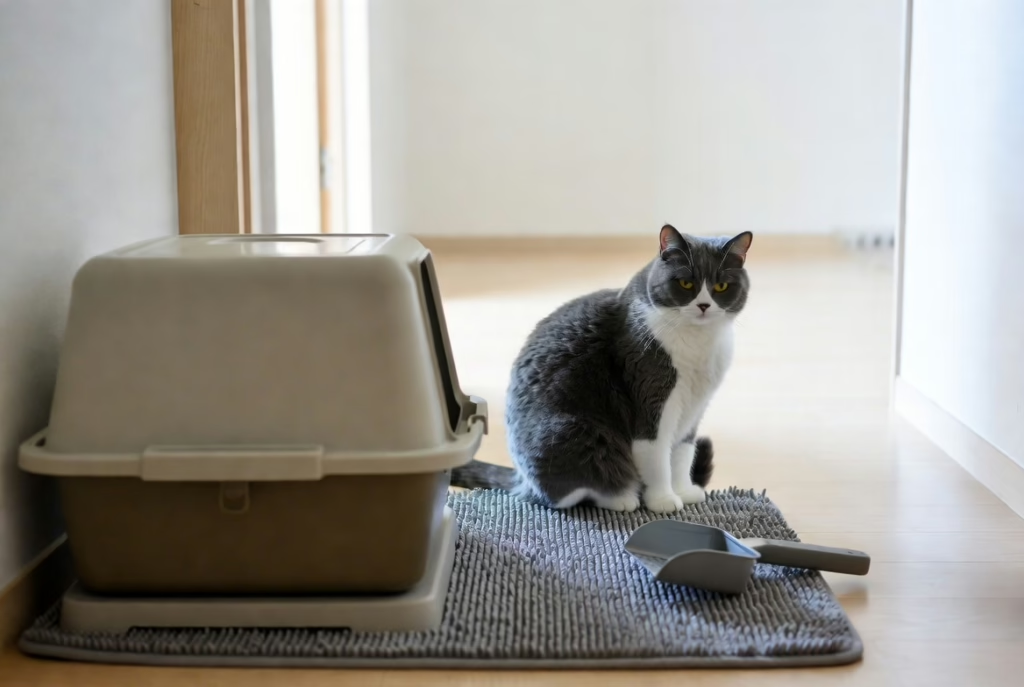
- Daily vs. Deep Cleaning: Understanding the Two-Part Routine
- Recommended Litter Box Cleaning Frequency by Household
- Signs Your Litter Box Needs Cleaning Sooner
- Step-by-Step Litter Box Maintenance Guide
- Common Litter Box Cleaning Mistakes Cat Owners Make
- How Cleaning Frequency Affects Your Cat’s Health and Behavior
Your cat’s litter box probably needs attention more often than you think. Here’s what surprises most new cat owners: that pristine bathroom you set up last week? Your cat started judging its cleanliness about 12 hours after first use.
Cats evolved as both predators and prey animals. In the wild, they instinctively bury waste to hide their scent from larger predators. This hardwired behavior means domestic cats remain incredibly particular about bathroom cleanliness—far more than dogs or most other pets. When we neglect their litter box, we’re not just dealing with unpleasant odors. We’re triggering genuine stress responses and creating conditions for urinary problems that land thousands of cats in emergency vet clinics each year.
Several factors determine your ideal cleaning schedule: household size, litter product choice, box placement, and your cat’s personality. Some cats will tolerate a less-than-perfect box for a day or two. Others will immediately seek alternative bathroom spots (usually your bed or favorite chair) after a single missed scoop. Let’s break down exactly what your situation requires.
Daily vs. Deep Cleaning: Understanding the Two-Part Routine
Your litter box maintenance actually involves two separate tasks that work together.
The daily scoop takes about three to five minutes. You’re fishing out solid waste and any clumped urine sections, tossing them in your designated waste bin, then smoothing the remaining clean litter. Do this once minimum, twice if possible. Morning works great—you’re clearing overnight accumulation before heading to work. Evening’s equally good since cats tend to be most active around dawn and dusk anyway.
Why daily? Bacteria multiply fast in organic waste. What seems like “just one more clump” to you translates to overwhelming ammonia levels for your cat’s sensitive nose. Cats have roughly 200 million odor sensors compared to our 5 million. Imagine being forced to use a public restroom that hasn’t been cleaned in three days—that’s what you’re asking your cat to tolerate when you skip scooping.
Complete litter changes happen less frequently but matter just as much. Every couple weeks (timing varies—we’ll get specific shortly), you’ll empty everything, scrub the actual box, let it dry, and start fresh. This tackles what daily scooping misses: urine that seeps beneath clumps, bacteria embedding in scratches on the plastic, dust particles that create that persistent “litter box smell” even in clean boxes.
Here’s where people mess up: they assume frequent scooping eliminates the need for complete changes. Not true. Or they do thorough monthly deep cleans but rarely scoop between them. Also wrong. You need both practices. One prevents daily disaster; the other prevents long-term bacterial buildup and odor absorption into the box itself.
Set a phone reminder for deep cleaning days. Otherwise, three weeks becomes four, then five, and suddenly you’re wondering why your previously reliable cat just urinated on your couch.
Recommended Litter Box Cleaning Frequency by Household
Here’s where it gets specific. Your friend’s schedule won’t necessarily work for you.
| Living Situation | Scoop Schedule | Total Litter Replacement | Recommended Box Count |
|---|---|---|---|
| Single cat, clumping clay | Twice daily | Every 18-21 days | 2 minimum |
| Single cat, crystal/silica | Once daily | Every 25-30 days | 2 minimum |
| Single cat, plant-based | Twice daily | Every 7-14 days | 2 minimum |
| Two or three cats, clumping clay | 2-3 times daily | Every 10-14 days | 3-4 total |
| Two or three cats, crystal/silica | Twice daily | Every 14-21 days | 3-4 total |
| Two or three cats, plant-based | 2-3 times daily | Every 5-7 days | 3-4 total |
| Four or more cats, clumping clay | 3+ times daily | Every 5-7 days | 5+ (one per cat plus extra) |
| Four or more cats, crystal/silica | 2-3 times daily | Every 7-14 days | 5+ (one per cat plus extra) |
| Four or more cats, plant-based | 3+ times daily | Twice per week | 5+ (one per cat plus extra) |
Clumping clay remains the most popular choice for good reason. When urine hits it, surrounding granules form solid masses you can remove cleanly. What’s left behind stays genuinely fresh longer than other options. Expect to replace everything roughly every three weeks with one cat, assuming you’re scooping faithfully.
Crystal litters (made from silica gel) absorb moisture differently. The individual crystals pull liquid inside themselves, which is why they can last a month or longer before needing replacement. The catch? They don’t clump around solid waste as effectively. Some cats also dislike how crystals feel on their paws—too hard or sharp compared to clay’s sandy texture.
Natural litters—made from corn, wheat, walnut shells, recycled paper, or pine—appeal to environmentally conscious owners. They’re biodegradable, often flushable, and control odor through plant enzymes rather than chemicals. The downside shows up in your schedule: most break down faster than clay, especially in humid climates. Budget extra time for more frequent complete changes.
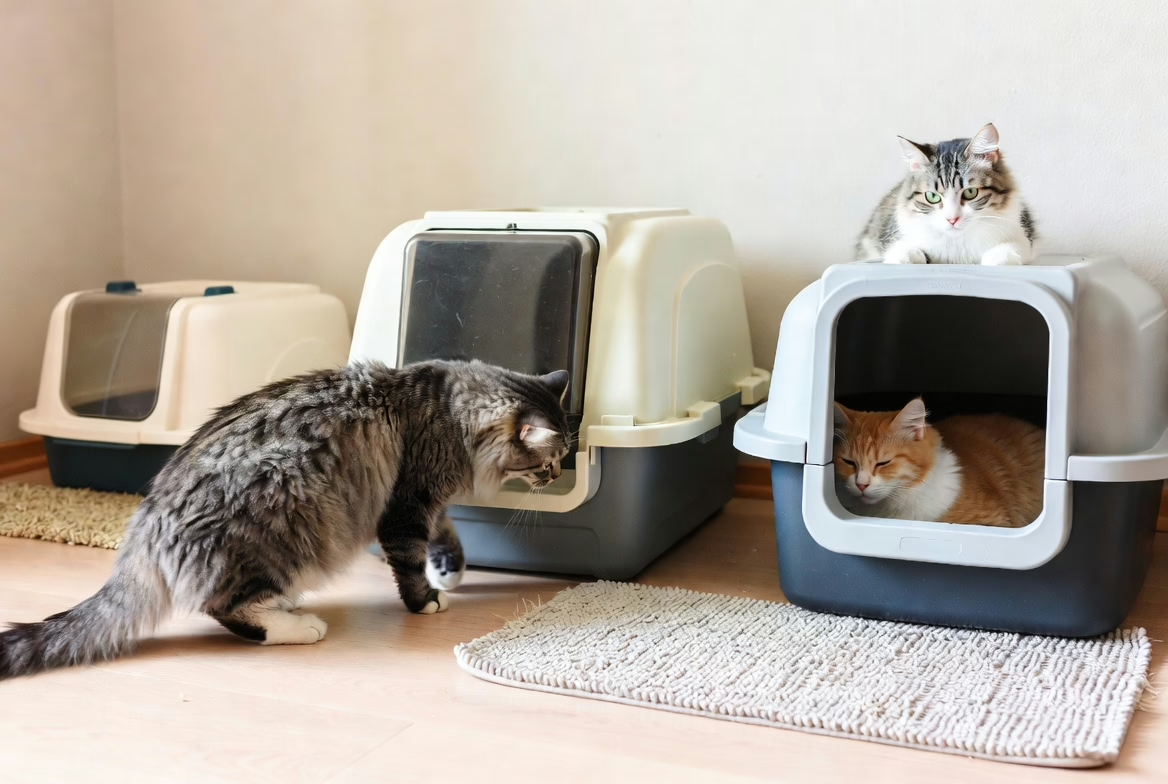
That “one box per cat plus one extra” rule confuses people, so let’s clarify. Three cats need four boxes minimum. Why the extra? Territorial behavior and timing. If two of your three cats both use the same box before your evening scoop, your third cat arrives to find two deposits waiting. Many cats will refuse to use a box containing another cat’s fresh waste. That extra box provides backup so everyone always has an acceptable option available.
Signs Your Litter Box Needs Cleaning Sooner
Sometimes life gets chaotic and you miss your normal schedule. Your cat will tell you when things have gone too long.
Visual waste left uncovered is your first clue. Cats instinctively bury their eliminations. When they stop bothering—leaving feces exposed on the surface—they’re essentially giving up. The box has exceeded their tolerance threshold. Clean it immediately, then evaluate whether your regular schedule needs adjusting.
Smell provides another obvious signal, though one many owners ignore. A faint earthy scent when you’re standing directly beside the box? Normal. But if you can detect ammonia from your doorway—or worse, from other rooms—you’ve got a serious problem. That’s not just unpleasant; it’s a genuine respiratory irritant for both you and your cat.
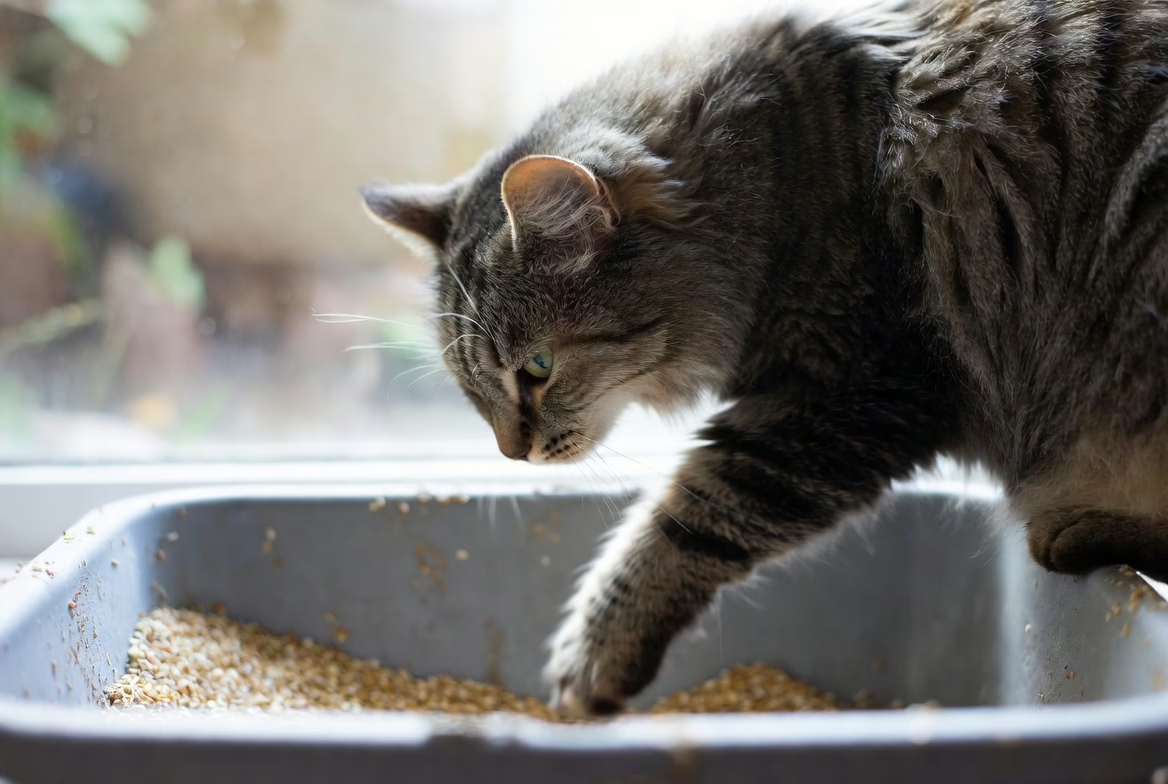
Elimination posture changes reveal discomfort. Watch your cat use the box sometime. Normally, they should enter confidently, dig a small depression, eliminate in it, cover thoroughly, then exit. Red flags include: balancing on the box rim without stepping inside fully, entering and exiting multiple times before finally going, skipping the covering process, or spending excessive time digging before they’ll commit to squatting.
Accidents outside the box represent the nuclear option in your cat’s communication arsenal. They’re not being spiteful or “getting back at you.” They’re either telling you the box conditions are intolerable, or they’re dealing with a medical issue (urinary tract infection, crystals, kidney problems). Before assuming behavioral problems, clean the box thoroughly and increase your scooping frequency. If accidents continue after three days of pristine litter box conditions, schedule a vet visit.
Litter tracking throughout your home—granules spread far beyond the immediate box area, stuck to your cat’s paws, or caught in their fur—often indicates the litter itself has become contaminated. Fresh litter shouldn’t create excessive mess on your cat’s body. When waste saturates the box, even “clean” litter gets coated with urine residue that sticks to paws.
Step-by-Step Litter Box Maintenance Guide
Let’s make this practical with specific actions.
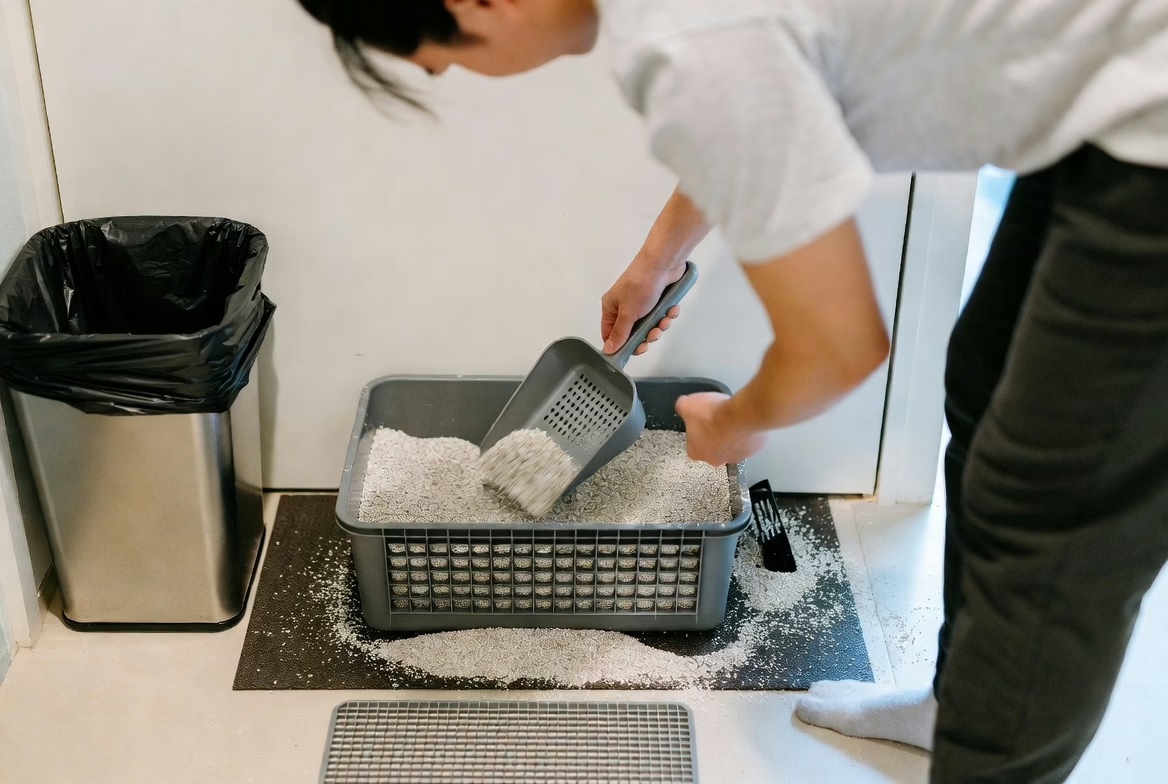
Your daily scooping routine: Keep a dedicated scoop (metal lasts longer than plastic) within arm’s reach of each box. Once in the morning, once at night—build it into existing habits like making coffee or brushing your teeth. Dig through all the litter, not just the top layer. Cats often cover waste with 2-3 inches of litter. Remove every clump and solid piece into a lined waste bin with a tight lid. Add fresh litter to maintain 3-4 inches of total depth. That’s it. Three minutes, max.
Weekly maintenance: Give the litter a complete stir once per week—this redistributes newer litter from the top and brings any missed clumps to the surface. Wipe the box rim where cats place their paws with a damp cloth. Sweep or vacuum around the box area. If you use a litter mat, shake it outside or vacuum it. Check the box itself for damage: cracks, deep scratches, or warping. Bacteria colonizes these damaged areas where cleaning can’t reach them. A scratched-up box needs replacing regardless of age.
Monthly deep clean process: Pick a warm, dry day if possible—the box needs to air-dry completely. Dump all used litter into a heavy-duty trash bag. Take the empty box outside or to a bathtub. Scrub every surface with hot water and your chosen cleaning solution (more on this next). Get into corners, under any hood, around textured bottom surfaces. Rinse until water runs completely clear—three times minimum. Residual cleaner will repel your cat better than a dirty box would. Dry with paper towels, then leave it in direct sunlight or a well-ventilated area for an hour. UV light naturally kills bacteria. Refill only when 100% dry.
What to Use When Cleaning the Box
Skip anything labeled “fresh scent,” “spring meadow,” or similar fragrance marketing. Your nose appreciates it. Your cat’s nose finds it overwhelming—imagine being forced to use a bathroom where someone just sprayed an entire can of air freshener.
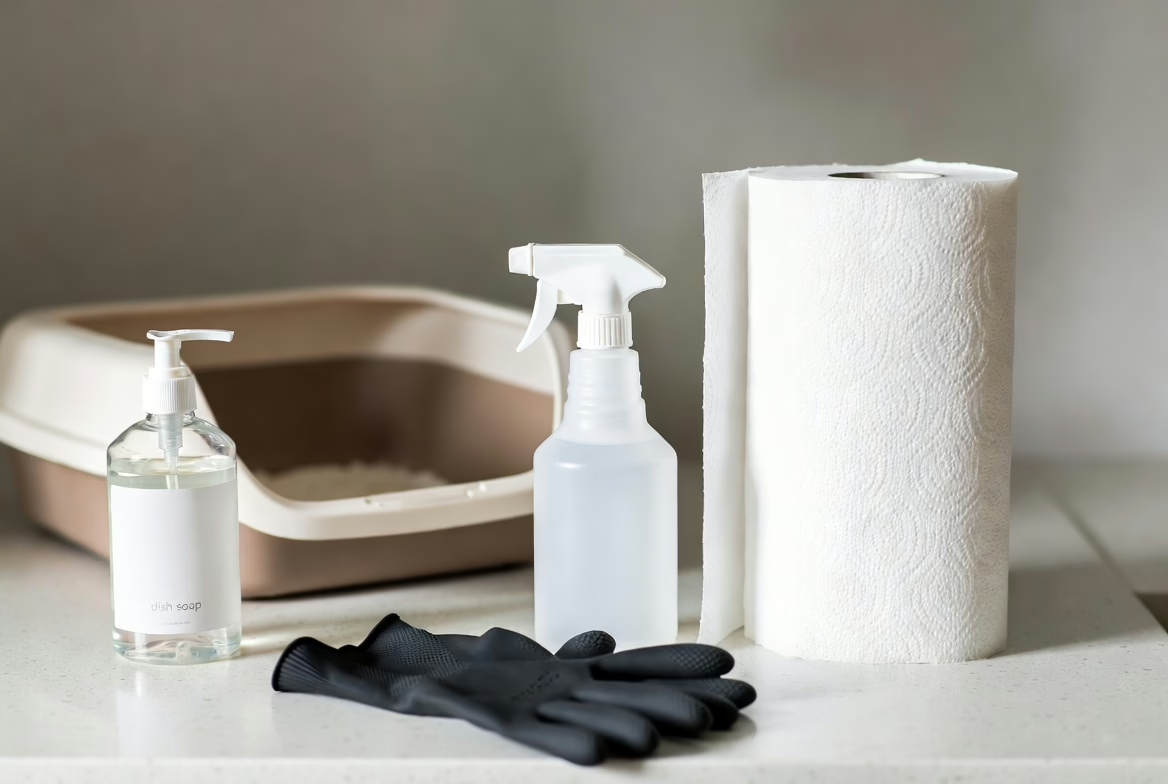
Plain unscented dish soap (the kind you’d use on baby bottles) works perfectly for routine washing. It cuts through organic residue, rinses clean easily, and costs almost nothing. Mix a few drops with hot water and scrub thoroughly.
Enzyme cleaners designed specifically for pet waste offer superior odor elimination. They contain beneficial bacteria that literally eat organic compounds, destroying odor molecules rather than just masking them. Nature’s Miracle and Rocco & Roxie are popular brands. These cost more than soap but genuinely neutralize urine smell that’s absorbed into plastic over time.
White vinegar diluted 1:1 with water provides natural disinfection and odor control. Let it sit for 5-10 minutes before rinsing. Some cats dislike the vinegar smell initially, but it dissipates completely once dry—unlike chemical cleaners that leave persistent residue.
Diluted bleach (1/2 cup per gallon of water) disinfects effectively but requires careful handling. Scrub with the bleach solution, then rinse obsessively—at least five times. Even trace amounts of bleach can irritate your cat’s paws and respiratory system. Never mix bleach with vinegar or ammonia-based products; you’ll create toxic chlorine gas.
Avoid ammonia-based cleaners entirely. Since urine contains ammonia, these products may encourage cats to urinate in the box more or—paradoxically—reject the box completely because the chemical smell mimics waste territory markers. Either way, it backfires.
How to Dispose of Used Litter Safely
Most cities require cat waste in regular garbage, not yard waste or compost bins. Double-bag used litter, especially during summer months when heat intensifies odors.
Some biodegradable litters claim compost compatibility. Maybe so—but never use that compost on vegetable gardens or anywhere edible plants grow. Cat feces can harbor Toxoplasma gondii, a parasite that survives standard composting temperatures and causes serious illness in humans, particularly pregnant women and immunocompromised individuals.
“Flushable” litters sound convenient but check local wastewater regulations first. Many treatment plants discourage or prohibit flushing any litter—it doesn’t break down as advertised and can contribute to system problems. If you do flush, go slowly: small amounts only, never flush clumping clay (it forms concrete-like masses in pipes), and expect occasional plumbing issues.
For daily waste, position a small, lidded trash can near each litter box. Those diaper pails with foot pedals work great—hands-free opening, odor-sealing lids. Empty this every 2-3 days into your main garbage.
Common Litter Box Cleaning Mistakes Cat Owners Make
Even experienced cat owners repeat these errors.
Adding baking soda or deodorizing powders seems logical—control odor at the source, right? Wrong. What masks smell for humans often irritates cats. Baking soda becomes airborne when cats dig, leading them to inhale it with every use. Many cats will reject boxes with additives. If your box smells bad, you need to scoop more often or do a complete change, not cover up the problem with chemicals.
Waiting until it’s convenient to scoop destroys the whole routine. “I’ll do it when I get home from work” becomes “after dinner” becomes “before bed” becomes “tomorrow morning.” Suddenly you’re 36 hours between scoops and wondering why your cat urinated on your bathmat. Schedule specific times—7am and 7pm, for example—and treat them as non-negotiable as feeding time.
Overfilling the box wastes money and creates mess. More than four inches of depth means cats fling litter everywhere while digging. Underfilling (less than two inches) prevents proper covering and feels unstable underfoot. Stick to 3-4 inches. Measure it once with a ruler so you know what that looks like, then eyeball it going forward.
Box placement affects cleaning success more than people realize. Boxes hidden in cold basements or closets get neglected because they’re out of sight. Boxes in high-traffic areas make cats feel exposed and vulnerable while eliminating. The sweet spot: quiet but accessible areas you pass regularly—like a corner of the laundry room, a spare bathroom, or a low-traffic hallway.
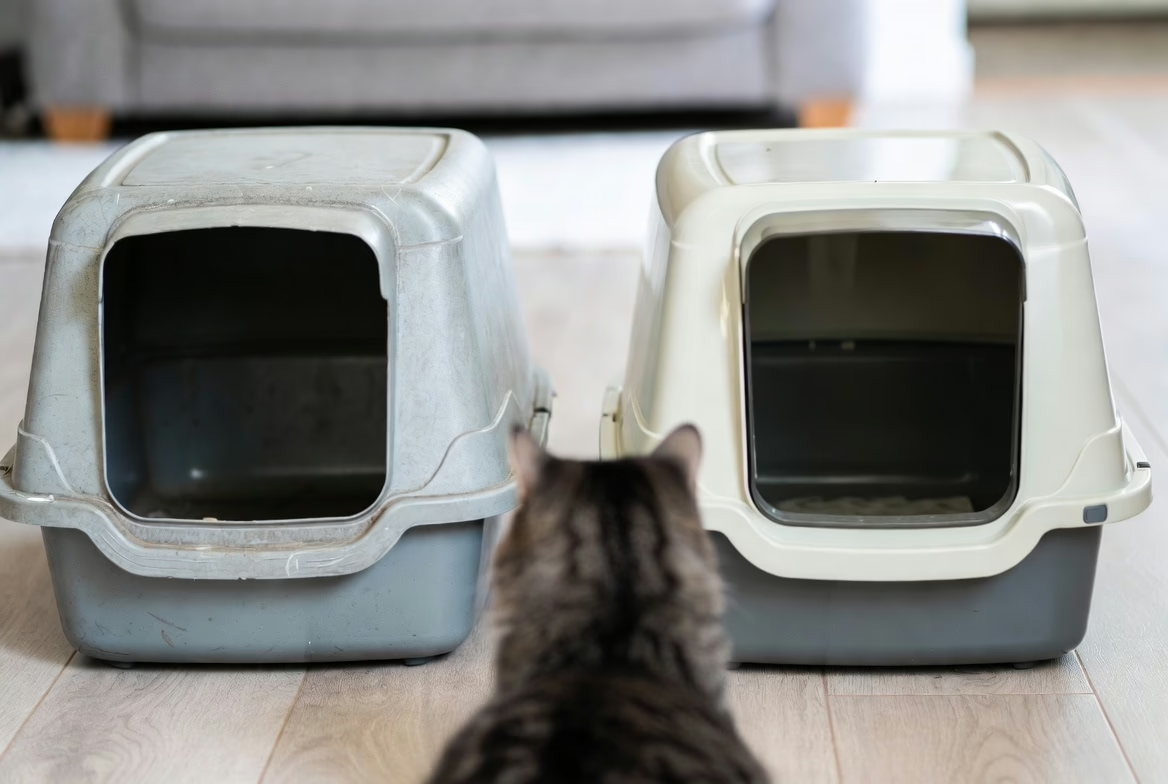
Never replacing the actual box causes persistent odor even with perfect cleaning habits. Plastic scratches easily (from cat claws and litter scoops), creating microscopic grooves where bacteria thrive beyond any cleaner’s reach. Odor molecules absorb into plastic over time. Replace boxes annually—sooner if you notice permanent discoloration or smell that doesn’t wash away.
Sudden litter brand switches confuse cats and disrupt their bathroom routine. Want to try a new litter? Transition gradually: 75% old/25% new for several days, then 50/50, then 25/75, finally 100% new. This gives your cat time to adjust to different texture, scent, and clumping behavior.
How Cleaning Frequency Affects Your Cat’s Health and Behavior
Poor litter box hygiene creates real medical emergencies, not just behavior annoyances.
Urinary tract infections develop when cats “hold it” to avoid using a dirty box. Bacteria multiply in stagnant urine sitting in the bladder. Female cats get painful infections requiring antibiotics. Male cats face life-threatening blockages—their narrower urethras become obstructed by crystals or inflammation, completely preventing urination. Without emergency treatment within 48-72 hours, this kills the cat through kidney failure and toxin buildup.
Feline lower urinary tract disease (FLUTD) has multiple causes, but stress is a major contributing factor. Dirty litter boxes create chronic stress. Stressed cats develop bladder inflammation, crystal formation, and painful urination. They associate the box with pain, then avoid it, creating a vicious cycle. Treatment costs $500-2,000. Prevention costs nothing but time.
Behavioral problems originating from litter box dissatisfaction can become permanent. Once a cat successfully eliminates on your carpet and finds it “works” (soft, absorbent, no uncomfortable confrontation with dirty litter), they may continue even after you’ve fixed the box situation. Retraining requires weeks or months of consistent effort—moving the box to the problem area, using enzymatic cleaners on affected spots, potentially anti-anxiety medication.
Respiratory irritation from ammonia affects both cats and humans sharing a home with neglected litter boxes. Cats with asthma or chronic bronchitis experience symptom flares. Even healthy cats develop airway inflammation from prolonged exposure to high ammonia concentrations. You might notice increased sneezing, coughing, or nasal discharge.
Stress manifests in unexpected ways beyond bathroom behavior. Cats dealing with litter box anxiety may overgroom (creating bald patches), become aggressive toward household members (human or animal), hide more than usual, vocalize excessively, or lose their appetite. These seem unrelated to the bathroom, but resolving litter box stress often resolves the other behaviors simultaneously.
At least 60% of the litter box avoidance cases I diagnose trace back to inadequate cleaning by owners. The cat isn’t being difficult or spiteful. They’re responding exactly as their instincts dictate—refusing to use a toilet they find unsanitary. When clients commit to scooping twice daily without exception, the inappropriate elimination stops within days, no medication needed.
Dr. Sarah Mitchell, a veterinarian specializing in feline medicine
Prevention beats treatment every time. Those 10 minutes of daily maintenance prevent thousands in vet bills, protect your carpets and furniture, and keep your cat comfortable and stress-free.
FAQs
Yes, significantly more. The math isn’t linear—three cats don’t require three times the work; they require four or five times the effort. You need more boxes (remember the plus-one rule), more frequent scooping since boxes fill faster, and more frequent complete changes since waste accumulates in layers the scooper misses. Some multi-cat households scoop three times daily: morning, afternoon, and evening. Sounds excessive until you realize it prevents finding cat urine on your bed.
Watch your cat’s body language around the box. Confident entry, brief digging, elimination, thorough covering, calm exit—that’s a satisfied cat. Warning signs include: excessive digging before committing, hesitation at the box entrance, uncovered waste, rushing through elimination, perching on the rim instead of stepping fully inside, or vocalizing near the box. If you spot any of these behaviors, increase scooping frequency by one session daily for a week. If the behaviors stop, you have your answer—your previous schedule was inadequate.
Pregnant women should delegate all litter box duties to other household members. Toxoplasma gondii—a parasite in cat feces—causes toxoplasmosis, which can result in miscarriage, stillbirth, or serious birth defects if contracted during pregnancy. If you absolutely must handle it yourself (single household, no alternatives), wear disposable gloves that go straight in the trash, use a mask to prevent inhaling particles, wash hands thoroughly with soap for 30+ seconds afterward, and scoop daily (the parasite needs 1-5 days to become infectious after being shed). Better option: invest in an automatic litter box for the duration of your pregnancy, or hire a pet care service for this specific task.
Getting litter box maintenance right makes everything else about cat ownership easier. Those few minutes of daily attention prevent behavioral problems, protect your cat’s health, and keep your home smelling neutral instead of like a veterinary clinic waiting room.
Your specific routine depends on your household variables, but the fundamentals stay constant: scoop daily minimum (twice is better), replace all litter every 1-3 weeks depending on type and household size, deep clean boxes monthly, and replace the boxes themselves annually. Follow these guidelines and you’ll avoid 90% of litter box-related problems.
Most importantly, view this maintenance through your cat’s perspective. They didn’t choose litter boxes—we forced this indoor bathroom system on them as a condition of living in our homes. The least we can do is maintain those bathrooms at a standard we’d accept for ourselves. Your cat can’t clean their own toilet, but they’ll definitely show you—through their behavior, health, and affection—how much they appreciate you doing it properly.