
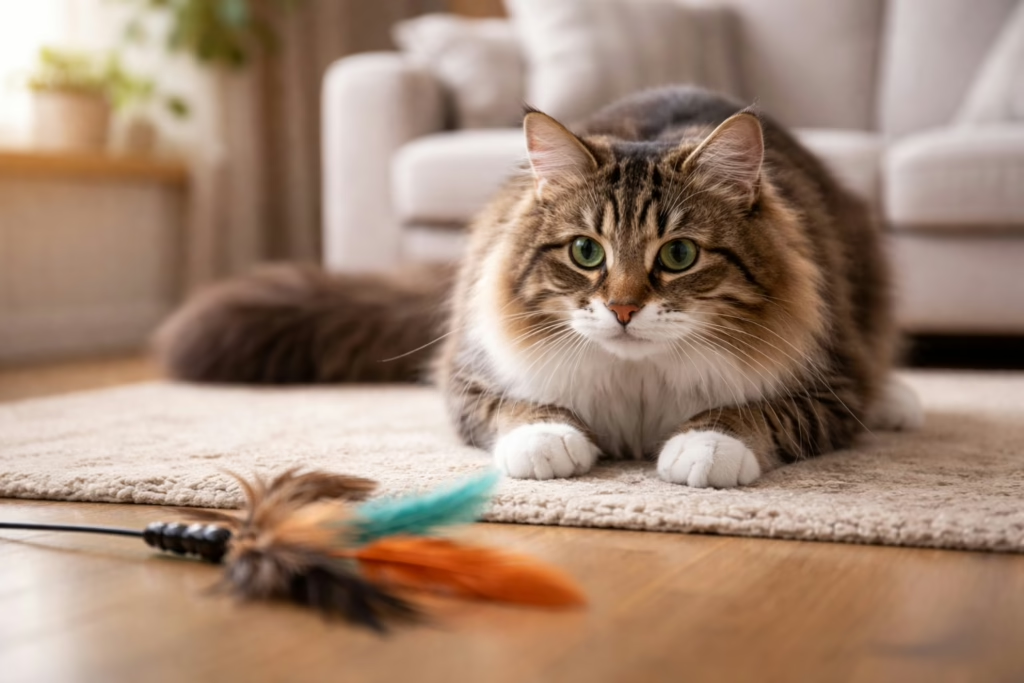
More than 46 million American homes have at least one cat living there right now. You’d think something so common would be well understood, but ask most owners to explain what actually makes a cat a cat—beyond the obvious whiskers and meowing—and you’ll get surprisingly vague answers.
Here’s the scientific version: Felis catus is a small meat-eating mammal that started living alongside humans roughly 10,000 years back. But domestication didn’t erase their wild programming. Your tabby hunting a toy mouse at 3 AM? That’s pure ancestral instinct playing out on your bedroom floor.
Getting a handle on what cats really are—not just what we’d like them to be—changes everything about living with them. When you know why your cat scratches furniture (territorial marking, not spite) or sleeps 14 hours daily (energy conservation between hunts), you stop fighting their nature and start working with it. Better care, fewer frustrations, stronger bonds.
Biological Classification and Species Overview
Every cat belongs to the Felidae family. This group spans an incredible size range—from rusty-spotted cats barely tipping three pounds all the way up to 500-pound tigers. The domestic variety, Felis catus, shares this biological family with about 41 wild relatives: bobcats, lynxes, ocelots, and others you wouldn’t want sleeping on your bed.
Felidae sits within the order Carnivora. That name sounds definitive, but it actually describes evolutionary ancestry more than current diet. Pandas are Carnivora members despite eating bamboo all day. The classification tells you where an animal came from, not necessarily what’s in its food bowl.
Small cats in the Felis genus share one defining trait: they can’t roar. Their hyoid bone fully ossified during evolution, which prevents the deep vocalizations that lions and tigers produce. This genus includes the African wildcat (Felis lybica)—almost certainly the direct ancestor of house cats—plus sand cats and jungle cats.
DNA analysis pinpoints when domestic cats split from African wildcats: approximately 10,000 years back in the Fertile Crescent. Early farmers stored grain. Grain attracted mice and rats. Wildcats showed up for the buffet. The friendliest wildcats tolerated human proximity and got first dibs on the rodents. Natural selection took it from there.
Compare this to dog domestication and you’ll notice stark differences. Humans actively bred dogs for thousands of years, creating everything from chihuahuas to Great Danes. Cats basically domesticated themselves and stayed physically similar until about 1870, when Victorian-era cat fancy began. The Cat Fanciers’ Association now recognizes 45 pedigreed breeds, but these represent under 10% of pet cats. Most are still mixed-breed animals displaying that time-tested wild body plan: flexible spine, retractable claws, specialized meat-shearing teeth, senses tuned for hunting.
Every house cat gets labeled Felis catus regardless of whether it’s a pampered Persian or an alley moggie. You might see Felis domesticus in older texts, but scientists settled on catus decades ago. This classification separates house cats from wild cousins while acknowledging minimal genetic separation—domestic cats and African wildcats can mate and produce fertile offspring, proving how recently they diverged.
Physical Characteristics of Domestic Cats
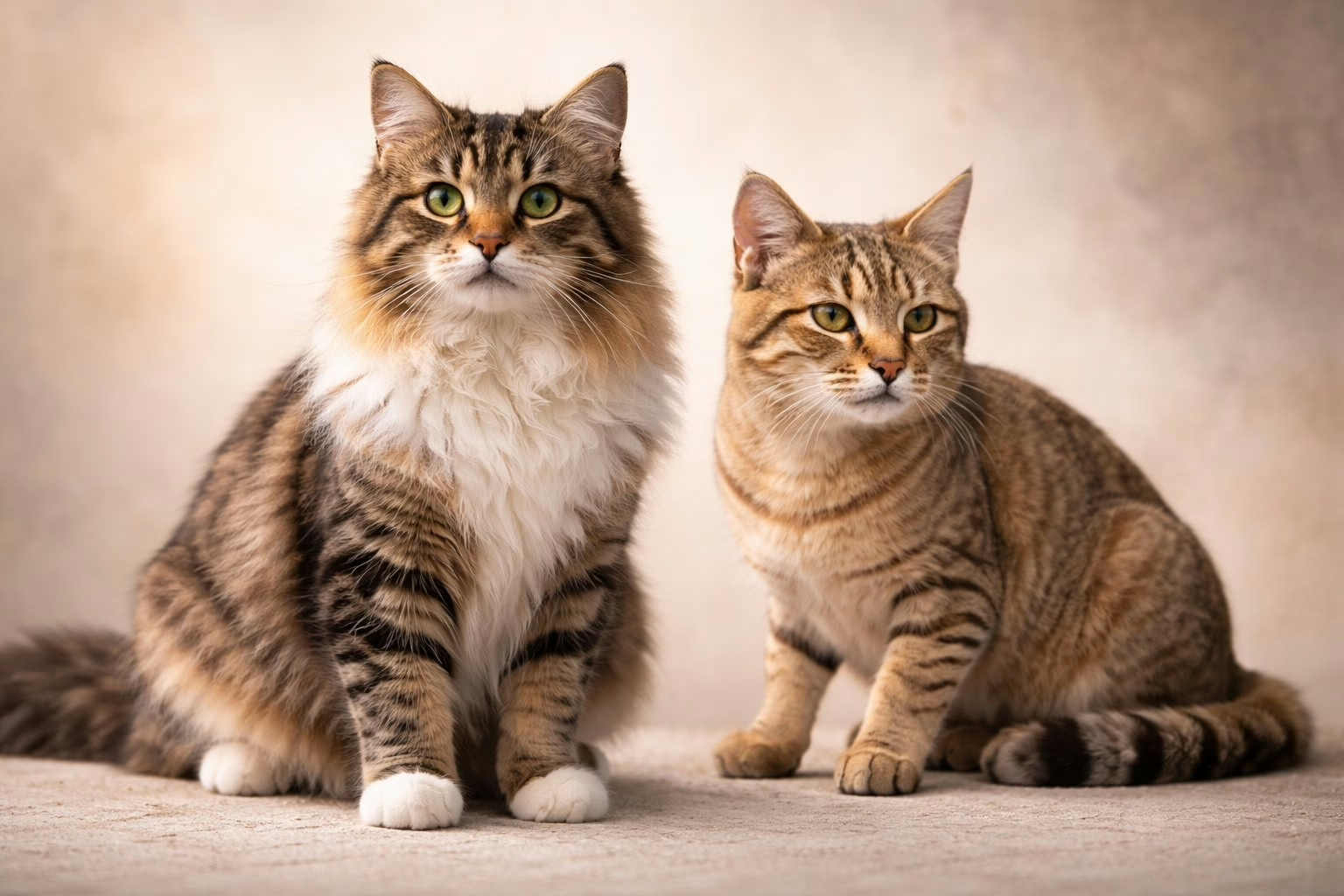
Most pet cats weigh somewhere between 8 and 11 pounds. Breed extremes stretch from 5-pound Singapuras up to 25-pound Maine Coons. Body length typically runs 18 to 20 inches minus the tail, which tacks on another 11 or 12 inches. This compact build evolved under pressure favoring animals that could squeeze into tight spaces while chasing prey into burrows.
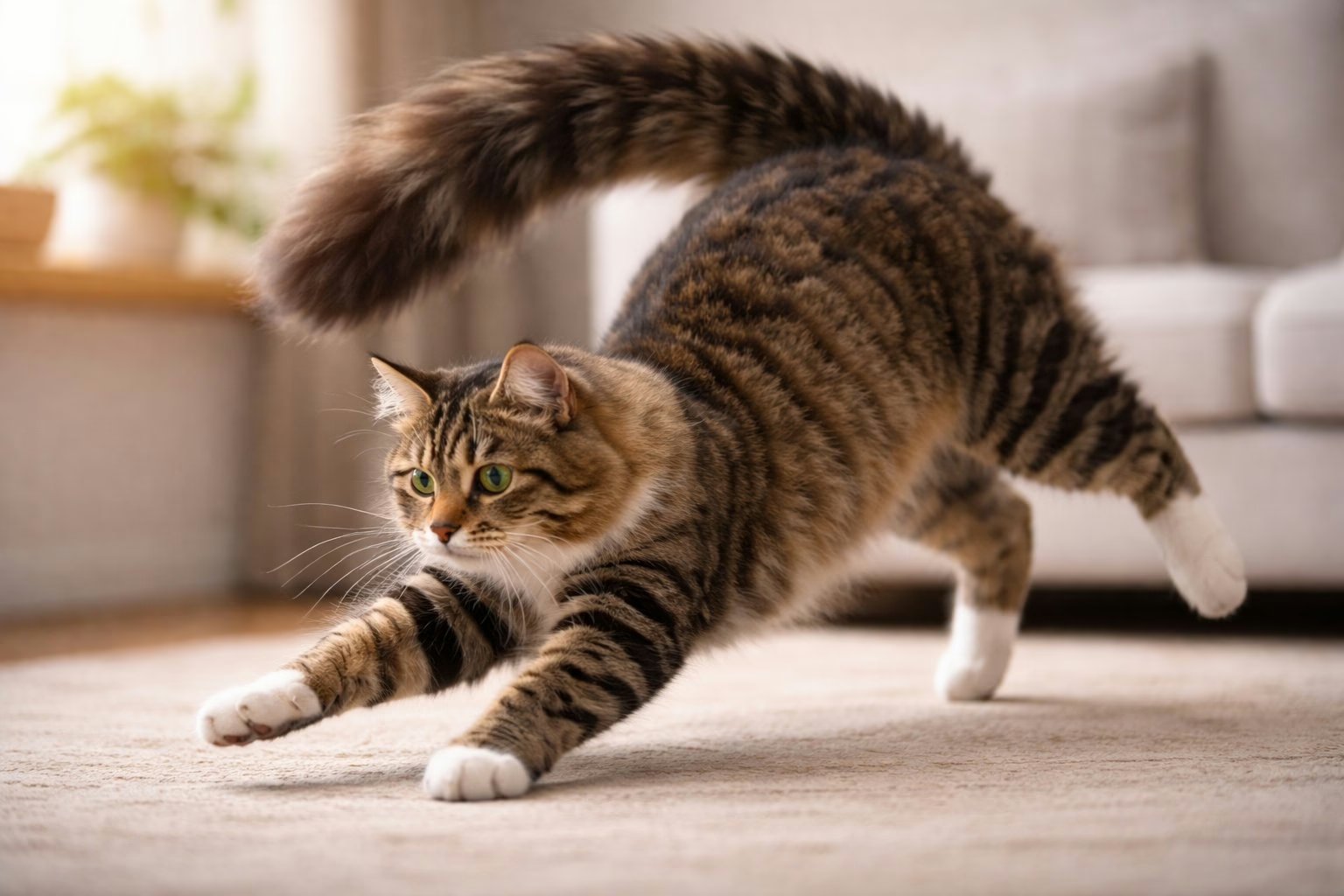
Cats pack about 244 bones into their skeletons—40 more than humans carry. Where’d the extras go? Mostly into the tail and spine. This vertebral flexibility lets cats perform that mid-air twist during falls, squeeze through impossibly narrow gaps, and arch their backs into that Halloween-cat shape when threatened. Their collarbone barely exists as a functional bone. It floats free, letting the shoulder blades move independently so cats can narrow their chest profile when threading through fence slats.
Those retractable claws represent peak feline engineering. Elastic ligaments keep claws tucked away during normal walking, preventing ground contact that would dull the points. When your cat decides to hunt (or destroy your couch), digital flexor muscles contract and extend those claws. Dogs and most other carnivores can’t do this—their claws stay out constantly, wearing down like your fingernails would if you walked on your hands.
Cats see remarkably well in dim light—they need only one-sixth the illumination humans require. Credit the tapetum lucidum, a reflective layer behind the retina that bounces light back through the photoreceptors for a second pass. That’s also what makes their eyes glow in camera flashes. Trade-off: they see fewer colors, lacking the red cone photoreceptors that give us full-spectrum vision. Their visual sweet spot sits at 2 to 6 meters—perfect pouncing distance.
Their hearing extends to 64 kHz, well into ultrasonic frequencies where rodents communicate. Each outer ear rotates up to 180 degrees independently, pinpointing sounds with remarkable accuracy. Whiskers detect air currents and physical obstacles, providing spatial information crucial for navigating dark spaces. Count them sometime—most cats have 24 whiskers arranged in four rows on each upper lip, plus smaller groups above the eyes, on the cheeks, and behind the front legs.
Cat Breed Comparison: Size, Coat, and Personality
| Breed Name | Typical Weight | Fur Length & Texture | General Disposition |
|---|---|---|---|
| Mixed Shorthair | 8-11 pounds | Short and dense | Highly variable personality depending on lineage |
| Maine Coon | 15-25 pounds | Long with water-repellent properties | Friendly and even-tempered |
| Siamese | 8-12 pounds | Short and fine-textured | Extremely vocal and attention-seeking |
| Persian | 7-12 pounds | Long and thick | Quiet and prefers calm environments |
| Bengal | 8-15 lbs | Short with spotted or marbled patterns | High-energy and requires active engagement |
| Ragdoll | 15-20 pounds | Medium-long and silky | Exceptionally calm and people-focused |
Behavioral Traits and Instincts
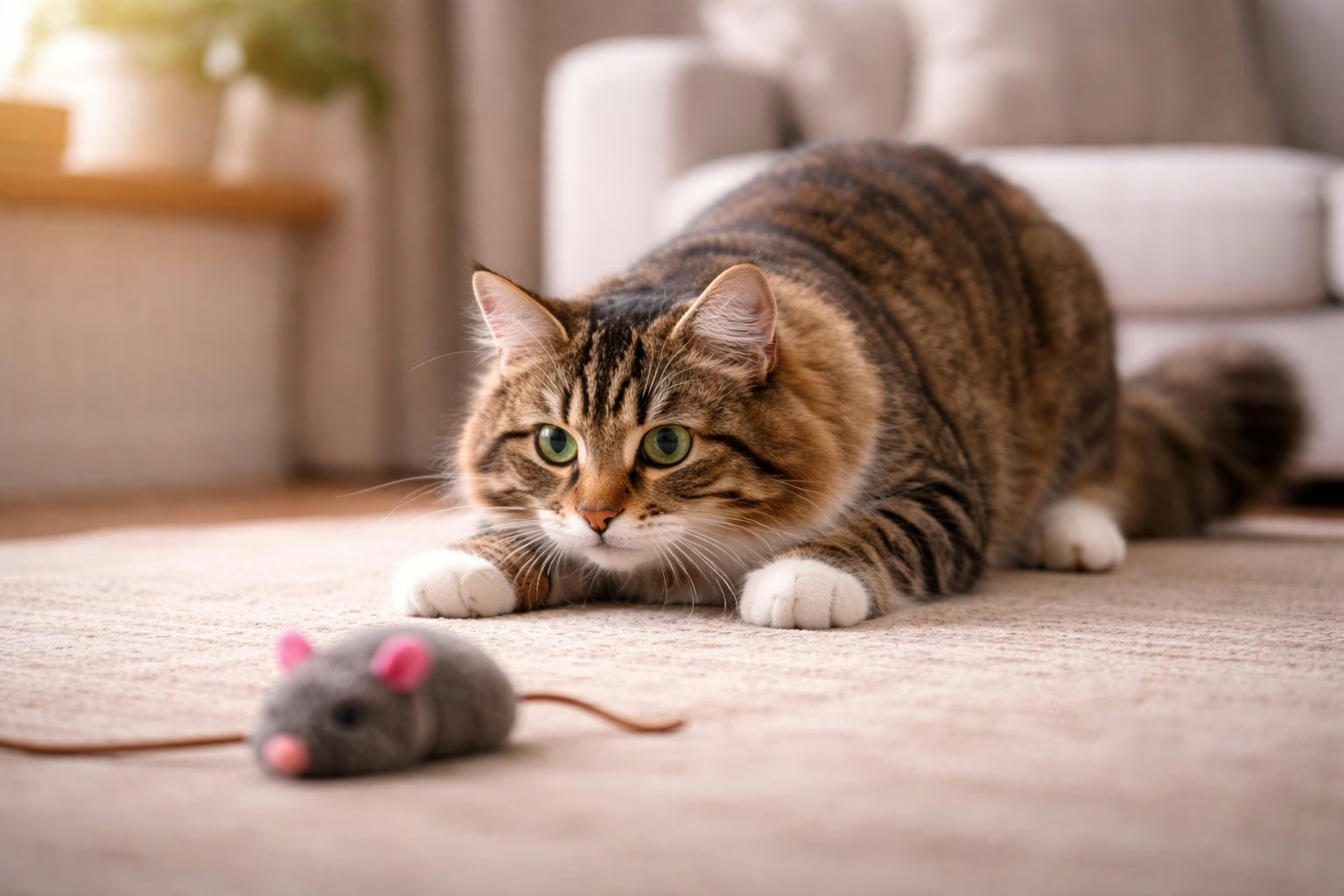
Cats must eat meat—they’re obligate carnivores with behavior hardwired for solo hunting. They don’t chase prey across miles like wolf packs do. Instead, cats employ the stalk-and-pounce approach targeting mice, birds, and other small animals. Watch any cat with a toy and you’ll see the sequence: intense focus, crouched stalk, wiggling rear end, explosive leap. Fed or starving, indoor or outdoor, this pattern plays out because it’s instinctive, not learned.
Expect your cat to sleep 12 to 16 hours daily. Activity peaks happen at dawn and dusk—this crepuscular pattern matches when rodents and birds are most active. Indoor cats often adjust toward human schedules (sleeping when you sleep, waking when you wake), but plenty retain that annoying tendency toward 4 AM zoomies. Their ancestors hunted at those hours. Your work schedule doesn’t override ten thousand years of evolution.
Territory drives much of what cats do socially. They establish core areas where they feel completely secure, surrounded by larger home ranges that might overlap with neighboring cats. Urine spraying, scratching vertical surfaces, and rubbing their faces on furniture all deposit scent markers broadcasting ownership and identity. Squeeze too many cats into too small a space with insufficient resources—food bowls, water stations, litter boxes—and you’ll trigger territorial stress. That manifests as aggression, excessive marking, or peeing outside the box.
Cats communicate through multiple channels simultaneously. They produce at least 16 distinct vocalizations, from that chirpy trill greeting familiar people to the yowling caterwauling of mating cats. Interestingly, meowing happens mainly in cat-human interactions rather than between cats. They developed this vocalization specifically for talking to us. Meanwhile, body language tells the real story: tail position, ear angle, pupil dilation, fur standing on end—these signals convey everything from contentment to fear-based aggression.
Social structure? More flexible than you’d think. Yes, cats can hunt alone and survive independently. But given sufficient food, they’ll form stable colonies. Related females sometimes nurse each other’s kittens and cooperatively defend territory, though male cats typically contribute nothing to parenting. Hierarchy within colonies stays fluid rather than rigidly linear—dominance relationships shift depending on what’s at stake and who wants it more.
Cats possess a remarkable ability to adapt their social behavior to environmental conditions. The notion that cats are inherently antisocial stems from comparing them to dogs rather than evaluating them within their own evolutionary context. They’re better described as socially flexible opportunists.
Dr. Sarah Ellis
Cats as Domesticated Animals
Cat domestication followed a completely different path than the deliberate breeding programs that created dogs, sheep, and cattle. Archaeological evidence points toward self-domestication—wildcats exploited the ecological niche humans accidentally created through grain storage. Wildcats comfortable around people got access to abundant rodent populations. People enjoyed reduced crop losses. Natural selection favored less fearful wildcats. Nobody needed to plan this arrangement; it just worked.
The earliest confirmed cat-human association shows up around 9,500 years ago in Cyprus. Archaeologists found cat bones buried alongside human remains. Cyprus has no native wildcats, so humans transported cats there by boat—you don’t bring an animal on a sea voyage unless you value it. Egyptian civilization elevated cats to religious status roughly 4,000 years back, mummifying thousands and depicting them constantly in art. Genetic analysis reveals a twist though: Egyptian cats contributed minimally to modern domestic cat ancestry. Most of today’s house cats trace back to other populations.
Cats retained dramatically more behavioral and genetic similarity to wild ancestors compared to dogs. A 2014 genomic analysis identified only 13 genes showing strong selection during domestication—mostly affecting fear response and reward-seeking. Dogs show selection in hundreds of genes affecting cognition, digestion, and body structure. This limited domestication explains why house cats can revert to feral existence within one generation while feral dogs remain noticeably different from wolves.
How humans use cats has shifted dramatically over the past century. Historically valued primarily for killing rats and mice on farms, ships, and in granaries, cats now function mainly as companion animals. The American Pet Products Association estimates Americans dropped $8.1 billion on cat food alone in 2025. That’s a massive jump from “barn cat eating whatever it catches.”
Still, outdoor and feral cats continue providing pest control, especially in agricultural areas. Barn cats remain common on working farms. A single motivated cat might kill 1,000 rodents annually. But studies show cats often prefer hunting birds and small mammals even when rodents abound, which raises serious conservation concerns about free-roaming cat populations decimating native wildlife.
Lifespan, Diet, and Basic Care Needs
Indoor cats typically hit 12 to 18 years, with many reaching their late teens or early twenties. Outdoor cats average just 7 years. Why the huge difference? Cars, predators, disease, poisoning, and environmental hazards eliminate outdoor cats at alarming rates. Spayed and neutered cats generally outlive intact animals, partly because they roam and fight less. The verified longevity record holder lived to 38 years, though exceptional cases like that remain rare.
Being obligate carnivores means cats require nutrients found exclusively or predominantly in animal tissues. Take taurine—an amino acid essential for heart and retinal function. It occurs naturally only in animal protein. Cats can’t manufacture sufficient vitamin A from plant-based beta-carotene the way humans do; they need preformed vitamin A from liver and organ meats. Arachidonic acid (a fatty acid dogs can synthesize from plant oils) must come from animal fat in cat diets.
Commercial cat foods meeting Association of American Feed Control Officials (AAFCO) standards provide complete nutrition, but quality varies wildly. Cats evolved eating prey containing roughly 50-60% protein, 30-40% fat, and minimal carbohydrates on a dry matter basis. Many dry foods pack in 30-40% carbohydrates as binders and fillers, potentially contributing to obesity and diabetes. Wet foods typically match ancestral macronutrient ratios better, though you still need to read labels carefully.
Water intake presents a persistent challenge. Cats descended from desert-dwelling ancestors and evolved a weak thirst drive, obtaining most hydration from prey. This works great when eating mice. It becomes problematic on dry kibble. Chronic mild dehydration contributes to kidney disease and urinary crystal formation. Solutions: multiple water sources placed away from food bowls, fountains that appeal to their preference for running water, and incorporating wet food into their diet.
Basic care extends well beyond nutrition into environmental enrichment. Indoor cats need mental and physical stimulation to prevent boredom-driven behaviors—excessive vocalization, destructive scratching, aggression. Vertical territory matters (cat trees, wall shelves). Interactive play sessions mimicking hunting sequences matter. Puzzle feeders that make cats “work” for meals matter. Aim for at least two 10-minute active play sessions daily, though individual cats need more or less.
Litter box management follows the “n+1 rule”—one box per cat plus one extra, distributed across different locations. Scoop waste daily. Dump everything and scrub the box weekly with unscented soap. Many behavioral problems trace directly to litter box aversion caused by insufficient boxes, poor placement (next to noisy appliances or in high-traffic areas), covered designs that trap odors, or scented litter overwhelming feline olfactory sensitivity.

Common Misconceptions About Cats
The myth of feline independence and aloofness refuses to die despite contradictory evidence. Researchers applied the Strange Situation Test—originally developed for human infant attachment—to cats. Results: 65% of cats show secure attachment to their owners, comparable to dog percentages. Cats seek proximity to familiar people when stressed, show distress during separation, and actively greet owners returning home. The independence perception comes from comparing cats to dogs instead of evaluating them on species-appropriate terms.
Another persistent belief claims cats can’t coexist with dogs or other pets. Individual personalities and proper introductions matter enormously, but countless households successfully maintain multi-species harmony. Cats and dogs form genuine friendships when introduced gradually, given escape routes, and provided separate resources. Problems typically arise from territorial stress, resource competition, or predatory drift (when a dog’s chase instinct activates toward a fleeing cat) rather than some inherent incompatibility.
“Cats always land on their feet” oversimplifies their righting reflexes. Yes, cats can rotate their bodies during falls from heights as low as 12 inches. No, this doesn’t guarantee injury-free landings. Falls from second or third-story windows frequently cause severe injuries because cats lack sufficient time to complete the rotation and brace properly. Oddly, cats falling from greater heights (above seven stories) sometimes sustain fewer injuries—possibly because they reach terminal velocity and relax rather than tensing, though this “high-rise syndrome” observation remains debated.
Many people label cats nocturnal, then get frustrated by nighttime activity. Wrong classification. Cats are crepuscular—most active at dawn and dusk when their ancestral prey emerged. Indoor cats often shift toward owner schedules but may retain early morning energy surges. You can minimize nighttime disruptions through scheduled feeding times, vigorous evening play sessions that exhaust energy, and ignoring nighttime attention-seeking behavior (no matter how persistent).
The belief that cats need outdoor access for fulfillment contradicts evidence showing indoor cats live longer, healthier lives. Outdoor environments provide enrichment, sure. But you can deliver similar benefits through structured indoor environments featuring vertical space, window perches for bird-watching, interactive toys, and regular play. The outdoor risks—vehicles, predators, disease, poisoning, theft, getting lost—typically outweigh any benefits. Want a compromise? Try supervised outdoor time via leash training, catios (enclosed outdoor spaces), or secure yards.
FAQs
Cats evolved as solitary hunters rather than pack animals, and that evolutionary background shapes everything about them. Dogs were selectively bred for thousands of years to cooperate with humans on specific tasks. Cats domesticated themselves and kept most of their independent streak. Practical differences: cats require less direct supervision, don’t need walks, handle their own grooming, and can tolerate being alone longer. But they also demand respect for personal boundaries and won’t necessarily tolerate handling or interaction on purely human terms.
Genuinely domesticated, just less intensively bred than most domestic animals. Genetic changes during domestication reduced fear responses and increased tolerance for human proximity. But cats retained most wild-type behaviors and physical traits. This means they can survive independently if circumstances demand it—you’ll see this with feral cat populations. However, house cats raised with human contact form genuine social bonds and rely on people for food, shelter, and companionship. They’re not wild animals just because they’re self-sufficient.
Felidae contains 41 recognized species spanning from the black-footed cat (under 4 pounds) to the Siberian tiger (over 600 pounds). These divide into two subfamilies: Pantherinae includes roaring cats like lions, tigers, leopards, and jaguars. Felinae includes everyone else—domestic cats, cougars, cheetahs, lynxes, and dozens more. Only Felis catus lives primarily alongside humans, though some wildcats like the African wildcat occasionally inhabit areas near human settlements.
Cat behavior reflects adaptations for solitary hunting of small prey. Stalking, pouncing, and killing bite sequences appear even during play because these behaviors are hardwired, not learned through experience. Scratching maintains claw sharpness while marking territory. Kneading with front paws originates from nursing behavior that stimulated milk flow. Sleeping 12-16 hours daily conserves energy between hunting bursts. When you understand these evolutionary origins, you can distinguish normal behaviors from signs of stress, illness, or environmental problems.
Indoor cats typically reach 12-18 years, with many hitting their late teens or early twenties. Outdoor cats average only 7 years because of increased exposure to vehicles, predators, disease, and environmental dangers. Lifespan factors include genetics, diet quality, veterinary care access, spay/neuter status, and environmental stress levels. Purebred cats sometimes have shorter lifespans than mixed breeds because of genetic bottlenecks and breed-specific health issues. Maximize longevity through regular vet checkups, appropriate nutrition, environmental enrichment, and keeping cats indoors.
All domestic cats share core species traits—retractable claws, obligate carnivore physiology, crepuscular activity patterns. But individual and breed variation exists extensively. Personality traits like sociability, playfulness, and vocalization vary tremendously. Certain breeds show distinctive tendencies: Siamese cats vocalize constantly, Ragdolls lean toward docility, Bengals display high energy. However, individual variation within any single breed often exceeds the differences between breeds. Early socialization experiences, genetic inheritance, and life experiences all shape individual cat personalities and behaviors.
Cats occupy a unique position between wild heritage and domestic companionship. They’re small carnivores within the family Felidae, carrying physical adaptations for hunting and behavioral instincts that domestication only slightly modified. Their relatively recent and limited domestication explains both their appeal as independent companions and the frustrations that arise when human expectations clash with feline nature.
Successfully living with cats requires acknowledging they’re neither small dogs nor decorative accessories. They’re highly evolved predators with specific physical, nutritional, and psychological requirements. Appropriate diet, environmental enrichment, veterinary care, and respect for their communication signals create conditions where cats thrive as companion animals while expressing natural behaviors in acceptable ways.
Over 94 million cats now live in American homes. Their continued popularity demonstrates successful adaptation to human households despite minimal selective breeding. As research into feline cognition, health, and behavior advances, cat owners gain better tools for enhancing the lives of these remarkable animals that chose to live alongside us ten thousand years ago—and continue making that choice every day.