
- Common Reasons Cats Bite Their Owners
- How to Tell the Difference Between Play Biting and Aggressive Biting
- Medical Causes Behind Sudden Biting Behavior
- Age-Related Biting Patterns in Cats
- What to Do When Your Cat Bites You
- How to Prevent Cat Biting Before It Starts
- When Cat Biting Signals a Serious Problem
- Types of Cat Bites: Comparison Chart
Cat bites can range from gentle nibbles during playtime to painful puncture wounds that send you running for antiseptic. Understanding the motivations behind this behavior helps you respond appropriately and strengthens your relationship with your feline companion. Cats communicate primarily through body language, and biting represents one of their most direct—if sometimes painful—methods of expressing needs, boundaries, and emotions.
Common Reasons Cats Bite Their Owners
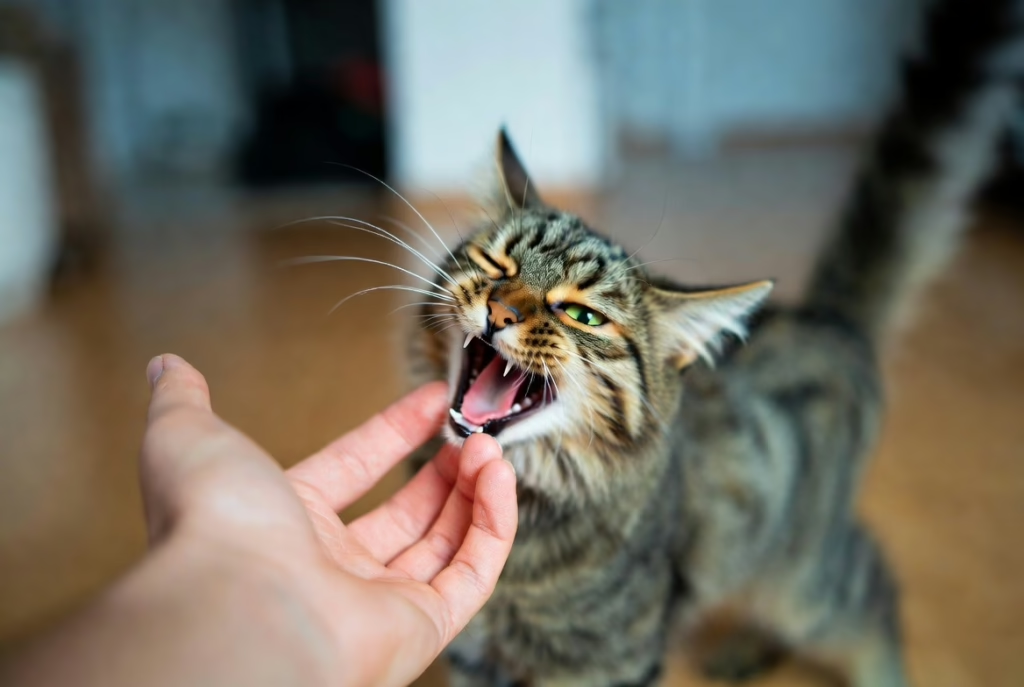
Overstimulation tops the list of why cats bite owners. Many cats enjoy petting sessions until they suddenly don’t. Their nervous systems become overwhelmed by repetitive touch, triggering what behaviorists call “petting-induced aggression.” You might notice your cat’s tail start twitching or skin rippling seconds before the bite—signals that the pleasant experience has crossed into uncomfortable territory.
Play aggression stems from natural hunting instincts. Kittens learn bite inhibition from littermates, but those separated too early or raised as solo cats often lack this crucial education. When your hand becomes a moving target, your cat’s predatory drive kicks in. The problem intensifies when owners inadvertently encourage this behavior by wrestling with cats using bare hands instead of appropriate toys.
Fear and anxiety transform even docile cats into defensive biters. Cats cornered during nail trimming, forced into carriers, or startled by unexpected movements may bite as a last resort. This represents self-preservation, not malice. The cat biting causes here relate directly to perceived threats and lack of escape routes.
Redirected aggression occurs when cats cannot access the actual source of their frustration. A cat watching birds through a window may bite the nearest person or animal when arousal peaks. Similarly, cats disturbed during fights with other household pets might redirect that aggressive energy toward an unsuspecting owner who attempts to intervene.
Pain or illness frequently manifests as sudden biting behavior in previously gentle cats. Arthritis makes certain touches excruciating. Dental disease causes mouth pain that flares when cats yawn or eat. Hyperthyroidism increases irritability. When medical issues drive cat aggression reasons, the biting often appears unpredictable because owners cannot see the underlying discomfort.
Territorial behavior prompts some cats to bite when they perceive boundary violations. This might involve guarding favorite sleeping spots, food bowls, or even specific family members. Intact males and females show heightened territorial responses, though neutered cats also establish and defend their spaces.
How to Tell the Difference Between Play Biting and Aggressive Biting
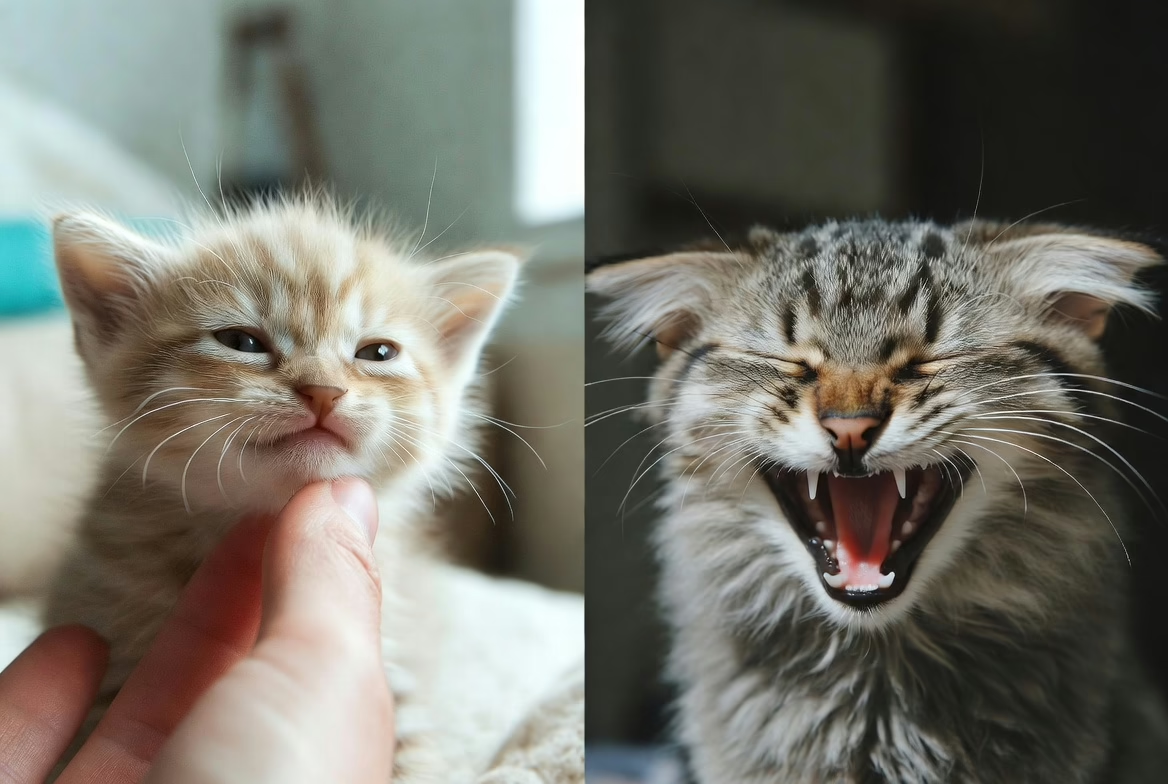
Context provides your first clue. Play biting typically occurs during interactive sessions with toys or when your cat initiates contact by pouncing. The cat behavior biting during play follows a pattern: stalk, pounce, bite, release, repeat. Ears remain forward or slightly to the side, pupils dilate with excitement rather than fear, and the overall body posture appears loose and bouncy.
Aggressive biting involves different body mechanics. Ears flatten against the head. Whiskers pull back. The tail lashes or puffs. Vocalizations—hissing, growling, or yowling—often precede the bite. The cat’s body becomes rigid or crouched low. These warning signs give you seconds to back away before the bite lands.
Bite intensity differs substantially. Play bites feel like quick pinches that rarely break skin. Your cat controls jaw pressure and releases immediately. Aggressive bites involve full jaw strength, often creating puncture wounds. The cat may latch on rather than releasing quickly, sometimes shaking their head or raking with back claws simultaneously.
Warning escalation separates the two behaviors. Playful cats might give a gentle mouth-on-skin warning before increasing pressure, testing your reaction. Aggressive cats display a progression: tense body, focused stare, tail movements, ear position changes, then the bite. Missing these signals results in seemingly “sudden” attacks that actually had multiple precursors.
Pupil size tells a story. During play, pupils dilate wide—your cat is excited and stimulated. During fear-based aggression, pupils may constrict to slits before dilating. Pain-related aggression often shows normal pupil size until the painful area is touched, then rapid constriction followed by the defensive bite.
Medical Causes Behind Sudden Biting Behavior

Dental disease affects approximately 70% of cats over age three. Fractured teeth, resorptive lesions, gingivitis, and abscesses cause significant pain. Cats with dental issues may bite when touched near the face or head, during eating, or seemingly at random when pain spikes. They often show decreased grooming, drooling, or reluctance to eat hard food alongside the biting behavior.
Arthritis develops in over 90% of cats older than twelve years. Unlike dogs, arthritic cats rarely limp obviously. Instead, they bite when painful joints are touched or when movement exacerbates discomfort. Common trouble spots include the spine, hips, and elbows. A cat who previously enjoyed being picked up might suddenly bite when lifted if arthritis makes certain positions painful.
Neurological conditions can dramatically alter cat biting behavior. Feline hyperesthesia syndrome causes episodes where cats experience skin sensitivity, often along the back. During episodes, even gentle touches trigger biting. Brain tumors, cognitive dysfunction, and seizure disorders may also manifest as personality changes including increased aggression. These conditions require veterinary neurological evaluation.
Hormonal changes influence behavior significantly. Hyperthyroidism increases irritability and lowers tolerance thresholds in middle-aged and senior cats. Diabetes can cause neuropathy that makes touch painful. Adrenal disorders alter stress responses. Blood work identifies these conditions, which often improve with appropriate treatment.
When to consult a veterinarian: Schedule an appointment within a week if biting behavior appears suddenly in a previously gentle cat, if your cat vocalizes when touched in specific areas, if appetite or litter box habits change alongside biting, or if your cat seems disoriented or confused. Emergency visits become necessary for bites accompanied by seizures, inability to walk normally, or extreme lethargy.
Age-Related Biting Patterns in Cats
Why Kittens Bite During Development
Kittens between three and sixteen weeks explore their world through their mouths. They lack the motor control for gentle play and haven’t learned bite inhibition from extended time with littermates. Their needle-sharp baby teeth inflict disproportionate pain relative to their size and intent.
Normal kitten play involves mock fighting, which includes biting. Kittens raised with siblings learn that biting too hard ends play sessions when the victim squeals and walks away. Solo kittens miss this education, requiring human intervention to teach appropriate pressure. Redirecting bites to toys rather than hands establishes lifelong patterns.

Teething occurs between three and six months as adult teeth replace baby teeth. During this period, kittens experience gum discomfort that increases their urge to bite and chew. Providing appropriate chew toys helps redirect this natural behavior away from human skin and household items.
Biting Changes in Senior Cats
Senior cats (over eleven years) show different biting patterns than their younger counterparts. Cognitive dysfunction syndrome affects an estimated 50% of cats over fifteen years, causing confusion, anxiety, and decreased tolerance for interaction. These cats may bite when disoriented or startled more easily than before.
Sensory decline contributes to biting incidents. Cats with hearing loss don’t notice approaches and react defensively when suddenly touched. Vision loss creates similar startle responses. Announcing your presence verbally and approaching from within their visual field reduces defensive biting.
Pain becomes increasingly common with age. Senior cats develop multiple concurrent conditions—arthritis, dental disease, kidney disease—that create chronic discomfort. Their tolerance for handling decreases proportionally. What once felt pleasant now hurts, and biting communicates this boundary clearly.
What to Do When Your Cat Bites You
Immediate response matters tremendously. Freeze rather than pulling away, which triggers predatory chase instincts and can worsen injury. Say “no” in a calm, firm voice—not a yell, which may frighten your cat further. Once your cat releases, withdraw slowly and leave the area. This teaches that biting ends positive interaction.
What NOT to do: Never hit, yell at, or spray your cat with water as punishment. These responses damage trust without addressing the underlying cause. Avoid staring directly at your cat immediately after a bite, as sustained eye contact signals threat in feline communication. Don’t chase your cat or continue attempting interaction—respect the boundary they’ve established.
Wound care basics prevent infection, which occurs in approximately 50% of cat bites due to bacteria in feline mouths. Wash the bite immediately with soap and running water for at least five minutes. Apply antibiotic ointment and cover with a clean bandage. Monitor for signs of infection: increasing redness, warmth, swelling, red streaks extending from the wound, pus, or fever. Seek medical attention for deep puncture wounds, bites on hands or near joints, or if you have diabetes or immune system conditions.
Behavior modification approach: After immediate care, analyze what triggered the bite. Review the minutes preceding the incident for patterns—specific touches, sounds, movements, or interactions. Adjust future interactions to avoid identified triggers while gradually desensitizing your cat through positive reinforcement training. This might involve shorter petting sessions, different approach angles, or increased environmental enrichment to reduce overall stress.
How to Prevent Cat Biting Before It Starts
Socialization during the critical period (two to seven weeks) shapes lifelong behavior patterns. Kittens exposed to gentle handling, various people, and positive experiences develop better bite inhibition and stress tolerance. For adult cats, gradual desensitization to handling through short, positive sessions builds trust and reduces defensive biting.
Recognizing stress triggers requires observation. Common stressors include changes in household routine, new pets or people, loud noises, insufficient resources (litter boxes, food bowls, resting spots), and lack of vertical territory. Cats need hiding spots and elevated perches to feel secure. When these needs go unmet, stress accumulates and manifests as cat aggression reasons including biting.
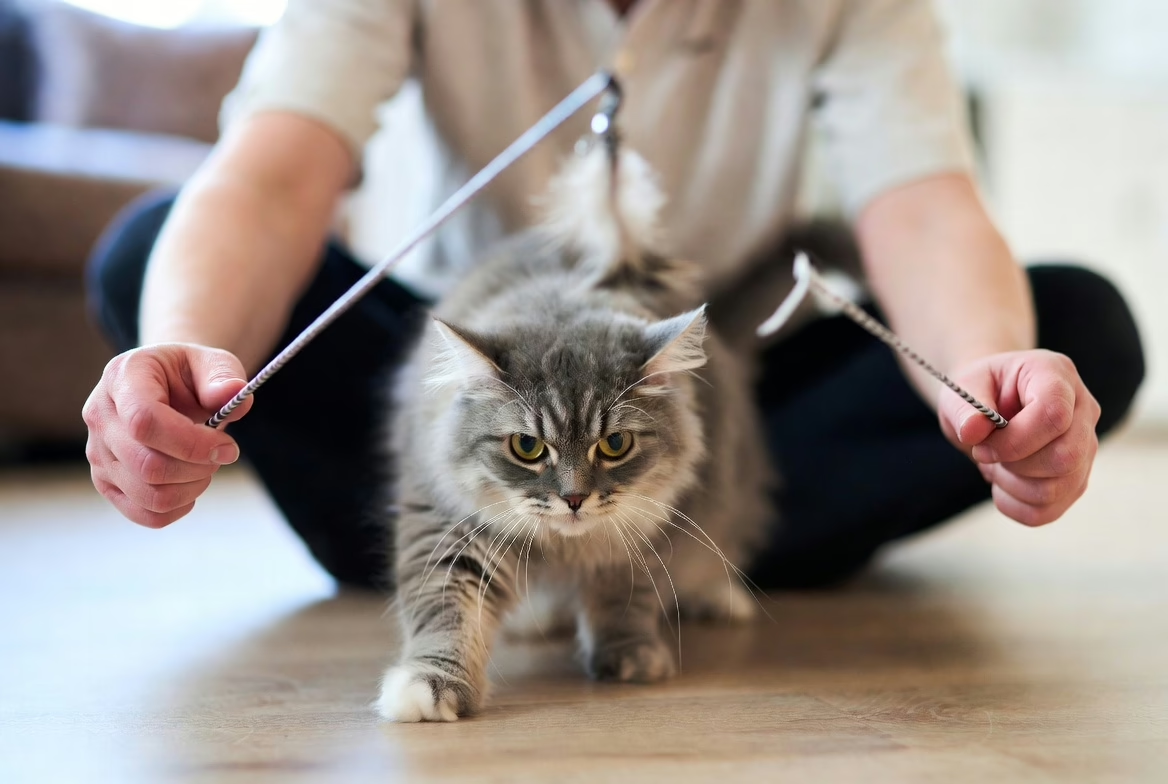
Proper play techniques channel hunting instincts appropriately. Use wand toys that create distance between your hands and your cat’s teeth. Schedule two to three play sessions daily, each lasting ten to fifteen minutes, to burn excess energy. Always let your cat “catch” the toy periodically—endless chasing without capture creates frustration. End sessions before your cat becomes overstimulated, ideally when they’re still engaged but beginning to slow down.
Environmental enrichment reduces boredom-related aggression. Puzzle feeders stimulate mental activity during meals. Window perches provide entertainment through bird watching. Rotating toys maintains novelty. Cats require both physical exercise and mental stimulation; without these outlets, normal predatory energy redirects toward inappropriate targets like human ankles and hands.
Establish consistent routines around feeding, play, and sleep. Cats are creatures of habit; predictable schedules reduce anxiety. Create multiple resource stations throughout your home so cats never feel trapped or forced to compete. This proves especially important in multi-cat households where resource guarding drives cat biting causes.
When Cat Biting Signals a Serious Problem
Patterns requiring professional help include biting that occurs daily or multiple times weekly, bites that consistently break skin or cause injury, aggression directed toward children or vulnerable individuals, biting accompanied by other behavioral changes like eliminating outside the litter box, and situations where you feel afraid of your cat.
Working with veterinary behaviorists provides specialized expertise beyond general veterinary care. These board-certified specialists hold advanced training in animal behavior and can prescribe behavior-modification medications when appropriate. They develop comprehensive treatment plans addressing both medical and behavioral components of feline aggression explanation.
The certification matters—look for diplomates of the American College of Veterinary Behaviorists (DACVB) or certified applied animal behaviorists (CAAB). These professionals conduct thorough behavioral histories, often requiring detailed logs of biting incidents including date, time, location, triggers, and your cat’s body language before and during each event.
Aggression escalation signs indicate worsening problems that require immediate intervention. These include increasing bite frequency, greater bite intensity over time, shorter warning periods before bites, expansion of triggering situations (what started as petting-induced aggression now includes approach or proximity), and addition of other aggressive behaviors like scratching or ambushing.
Some cats develop learned aggression where biting successfully achieves their goals—ending unwanted interaction, gaining access to resources, or removing perceived threats. This reinforcement cycle strengthens the behavior. Early intervention prevents this pattern from becoming entrenched. Behavioral medication combined with environmental management and training offers the best outcomes for severe cases.
Cats rarely bite without warning—we simply miss or misinterpret their signals. Learning to read feline body language transforms seemingly random aggression into understandable communication. Most biting behavior stems from fear, pain, or overstimulation rather than malice, and responds well to environmental modifications and patient training.
Dr. Sarah Ellis
Types of Cat Bites: Comparison Chart
| Bite Type | Common Triggers | Body Language Signs | Severity Level | Recommended Response |
|---|---|---|---|---|
| Play Biting | Moving hands/feet, interactive toys, high energy periods | Forward ears, dilated pupils, loose body, playful pouncing, tail up or swishing gently | Mild – rarely breaks skin | Redirect to appropriate toys, end play if too rough, never use hands as toys |
| Overstimulation | Extended petting, touching sensitive areas, repetitive stroking | Tail twitching, skin rippling, ears rotating back, shifting weight, sudden stillness | Moderate – may break skin | Learn individual tolerance limits, watch for early warning signs, stop petting before threshold reached |
| Fear/Defensive | Cornering, forced handling, loud noises, unfamiliar people | Ears flat, crouched body, dilated pupils, hissing, tail tucked or lashing | Moderate to severe – defensive strikes | Provide escape routes, avoid forcing interaction, gradual desensitization training |
| Pain-Related | Touching painful areas, movement that aggravates injury, illness | Normal until trigger point, then sudden tension, vocalization possible, may guard affected area | Moderate to severe – protective response | Veterinary examination, pain management, avoid handling painful areas during treatment |
| Redirected | Inaccessible prey animals, other pets, frustration | Focused stare elsewhere, tense body, dilated pupils, unaware of your presence initially | Severe – intense bites | Identify and remove triggers, give space to calm down, interrupt visual access to stimuli |
| Territorial | Resource guarding, boundary violations, competition | Stiff posture, direct stare, blocking behavior, tail lashing, may include urine marking | Moderate to severe – warning escalation | Increase resources, provide separate spaces, respect established territories, consult behaviorist |
FAQs
Your cat likely experiences petting-induced overstimulation. Cats have lower tolerance thresholds than dogs for repetitive touch, and their nervous systems become overwhelmed. Watch for warning signs: tail twitching, ears rotating backward, skin rippling along the back, or sudden stillness. Stop petting before these signals appear. Some cats enjoy only brief petting sessions—thirty seconds to two minutes—while others tolerate longer interaction. Individual preferences vary significantly, and respecting your cat’s limits prevents biting while maintaining positive associations with touch.
Yes, play biting represents normal feline behavior, especially in kittens and young cats. Wild cats practice hunting skills through play, which includes biting. However, the intensity matters. Gentle mouthing that doesn’t break skin falls within normal parameters. Hard bites that cause injury indicate either lack of bite inhibition training or overstimulation during play. Always use toys rather than hands during play sessions, and stop play immediately if biting becomes too rough. This teaches your cat appropriate boundaries while allowing natural behavioral expression.
Cat bites carry significant infection risk due to Pasteurella multocida and other bacteria in feline mouths. Their long, thin teeth create deep puncture wounds that seal quickly, trapping bacteria inside tissue. Approximately 50% of cat bites become infected without proper treatment. Hand bites prove particularly dangerous due to tendons, joints, and limited blood flow. Seek medical attention for deep punctures, bites that don’t stop bleeding after ten minutes, bites on hands or near joints, increasing redness or swelling after 24 hours, fever, or if you have diabetes or immune compromise. Doctors may prescribe preventive antibiotics for high-risk bites.
This behavior pattern typically indicates overstimulation during grooming or affection. Cats groom each other as social bonding, and your cat extends this behavior to you through licking. However, the repetitive motion combined with arousal can cross into overstimulation, triggering a bite. The cat isn’t being malicious—they’re experiencing conflicting drives between affection and sensory overload. Some cats also use gentle bites as communication during grooming sessions, similar to how mother cats nip kittens. If bites are soft and don’t cause injury, this represents normal feline interaction rather than aggression.
Never use your hands as toys during play—this teaches that hands are appropriate bite targets. If your cat bites during play, immediately stop all interaction and leave the area for several minutes. This consequence teaches that biting ends fun activities. Provide appropriate outlets through wand toys, scheduled play sessions, and environmental enrichment. For attention-seeking bites, ignore the behavior completely while rewarding gentle interaction with treats and affection. Consistency matters; everyone in the household must follow the same rules. If biting persists despite these interventions, consult a veterinary behaviorist to rule out underlying medical or behavioral issues.
Understanding why cats bite transforms frustrating and painful interactions into opportunities for better communication with your feline companion. Most cat biting behavior stems from identifiable causes—overstimulation, play drive, fear, pain, or territorial instincts—rather than random aggression. Learning to read the subtle body language signals that precede biting allows you to respond appropriately and often prevent incidents entirely.
When biting appears suddenly in a previously gentle cat, medical evaluation should be your first step. Dental disease, arthritis, and other painful conditions frequently manifest as increased aggression. Age-related changes in both kittens and senior cats create specific biting patterns that require tailored approaches.
Prevention strategies—proper socialization, appropriate play techniques, environmental enrichment, and stress reduction—prove more effective than punishment-based responses. When biting does occur, calm withdrawal teaches clearer lessons than yelling or physical corrections. For persistent or severe biting problems, veterinary behaviorists offer specialized expertise and comprehensive treatment plans.
Your cat’s bites communicate important information about their physical comfort, emotional state, and environmental needs. By learning this aspect of feline language, you build a relationship based on mutual understanding and respect rather than fear or frustration.