
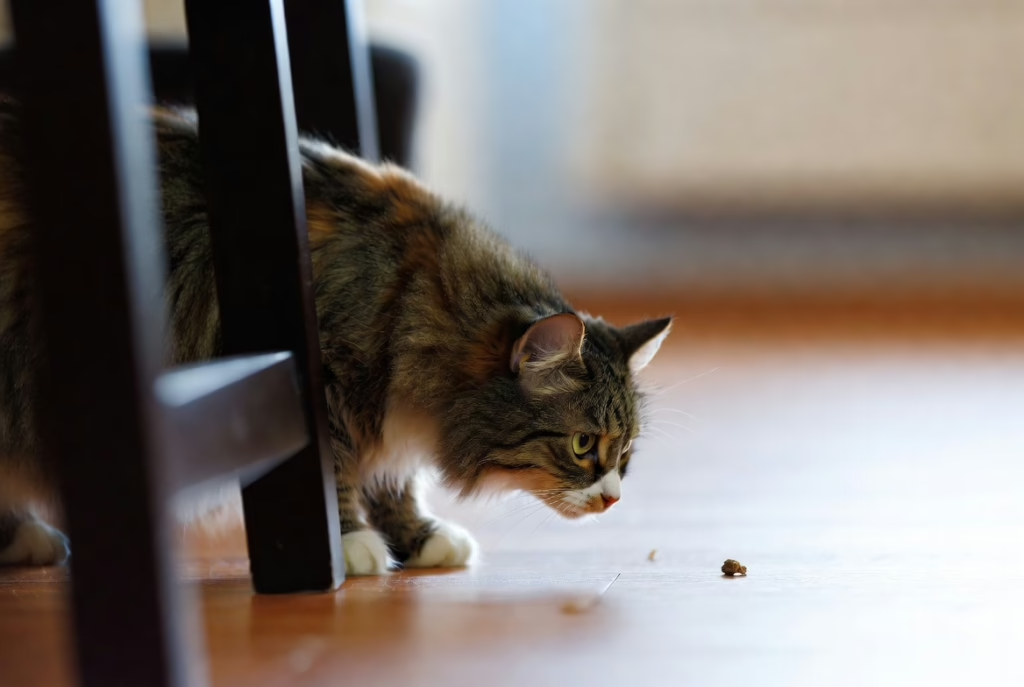
If you’ve ever watched your cat bolt across the room after a dust particle or launch an ambush on your ankles, you’ve witnessed one of the most fundamental feline behaviors. Chasing is hardwired into every domestic cat, regardless of whether they’ve ever set paw outside or caught actual prey. Understanding what drives this behavior helps you provide better enrichment and recognize when play crosses into stress.
The Biology Behind Cat Hunting Instinct
Domestic cats descended from the African wildcat (Felis lybica), a solitary hunter that survived by catching small prey multiple times daily. Unlike pack hunters that cooperate on large kills, wildcats evolved as ambush predators targeting rodents, birds, and reptiles. This ancestry explains why your well-fed house cat still crouches behind furniture waiting to pounce on a toy mouse.
The cat hunting instinct operates independently from hunger. Brain structures like the hypothalamus control appetite, but predatory sequences are governed by different neural pathways in the periaqueductal gray matter. This separation means a cat with a full food bowl will still stalk, chase, and capture moving objects because the behavior itself provides neurological rewards.
The predatory motor pattern in cats is a fixed action sequence that, once triggered, runs to completion regardless of nutritional state. This is why even well-fed domestic cats maintain their hunting drive—it’s about behavioral fulfillment, not calories.
Dr. Sarah Ellis
Evolution favored cats that practiced hunting skills constantly. Kittens born to well-fed mothers still develop full predatory repertoires through play. The feline prey drive remained strong through 10,000 years of domestication because humans valued cats precisely for their mousing abilities. Cats that lost interest in chasing small, fast-moving creatures were less useful to agricultural societies and less likely to be kept and bred.
Modern neuroscience reveals that successful “hunts”—even simulated ones with toys—trigger dopamine release in cats’ brains. This neurochemical reward reinforces the behavior, creating a self-sustaining cycle. Your cat chases because chasing feels good at a biochemical level, not because they’ve consciously decided to practice survival skills.
How Predatory Behavior Works in Cats
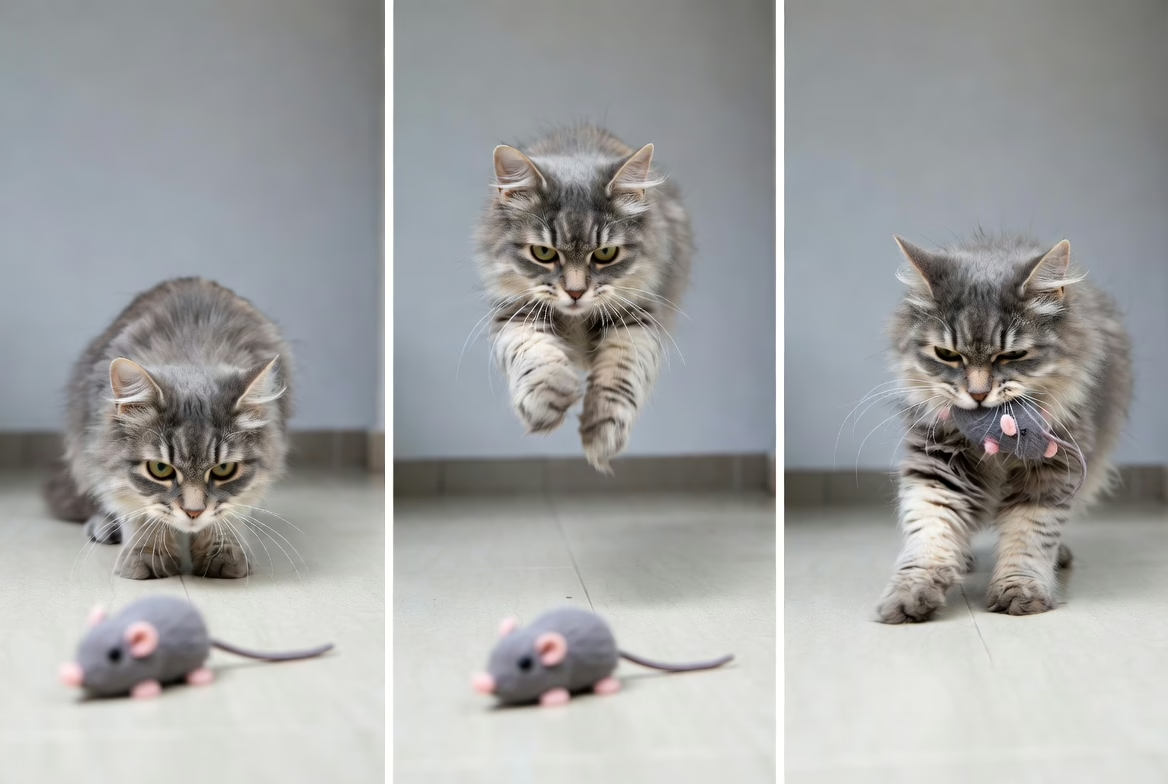
Predatory behavior cats exhibit follows a predictable sequence that researchers have broken into distinct phases: locate, stalk, chase, pounce, catch, kill, and sometimes eat. Domestic cats display this entire chain even when “hunting” a feather wand, though they obviously skip the final steps.
The sequence begins with sensory detection. Cats have exceptional motion detection—their eyes contain a high concentration of rod cells that excel at tracking movement in low light. Once they spot potential prey, their pupils dilate, whiskers push forward, and their body lowers into a stalk position. The hindquarters often wiggle as they calculate distance and timing, a behavior unique to felids that helps them gauge the precision needed for their leap.
The chase phase activates when the target moves away at the right speed. Too slow, and the cat may lose interest; too fast, and they can’t track it effectively. The sweet spot sits around 3-8 feet per second—roughly the speed of a fleeing mouse. During pursuit, cats can reach bursts of 30 mph, though most indoor chases involve shorter distances at lower speeds.
Cat instincts chasing involve complex calculations. The brain’s superior colliculus processes visual information about trajectory and speed, allowing cats to predict where a moving object will be, not just where it is. This predictive tracking explains why cats often leap to where a toy is going rather than where it currently sits.
The pounce represents the culmination of the sequence. Cats launch themselves with powerful hind legs, front paws extended with claws deployed to pin the target. In successful hunts, the catch phase immediately follows, with the cat grasping the prey in their paws and delivering a killing bite to the neck or head. With toys, cats often perform these motions without the lethal force, though they may still use their teeth to carry or “kill” their captured toy.
Why Cats Chase Toys Even When They’re Not Hungry
The disconnect between feeding and hunting confuses many cat owners. You might fill your cat’s bowl with premium food, yet they still attack toy mice with ferocious intensity. This happens because cat play hunting serves multiple functions beyond obtaining calories.
First, chasing provides essential physical exercise. Indoor cats particularly need this outlet—without it, they risk obesity and associated health problems. A five-minute intense play session can burn significant energy and maintain muscle tone. The sprint-and-pounce pattern mimics interval training, alternating between explosive movement and rest.
Mental stimulation matters just as much. Problem-solving during play—calculating angles, timing jumps, adjusting strategies when toys change direction—keeps cats’ brains engaged. Cats denied hunting outlets often develop behavioral problems: excessive vocalization, destructive scratching, or redirected aggression toward household members. Why cats chase toys relates directly to psychological wellbeing, not just physical health.
The practice theory suggests another dimension. Young predators in the wild spend months honing their techniques before they must catch real prey to survive. Play allows low-stakes repetition of complex motor sequences. While your domestic cat won’t starve if they miss a toy, their brain doesn’t fully distinguish practice from performance. Each successful “hunt” reinforces neural pathways and builds confidence.
Cats also chase for social reasons. Interactive play with humans strengthens bonds and provides attention. Some cats initiate play sessions by bringing toys to their owners or performing attention-getting behaviors near toy storage areas. The social reward of shared activity adds another layer to the motivation.
Interestingly, the incomplete nature of toy play may actually sustain interest better than real hunting. Wild cats that make a kill often lose interest in hunting temporarily. With toys, cats rarely achieve full predatory satisfaction—there’s no actual consumption—which can leave the drive partially unfulfilled and ready to activate again soon.
What Triggers a Cat’s Prey Drive
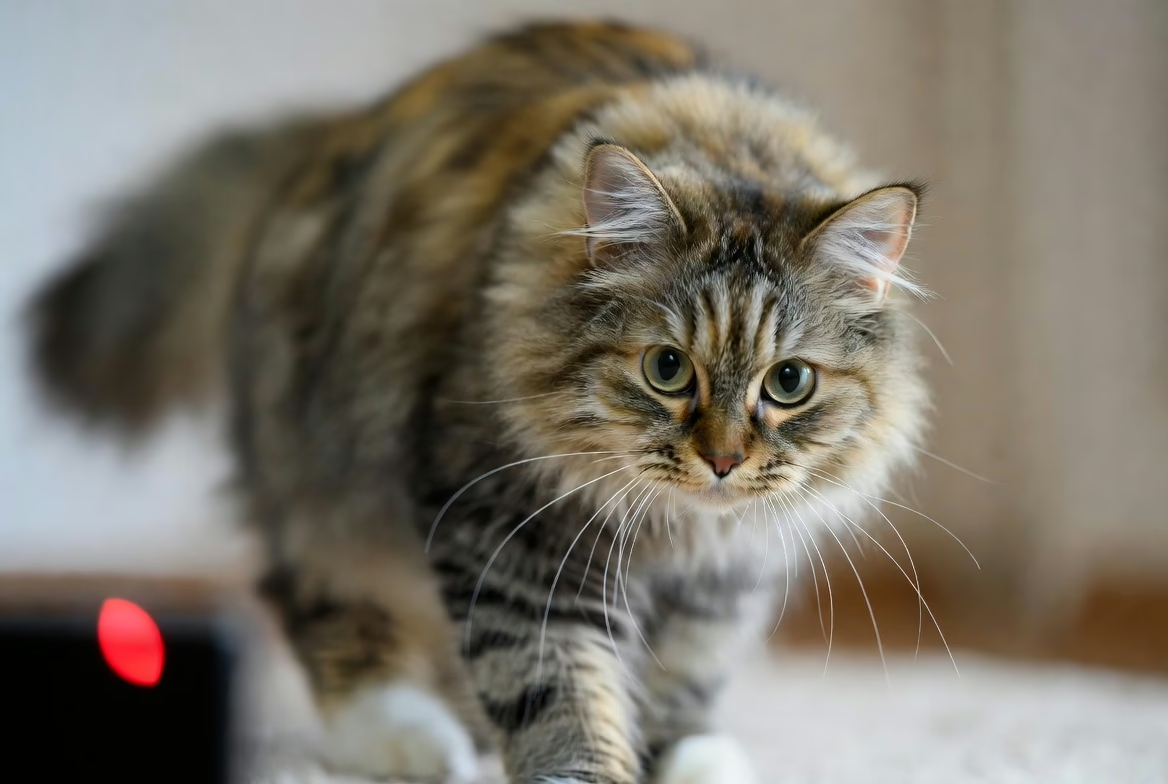
Specific stimuli reliably activate hunting behavior. Understanding these triggers helps you choose effective toys and recognize what environmental factors might overstimulate your cat.
Visual Triggers That Activate Chasing
Movement is the primary visual trigger. Cats have limited color vision compared to humans but excel at detecting motion. Their visual system prioritizes changes in position over static details. A motionless toy mouse might be ignored, but the same toy pulled across the floor becomes irresistible.
Size matters significantly. Objects roughly 1-4 inches long—the size of typical prey species—trigger the strongest responses. Larger objects may elicit caution rather than predation, while very small items might not register as worthy targets.
Erratic, unpredictable movement patterns work better than steady, linear motion. Prey animals flee in zigzags and sudden direction changes to evade predators. Toys that dart, pause, and change direction mimic this pattern. This explains why laser pointers prove so engaging—the random, jittery movement pattern perfectly simulates fleeing prey.
Height triggers matter too. Cats instinctively track objects at ground level more readily than items overhead, reflecting their natural prey’s typical location. However, birds represent valid prey, so vertical movement—especially downward motion—can also activate the feline prey drive.
Sounds and Textures That Spark Interest
High-pitched sounds resembling rodent vocalizations trigger immediate attention. Frequencies between 2,000-10,000 Hz particularly interest cats. Toys with squeakers, crinkly materials, or rattles exploit this auditory sensitivity. In nature, these sounds indicate hidden prey even before visual confirmation.
Rustling noises suggesting movement through grass or leaves also activate hunting responses. This explains cats’ fascination with paper bags and tissue paper—the sounds mimic environmental cues associated with prey activity.
Texture influences prey drive through tactile feedback. Cats prefer toys that provide realistic resistance when caught. Soft, yielding materials like feathers and fur fabrics feel satisfying to grasp. Hard plastic toys often prove less engaging because they don’t simulate the give of actual prey.
Temperature can play a subtle role. While cats can’t detect warmth at a distance like some snakes, they do respond to temperature differences upon contact. This partially explains preference for recently-used toys over ones that have sat cold and untouched.
Different Types of Chasing Behavior in Cats
Not all chasing looks identical. Cats modulate their behavior based on context, target, and internal state.
| Behavior Indicator | Play Chasing | Serious Hunting |
|---|---|---|
| Body posture | Loose, bouncy, exaggerated movements | Tight, controlled, low to ground |
| Vocalization | Often silent or chirping | Typically silent, focused |
| Intensity | Moderate, with frequent pauses | Sustained, single-minded |
| Follow-through | May abandon “prey” easily | Persistent, reluctant to disengage |
| Frequency | Multiple short sessions | Longer, less frequent episodes |
Kittens display more play-oriented chasing with siblings and objects. Their attacks lack the precision and force of adult hunting, and they frequently role-switch between predator and prey during social play. This developmental stage builds skills and social boundaries.
Adult cats generally show more refined predatory behavior cats execute with greater efficiency. A mature cat stalking a real mouse demonstrates patience and precision absent in playful chasing. Their body language becomes more serious—ears forward, pupils fully dilated, tail low or lashing.
Senior cats often maintain interest in chasing but with reduced intensity and duration. They may prefer slower-moving targets and shorter play sessions. However, the instinct rarely disappears entirely; even elderly cats typically respond to appropriate stimuli, though arthritis or other health issues may limit physical expression.
Indoor versus outdoor cats show interesting differences. Outdoor cats with access to real prey often become more selective about toys, sometimes preferring actual hunting to simulated play. Indoor-only cats typically maintain stronger interest in toys throughout their lives since these provide their only outlet for cat play hunting behaviors.
Some cats develop specialized chasing preferences. One might obsess over specific toy types while ignoring others. These individual differences reflect personality, early experiences, and learned associations. A cat that successfully “caught” a particular toy type may preferentially target similar items in the future.
Common Mistakes Cat Owners Make About Chasing Behavior
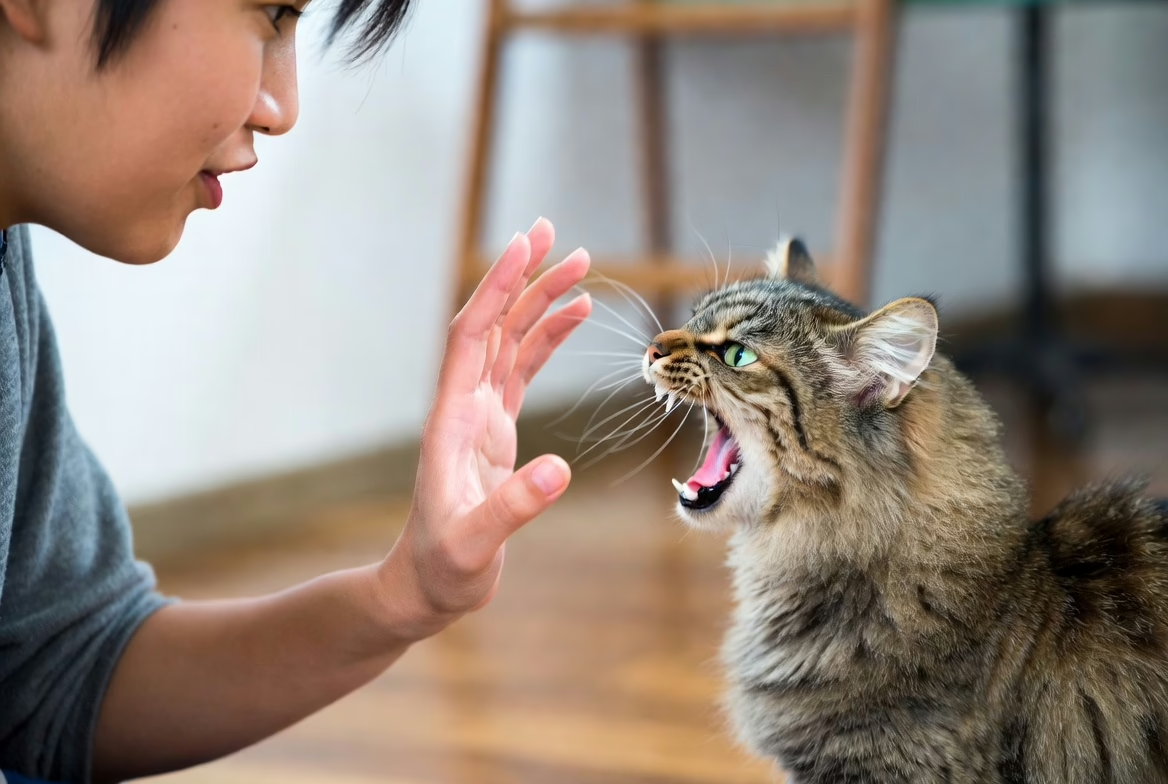
Many people misinterpret or mishanage their cats’ natural predatory behaviors, sometimes creating problems inadvertently.
Using hands or feet as toys during kitten play seems harmless when they’re small, but it teaches cats that human body parts are appropriate prey. Adult cats maintain this association, leading to painful ambush attacks on ankles or hands. Always redirect chasing toward appropriate toys, never your body.
Punishing chasing behavior backfires. Yelling at a cat for stalking your feet doesn’t eliminate the instinct—it just creates stress and confusion. The cat still experiences the urge to chase but now associates it with negative consequences, potentially leading to anxiety or redirected aggression.
Providing inadequate outlets causes frustration. A cat with strong prey drive needs daily interactive play sessions. Expecting them to entertain themselves with static toys rarely works. Most cats require human-directed play with moving targets to fully satisfy their hunting needs.
Overstimulation happens when play sessions run too long or become too intense. Signs include dilated pupils that don’t return to normal, aggressive biting, or the cat seeming unable to “turn off” after play. Sessions should end while the cat still shows interest but before they become frantic. Five to ten minutes of intense play typically suffices, repeated two to three times daily.
Leaving laser pointers as the only play option creates frustration because cats never achieve the catch phase. The inability to physically capture the light dot may leave the prey drive unsatisfied. If you use laser pointers, always end sessions by directing the light to a physical toy the cat can pounce on and “capture.”
Misidentifying play aggression as dominance or meanness leads to inappropriate responses. A cat crouching and wiggling before pouncing on your leg isn’t being malicious—they’re expressing natural predatory behavior toward an inappropriate target. The solution involves redirecting, not punishment.
Expecting older cats to stop chasing entirely is unrealistic. While intensity may decrease with age, the instinct persists. Assuming your senior cat no longer needs play can lead to boredom and depression.
FAQs
Prey drive intensity varies among individual cats, influenced by genetics, early socialization, and personality. Some cats show obsessive hunting focus while others display moderate interest. However, virtually all cats retain some level of predatory instinct. Breeds developed for specific traits may show variation—some working breeds retain stronger drives—but even typically docile breeds will chase under the right circumstances. A cat with seemingly low prey drive might simply need different stimuli or may express the behavior at different times of day.
Cats sometimes appear to chase invisible targets, which usually means they’ve detected something you can’t perceive. Their superior hearing picks up ultrasonic rodent vocalizations or insects moving inside walls. Their motion-detection vision spots tiny flies or dust particles you’d never notice. Occasionally, this behavior reflects playful energy release without specific targets—essentially shadow boxing. If “chasing nothing” becomes excessive or obsessive, particularly if accompanied by other behavioral changes, consult your veterinarian to rule out neurological issues or vision problems.
You cannot eliminate the chasing instinct entirely, nor should you try—it’s fundamental to feline psychology. However, you can redirect chasing toward appropriate targets and away from problematic ones. Consistent redirection, providing adequate appropriate outlets, and managing environmental triggers helps control where and when chasing occurs. For example, if your cat chases your other pets, scheduled interactive play sessions before typical problem times can reduce the behavior by satisfying the urge proactively.
Several factors explain this preference. Your movement patterns might trigger prey drive more effectively than available toys—quick, unpredictable movements resembling fleeing prey. Some cats also chase humans for attention or social interaction rather than pure predation. If toys don’t engage your cat, they may be the wrong type, moved incorrectly, or presented at the wrong times. Cats have peak activity periods at dawn and dusk; toys offered during these windows prove more engaging. Experiment with different toy types, movements, and timing.
Kittens begin showing predatory behavior around three to four weeks old, coinciding with improved vision and coordination. Initial attempts look clumsy—poorly aimed pounces and uncoordinated swatting—but skills rapidly improve. By six to eight weeks, kittens actively chase and pounce on littermates, toys, and moving objects. The critical socialization period between two and seven weeks shapes how these instincts develop. Kittens with opportunities to practice on appropriate targets develop better bite inhibition and play skills than those without proper outlets.
Cats chase things because evolution spent millions of years perfecting them as hunters. The behavior persists in your domestic cat not from necessity but from neurological hardwiring that provides its own rewards. Understanding that chasing serves biological and psychological needs rather than just entertainment helps you support your cat’s wellbeing.
Providing appropriate outlets through interactive play, choosing toys that trigger the right stimuli, and recognizing the difference between healthy predatory play and problematic behavior ensures your cat expresses natural instincts safely. Rather than viewing chasing as a quirk to tolerate or eliminate, recognize it as a window into your cat’s evolutionary heritage and a key to their mental and physical health.
The cat watching intently from the windowsill, the kitten attacking your shoelaces, and the senior cat still batting at a feather toy all express the same ancient drive. Respecting and accommodating this instinct strengthens your relationship with your cat and keeps them engaged, healthy, and fulfilled.