
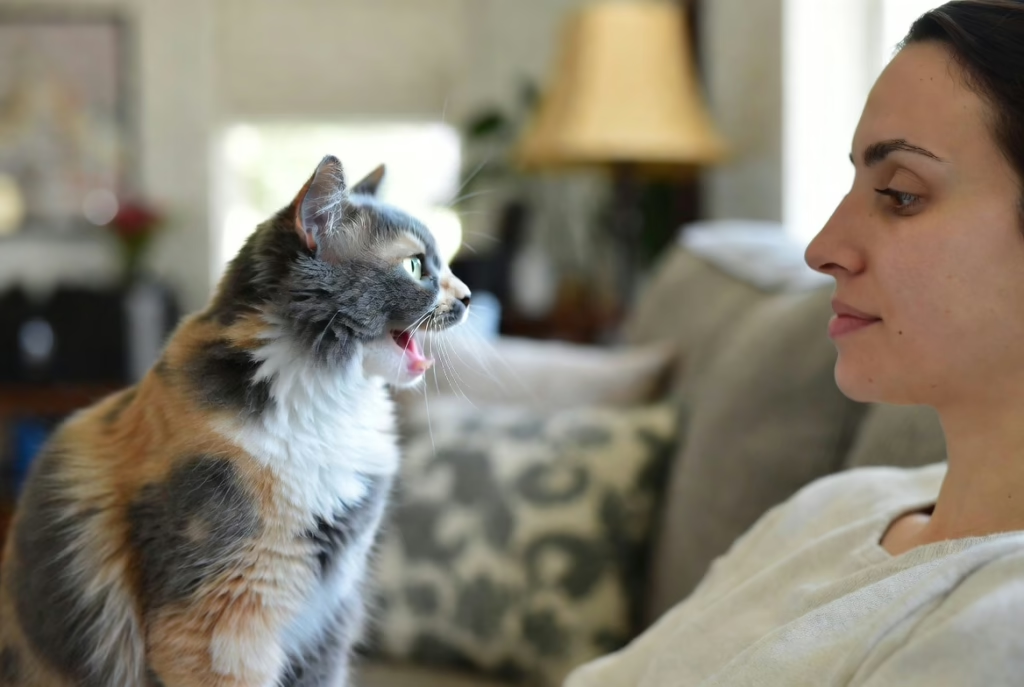
If you’ve ever wondered why your cat sits at your feet and delivers a series of insistent meows right before dinner, or chirps at you when you walk through the door, you’re not alone. Cat meowing behavior puzzles many owners, especially when it seems excessive, oddly timed, or suddenly changes. Unlike the silent stalking predators we imagine in the wild, domestic cats have developed an entire vocabulary aimed directly at us—their human companions.
Understanding why cats meow helps you respond appropriately to their needs, strengthen your bond, and identify potential health concerns before they become serious. Each meow carries meaning, whether your cat is demanding breakfast, seeking comfort, or signaling distress.
How Cats Use Meowing to Communicate with Humans
Adult cats rarely meow at each other. In feline social groups, cats rely on body language, scent marking, and occasional hisses or growls to communicate. Kittens meow to their mothers when they’re cold, hungry, or lost, but this vocalization typically fades as they mature.
Domestic cats, however, have retained and expanded this kitten-like behavior specifically for human interaction. Over thousands of years living alongside people, cats learned that vocalizing gets our attention in ways that a flicked tail or flattened ears might not. We respond to sounds more readily than subtle visual cues, so cats adapted their communication strategy accordingly.
This evolution of cat communication sounds means your cat has essentially developed a second language—one designed exclusively for you.
Your cat learns which sounds make you fill the food bowl, open the door, or provide attention. Some cats develop elaborate “conversations” with owners who respond consistently to their vocalizations. This explains why cats vocalize differently with different family members—they’ve mapped out who responds to what.
Common Reasons Your Cat Meows
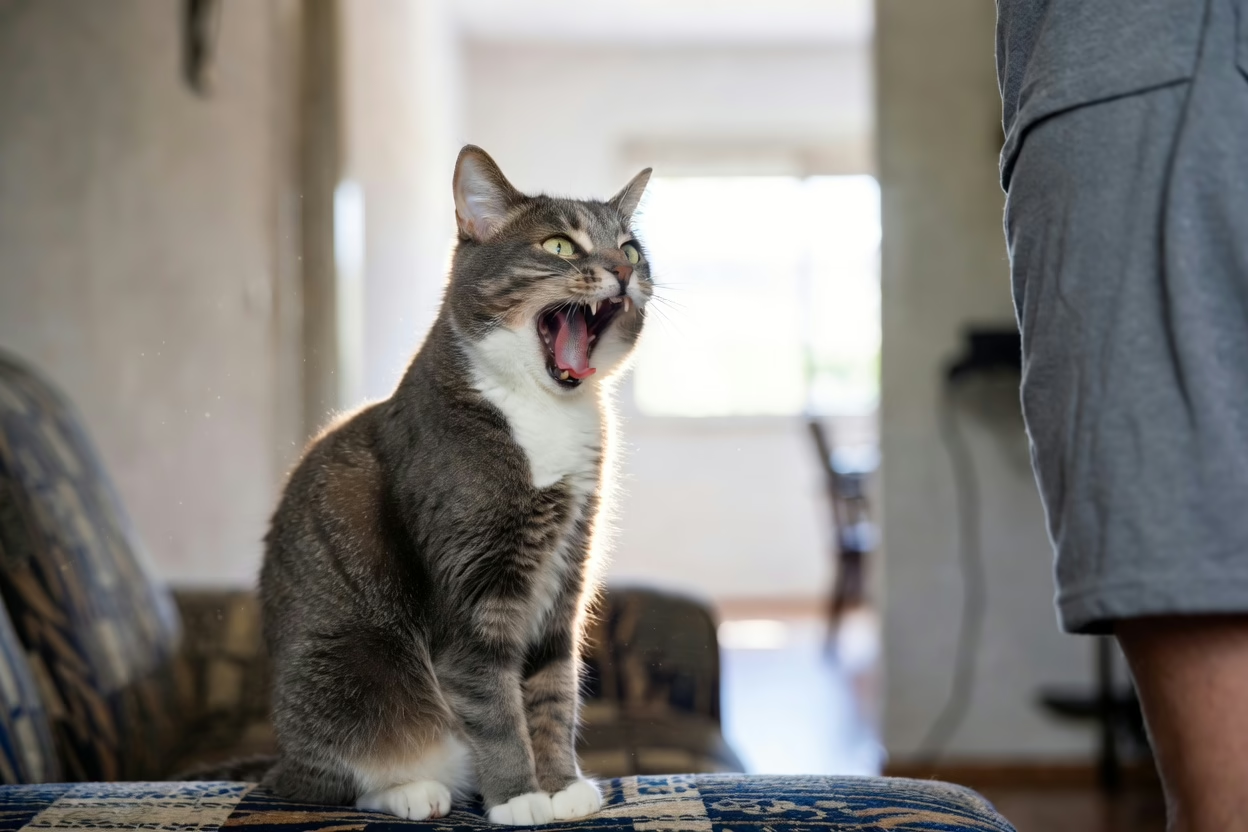
Cat meowing reasons vary widely, but most fall into predictable categories. Recognizing the context around your cat’s vocalizations helps you decode their message.
Meowing for Food or Water
The pre-meal meow is perhaps the most universal cat behavior. Many cats develop a routine around feeding times, starting their vocal demands anywhere from five minutes to an hour before their usual meal. This meowing often escalates in volume and frequency as mealtime approaches.
Some cats meow at their empty food bowl even when it’s not mealtime, testing whether you’ll provide an extra snack. Others vocalize near their water dish if the water seems stale or the bowl is nearly empty—cats prefer fresh water and some refuse to drink from bowls they perceive as dirty.
A common mistake is immediately feeding a meowing cat, which reinforces the behavior. If your cat meows at 4 a.m. for breakfast and you comply, you’ve just trained them that early-morning concerts produce results.
Attention-Seeking Meows
Cats meow when they want interaction, whether that’s petting, play, or simply your acknowledgment. These meowing behavior cats patterns often occur when you’re busy with something else—working at your computer, talking on the phone, or reading.
The attention-seeking meow typically sounds different from the food-demand meow. It’s often shorter, sometimes chirp-like, and may be accompanied by rubbing against your legs or jumping onto your workspace. Some cats have learned that meowing while staring directly at you is particularly effective.
Boredom drives many attention-seeking meows. Indoor cats without adequate environmental enrichment may vocalize excessively simply because they have nothing else to do. This becomes especially noticeable in single-cat households where the cat lacks feline companionship.
Stress or Discomfort Signals
Changes in environment, routine, or household dynamics trigger stress-related vocalizations. A new pet, a move to a different home, construction noise, or even rearranged furniture can prompt increased meowing. These cat vocal signals often sound more distressed—longer, lower-pitched, or more urgent than typical meows.
Medical discomfort also produces distinctive vocalizations. A cat with a urinary tract infection might meow in or near the litter box. Arthritic cats may vocalize when jumping down from heights. Dental pain can cause meowing during or after eating.
Elderly cats sometimes meow due to cognitive decline, similar to sundowner’s syndrome in humans. These vocalizations often occur at night and sound confused or distressed rather than demanding.
Meowing is a learned behavior cats develop specifically to communicate with humans, not other cats. Each cat fine-tunes their vocalizations based on what gets results from their particular owner.
Dr. Sarah Johnson
What Different Types of Meows Mean
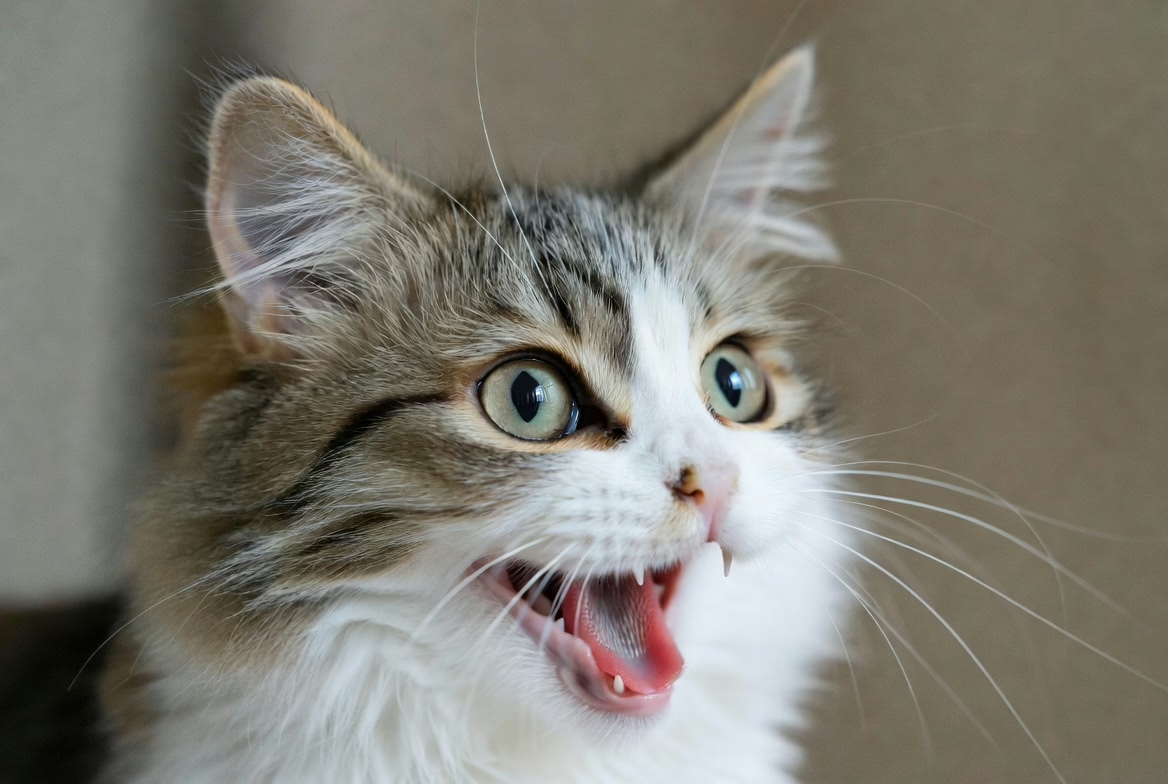
Cats produce a surprising range of feline sounds meaning different things. Learning to distinguish between them helps you respond appropriately.
Short, single meows often serve as greetings or acknowledgments. Your cat might emit one when you make eye contact or enter a room. These are the feline equivalent of “hello” or “I see you.”
Repeated meowing—multiple meows in quick succession—usually indicates urgency or demand. The more insistent the request, the more meows you’ll hear. A cat locked in a bedroom might meow continuously until released.
High-pitched meows often signal excitement or a request. The “feed me” meow frequently falls into this category. Some cats develop an almost question-like inflection, with the pitch rising at the end.
Low-pitched, drawn-out meows suggest complaint, dissatisfaction, or warning. A cat who doesn’t want to go to the vet might produce these deeper sounds. They’re not quite growls but carry a more serious tone than typical requests.
Chirps and trills—those ascending, almost bird-like sounds—usually express happiness or invitation. Mother cats use trills to call their kittens, and many cats trill at their owners as a friendly greeting or to say “follow me.”
The volume and duration matter as much as the pitch. A quiet, brief meow requires less urgent attention than a loud, sustained yowl.
Types of Cat Meows and Their Meanings
| Meow Type | Characteristics | Likely Meaning | Suggested Response |
|---|---|---|---|
| Short, single meow | Brief, mid-pitched, one sound | Greeting or acknowledgment | Greet back verbally or with eye contact |
| Repeated short meows | Multiple quick meows in succession | Excited greeting, urgent request | Check for immediate needs (food, water, litter box) |
| Long, drawn-out meow | Extended vocalization, often mid-to-low pitch | Demand, complaint, or persistence | Evaluate context; may need to ignore if attention-seeking |
| High-pitched meow | Sharp, elevated tone | Pain, fear, or surprise | Check for injury or threat; provide comfort |
| Low-pitched meow | Deep, sustained sound | Displeasure or warning | Respect boundaries; don’t force interaction |
| Chirp or trill | Short, ascending, bird-like sound | Friendly greeting, invitation to follow | Engage positively; often indicates contentment |
When Cat Meowing Signals a Health Problem
Sudden changes in meowing behavior cats exhibit warrant veterinary attention. A typically quiet cat who becomes vocal, or a chatty cat who goes silent, may be signaling illness.
Excessive meowing—defined as significantly more than your cat’s baseline—can indicate hyperthyroidism, especially in cats over eight years old. This condition causes increased appetite, weight loss despite eating more, and hyperactivity alongside increased vocalization.
Cats experiencing pain often vocalize differently. The meow might sound strained, occur at unusual times, or happen during specific activities like using the litter box or being touched in certain areas. Arthritis, dental disease, and digestive issues all produce pain-related vocalizations.
Senior cats with cognitive dysfunction syndrome meow more at night, often sounding disoriented. They may wander while vocalizing or meow at walls and corners. This condition affects up to 50% of cats over age 15.
Sudden onset of loud, persistent yowling—especially if your cat seems unable to settle—requires immediate veterinary evaluation. This could indicate acute pain, neurological issues, or other serious conditions.
Changes in meow sound quality also matter. A hoarse or raspy meow might indicate laryngeal problems or upper respiratory infection. A meow that suddenly sounds different in pitch or tone could signal thyroid issues or other metabolic changes.
Keep a mental baseline of your cat’s normal vocalization patterns. Note frequency, typical times of day, and usual triggers. This makes it easier to spot meaningful changes that might indicate health problems.
How to Respond When Your Cat Meows
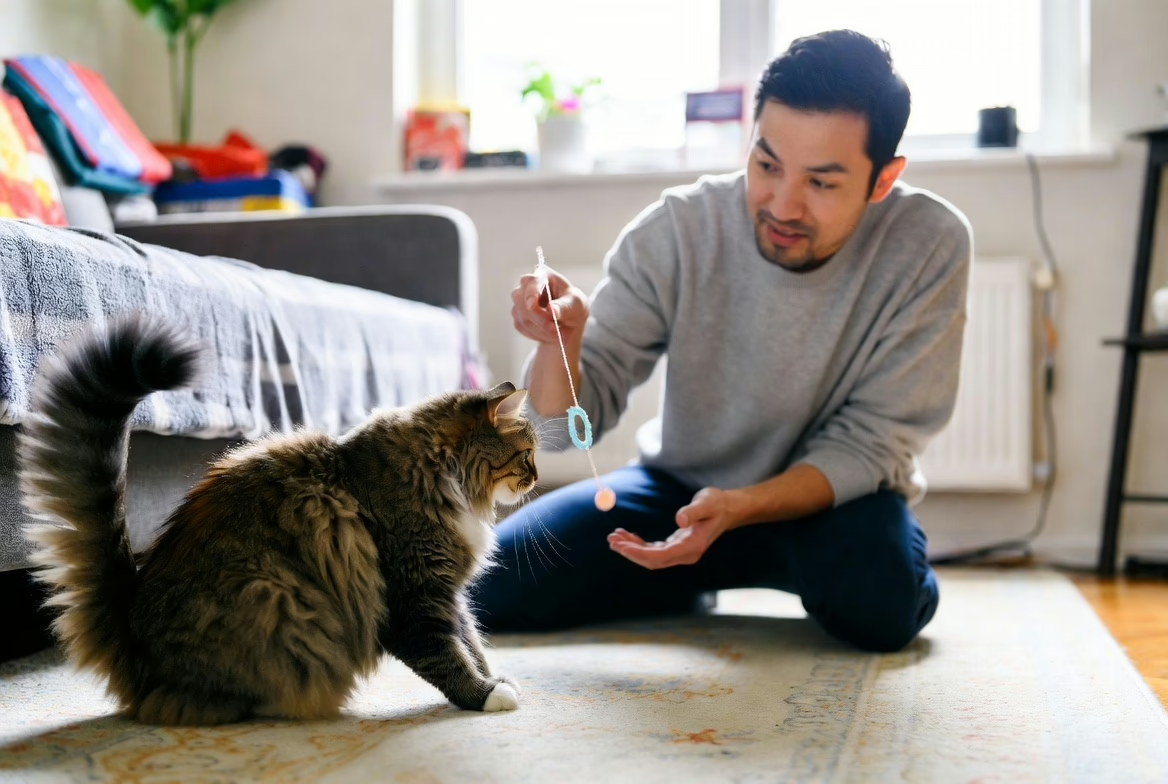
Your response to meowing behavior cats display directly shapes future vocalizations. Inconsistent responses confuse cats and often worsen excessive meowing.
First, determine the cause. Run through a quick checklist: Is the food bowl empty? Water fresh? Litter box clean? Any obvious sources of stress or discomfort? Many meowing episodes resolve once you address the underlying need.
For attention-seeking meows, timing matters. If you respond immediately every time, you reinforce the behavior. Instead, wait for a quiet moment, then initiate interaction on your terms. This teaches your cat that silence, not meowing, earns attention.
Never yell at or punish a meowing cat. This increases stress and often worsens vocalization. It can also damage your bond and make your cat fearful.
For nighttime meowing, ensure your cat has adequate daytime enrichment. Tired cats sleep better. Schedule active play sessions in the evening, provide puzzle feeders, and consider adopting a second cat if loneliness drives the behavior.
Scheduled feeding helps reduce food-related meowing. Cats thrive on routine. If meals arrive at consistent times, the anticipatory meowing window shrinks. Automatic feeders can help by removing you from the feeding equation—cats can’t meow at a machine to make it dispense food early.
Some cat vocal signals require immediate response. A cat meowing near the litter box might have a urinary blockage—a life-threatening emergency. A cat meowing while hiding or showing other signs of distress needs veterinary attention.
Positive reinforcement works better than any other approach. When your cat is quiet during times they usually meow, offer praise, treats, or attention. This rewards the behavior you want to see more of.
FAQs
Nighttime meowing often stems from boredom, hunger, or a cat’s natural crepuscular activity pattern—they’re most active at dawn and dusk. Senior cats may meow at night due to cognitive dysfunction. Increase daytime play, provide puzzle feeders for mental stimulation, and establish a consistent evening routine. Feeding a small meal before bed can help. If your older cat suddenly starts nighttime vocalizing, consult your veterinarian about cognitive support supplements or medications.
Yes. Siamese, Burmese, and other Asian breeds are notably vocal, often engaging in long “conversations” with their owners. Maine Coons tend to chirp and trill more than meow. Persian and British Shorthair cats are generally quieter. However, individual personality matters as much as breed—you’ll find chatty Persians and quiet Siamese. Mixed-breed cats show the full spectrum of vocalization tendencies.
What counts as “excessive” varies by cat. Some cats are naturally talkative and maintain constant commentary throughout the day—this is their normal. Excessive meowing becomes concerning when it represents a significant change from your cat’s baseline behavior, interferes with sleep or daily activities, or accompanies other symptoms like appetite changes or lethargy. Intact female cats in heat meow excessively, which is normal but resolves with spaying.
This greeting behavior shows your cat recognizes you and wants to interact. Many cats meow at their returning owners as a combination of greeting and request—they’re saying hello and asking for attention, food, or play. Some cats trill instead of meow during greetings. This behavior indicates a positive bond. Responding with verbal greetings and brief attention reinforces your connection.
Yes, through consistent responses and environmental management. Never reward meowing with the thing your cat wants—wait for quiet before providing food, opening doors, or giving attention. Increase environmental enrichment to reduce boredom-driven vocalizing. Maintain consistent routines so your cat knows when to expect meals and playtime. Address any underlying medical issues. Training takes weeks of consistency, but most cats reduce excessive meowing when it stops producing results.
A sudden change in meow quality—becoming hoarse, raspy, higher, lower, or strained—often indicates a health issue. Upper respiratory infections, laryngeal problems, thyroid disease, and neurological conditions can all alter meow sound. Gradual changes in senior cats may relate to aging vocal cords. Any persistent change in how your cat’s meow sounds warrants veterinary evaluation, especially if accompanied by other symptoms like coughing, difficulty breathing, or behavior changes.
Every cat develops their own communication style, shaped by their personality, breed tendencies, and what they’ve learned gets results from you. The key to managing cat meowing behavior lies in understanding the specific patterns your cat displays, responding consistently to legitimate needs while avoiding reinforcement of attention-seeking vocalizations, and staying alert to changes that might signal health problems.
Pay attention to context, timing, and tone. A cat meowing at their empty food bowl at dinnertime needs feeding. The same cat meowing at a full bowl at 3 a.m. is testing boundaries. Your cat’s vocalizations form a language you can learn to understand with observation and patience.
When in doubt about whether meowing indicates a problem, consult your veterinarian. Cats can’t tell us in words when something hurts or feels wrong—their meows are often the closest they can come to asking for help. By learning to interpret these cat vocal signals accurately, you become a better advocate for your cat’s health and wellbeing while strengthening the communication bond you share.