
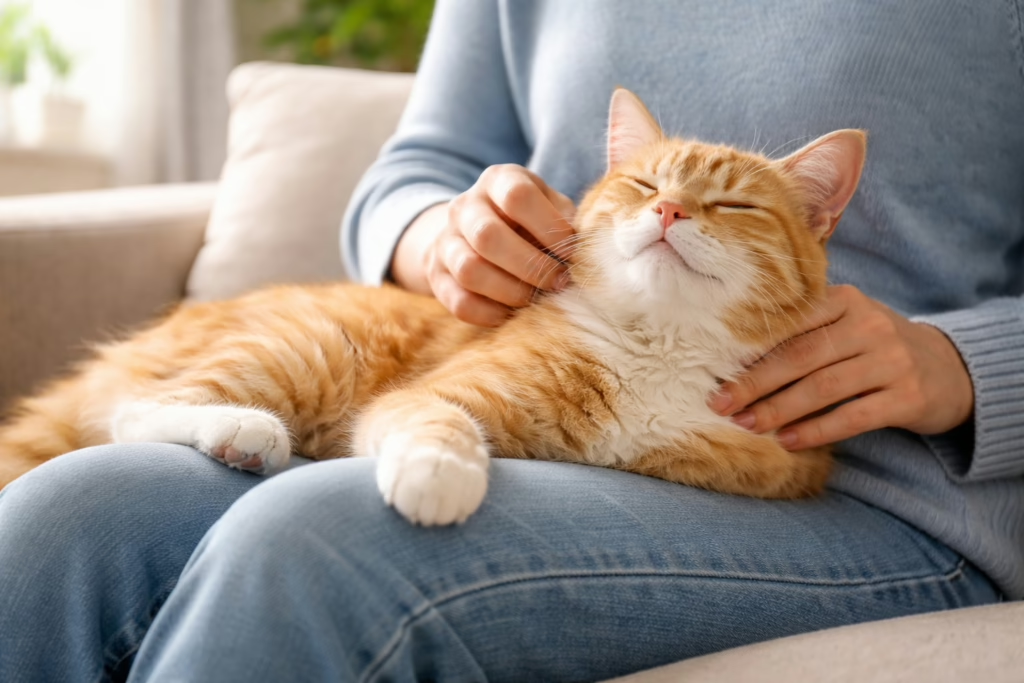
That soft rumbling vibration emanating from your cat’s chest is one of the most recognizable sounds in the animal kingdom. Yet despite its familiarity, the purr remains surprisingly complex—a multifaceted signal that can communicate everything from pure contentment to acute distress. Understanding the nuances behind this behavior helps cat owners interpret their pet’s emotional state and recognize when something might be wrong.
The Science Behind Cat Purring
The physical mechanism that produces a purr involves the laryngeal muscles—specifically, the intrinsic muscles of the larynx that control the glottis, the opening between the vocal cords. These muscles contract and relax rapidly at a rate of 25 to 150 vibrations per second (Hertz), causing the vocal cords to separate rhythmically. As your cat breathes in and out, air passes through these oscillating vocal cords, creating the continuous rumbling sound we recognize as purring.
Unlike meowing, which only occurs during exhalation, purring happens during both inhalation and exhalation. This creates an uninterrupted sound that can continue for minutes at a time. The frequency range typically falls between 25 and 50 Hz for the fundamental frequency, though harmonics can extend higher.
Research conducted by feline bioacoustics specialists has revealed that this specific frequency range isn’t arbitrary. Studies measuring purr vibrations have found they fall within frequencies known to promote tissue regeneration and bone density. A 2022 study published in the Journal of Feline Medicine demonstrated that exposure to vibrations at 25 Hz and 50 Hz increased bone healing rates in controlled laboratory settings, lending credence to the theory that cats may have evolved purring partly as a self-healing mechanism.
The neural pathway controlling purring originates in the brain’s central pattern generator—a neural network that produces rhythmic motor patterns. This explains why cats can purr even when unconscious during anesthesia, though this is relatively rare. The mechanism operates somewhat independently of conscious control, though cats can initiate and stop purring voluntarily.
Common Reasons Cats Purr
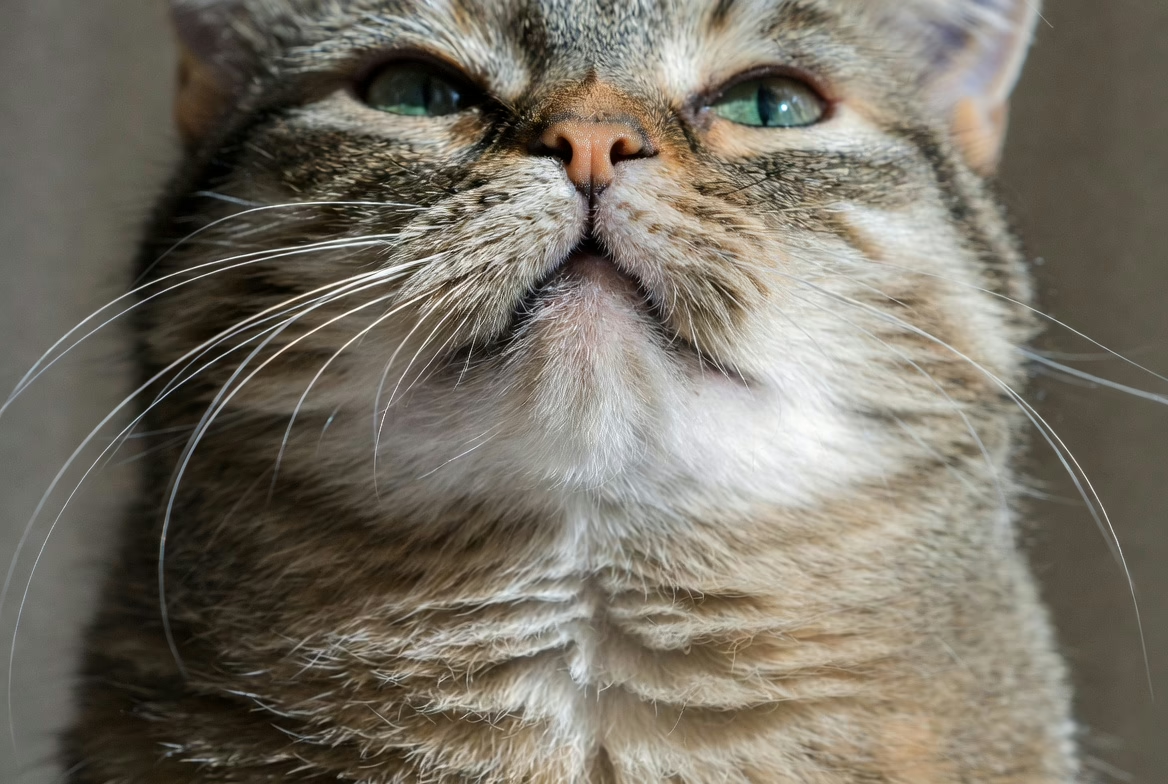
Cat purr reasons extend far beyond simple happiness. While contentment is certainly one trigger, cats deploy this vocalization in surprisingly varied contexts, each revealing something different about their emotional state.
Purring When Happy or Relaxed
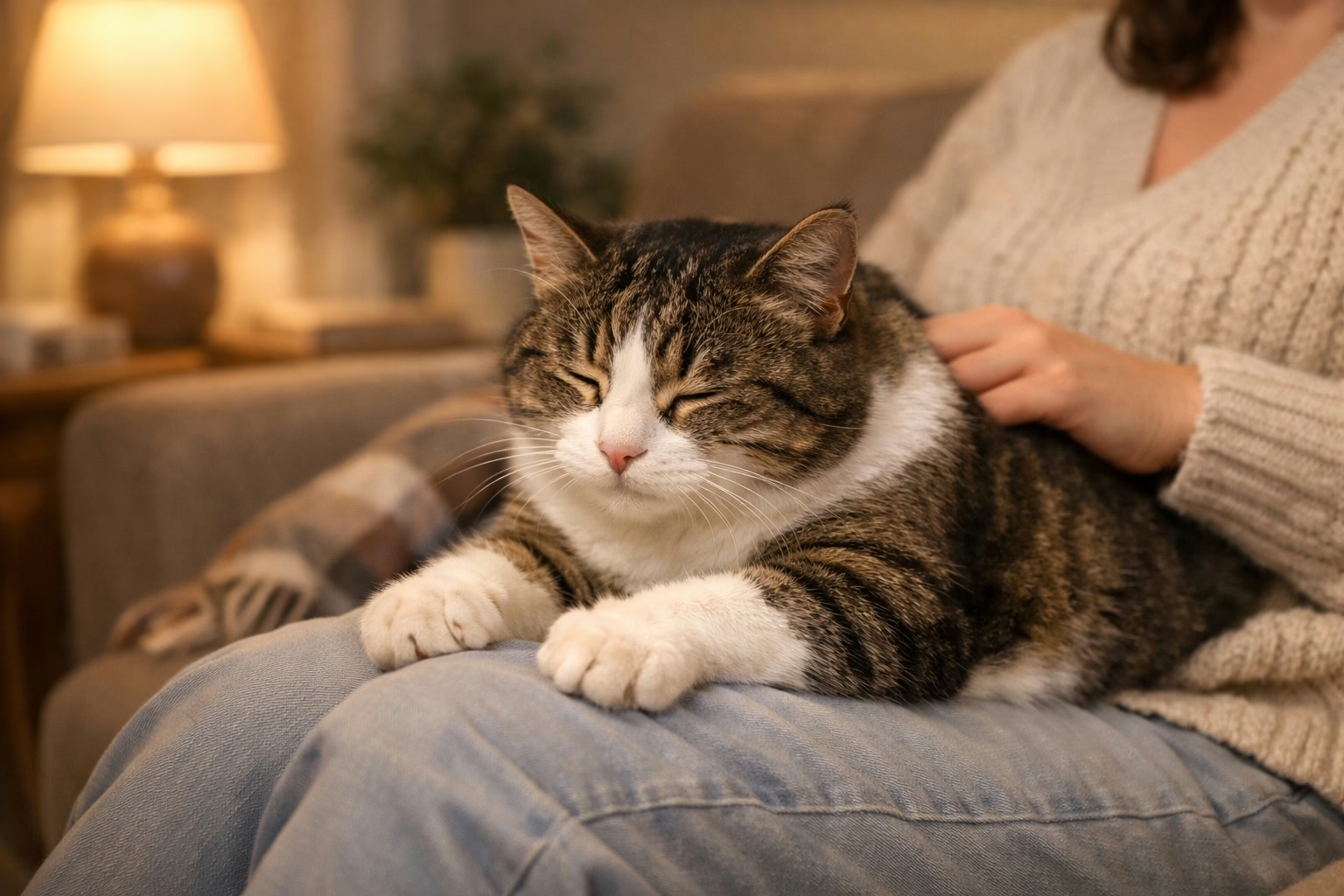
The most familiar scenario: your cat curls up in your lap, kneads your thigh with alternating paws, and begins purring steadily. This represents the classic contentment purr. The cat’s body language reinforces the message—half-closed eyes, relaxed whiskers pointing slightly forward, a loosely curled tail. In this context, purring serves as both an expression of satisfaction and a social bonding signal. Mother cats and their kittens exchange purrs during nursing, establishing a pattern that adult cats later replicate with their human caregivers.
Interestingly, cats often purr during grooming sessions with other cats they trust, suggesting the sound functions as a social lubricant that maintains peaceful interactions. A cat grooming a companion while purring is essentially saying “I’m calm, you’re safe, we’re good here.”
Purring to Request Food or Attention
Not all purrs sound identical. In 2009, researcher Karen McComb at the University of Sussex identified what she termed the “solicitation purr”—a modified purr cats use when they want something, typically food. This purr contains a higher-frequency component (220 to 520 Hz) embedded within the typical low-frequency rumble. To human ears, this creates a slightly more urgent, less soothing sound that’s harder to ignore.
McComb’s research found that even non-cat owners rated solicitation purrs as more urgent and less pleasant than standard purrs. This suggests cats have refined their purring to exploit human sensory biases, embedding a frequency similar to a baby’s cry within their purr. Your cat isn’t being manipulative in a negative sense—they’ve simply learned what works.
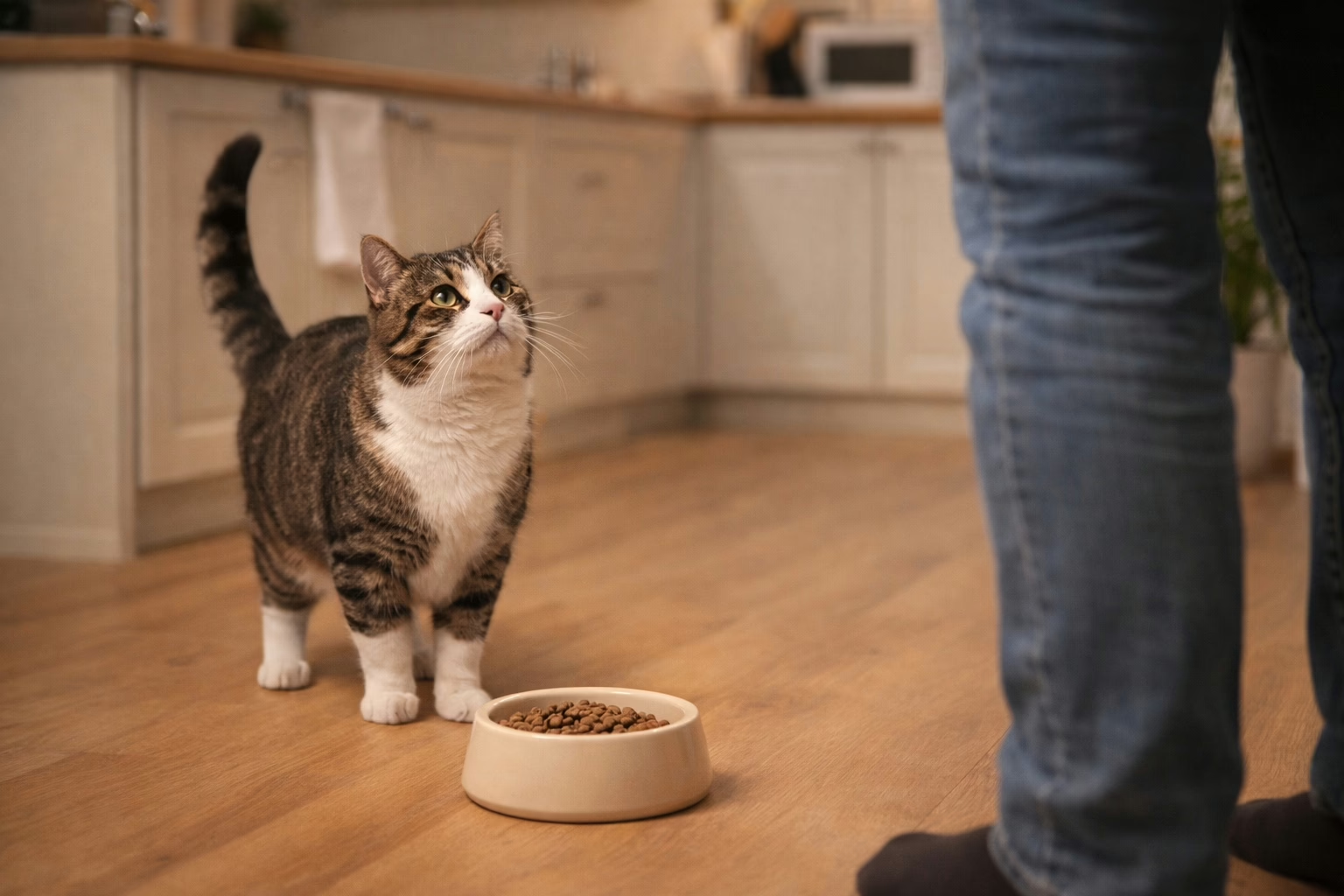
You’ll typically hear this purr variation around feeding times, when your cat positions themselves near their empty bowl or follows you to the kitchen. The accompanying body language includes direct eye contact, rubbing against your legs, and sometimes pacing or meowing between purr bursts.
Purring During Stress or Pain
Here’s where cat emotions purring becomes counterintuitive: cats often purr when frightened, injured, or in pain. Veterinarians frequently report that injured cats purr during examinations, and cats in labor purr between contractions. This seemingly contradictory behavior likely represents self-soothing, similar to how humans might rock back and forth or hum when anxious.
The healing frequency theory offers another explanation. If purring genuinely promotes tissue repair and pain relief through vibration, an injured cat might instinctively purr to accelerate healing. Some researchers theorize that purring releases endorphins, providing natural pain relief during stressful situations.
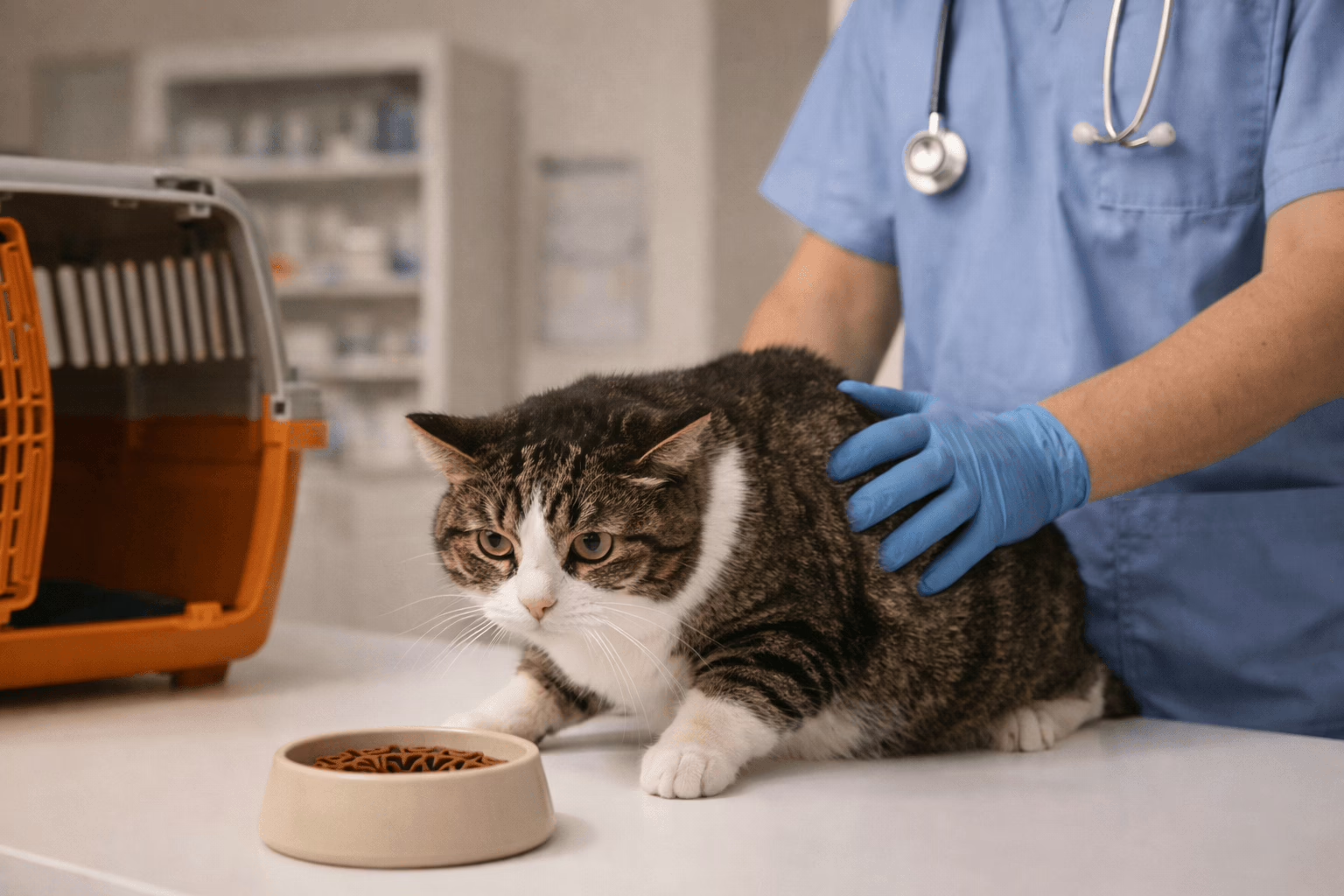
Distinguishing stress-purring from contentment-purring requires attention to context and body language. A cat purring at the veterinary clinic while pressed against the back of the carrier, ears flattened, pupils dilated, is clearly not happy. Similarly, a cat purring while hiding under the bed with a stiff posture is likely self-soothing rather than expressing joy.
What Different Purring Sounds Mean
Cat purring meaning shifts based on subtle variations in tone, volume, and rhythm. Experienced cat owners often report they can distinguish their cat’s different purrs, though these variations can be subtle.
Volume provides one clear indicator. A soft, barely audible purr typically signals contentment without urgency—your cat is comfortable but not demanding anything. A louder, more insistent purr often accompanies requests, particularly for food or access to a closed room. Some cats naturally purr louder than others due to individual variation in laryngeal structure, so you’ll need to establish your own cat’s baseline.
The rhythm and continuity matter too. A steady, uninterrupted purr usually indicates a stable emotional state, whether contentment or self-soothing. A purr that starts and stops, interspersed with other vocalizations like chirps or meows, suggests your cat is trying to communicate something specific and may be slightly frustrated that you’re not responding.
Pitch variations, while subtle, carry meaning. The solicitation purr’s higher-frequency component has already been mentioned, but some cats also produce slightly lower-pitched purrs during deep relaxation, particularly during sleep or near-sleep states.
| Purring Type | Sound Characteristics | Likely Meaning | Accompanying Behaviors |
|---|---|---|---|
| Contentment purr | Steady, moderate volume, low frequency (25-50 Hz) | Relaxation, satisfaction, bonding | Half-closed eyes, kneading, relaxed posture, slow blinks |
| Solicitation purr | Contains high-frequency cry-like component (220-520 Hz), more urgent tone | Requesting food or attention | Direct eye contact, pacing, positioning near food bowl, rubbing |
| Self-soothing purr | Variable volume, may be interrupted by breathing changes | Stress, pain, anxiety, or fear | Tense body, flattened ears, hiding, dilated pupils, rigid tail |
| Social bonding purr | Soft, rhythmic, often reciprocal | Maintaining peaceful interaction during grooming or proximity | Mutual grooming, head bunting, intertwined tails with other cats |
| Maternal/kitten purr | Very soft, continuous, starts within days of birth | Mother-kitten communication, nursing, comfort | Nursing position, kneading, eyes closed in kittens |
How Purring Fits Into Cat Communication
Feline communication purring represents just one element in a sophisticated multimodal communication system. Cats rarely rely on purring alone; instead, they combine it with body language, other vocalizations, and scent signals to convey complete messages.
Consider a cat approaching their owner: they might purr while simultaneously holding their tail vertically with a slight curve at the tip (a friendly greeting), making intermittent eye contact, and rubbing their cheek against the person’s hand (depositing scent from facial glands). Each element reinforces the others, creating an unmistakable message of affection and social bonding.
Purring serves different communicative functions than meowing. Adult cats rarely meow at each other—meowing is primarily a human-directed vocalization that cats have elaborated through domestication. Purring, by contrast, occurs in cat-to-cat interactions, particularly between mothers and kittens, and between bonded adult cats. When your cat purrs at you, they’re using a vocalization that evolved for close-range, intimate communication within their own species.
The combination of purring with other signals can completely change the message. A cat purring with ears forward and whiskers relaxed is content. A cat purring with ears flattened back, whiskers pulled tight against the face, and a twitching tail is stressed and potentially aggressive—the purr here serves as self-soothing, not an invitation to interact.
Tail position provides particularly valuable context. A purring cat with a relaxed, gently swaying tail is comfortable. A purring cat with a puffed tail or a tail lashing back and forth is overstimulated or frightened. Ignoring these signals because “the cat is purring” can lead to scratches or bites.
Some cats also combine purring with trilling—a short, rising-pitch chirp sound. This combination typically occurs during greetings and signals friendly intentions. Mother cats trill at kittens to encourage them to follow, and adult cats often trill at trusted humans in similar contexts.
Can Purring Indicate Health Problems?
While purring itself isn’t a health problem, changes in purring patterns or purring in unusual contexts can signal medical issues that warrant veterinary attention.
Excessive purring, particularly when combined with restlessness, hiding, or changes in appetite, may indicate pain or discomfort. Cats instinctively hide illness, and increased purring might represent an attempt to self-soothe through chronic pain. Conditions like arthritis, dental disease, or gastrointestinal problems can all trigger this response.
Purring in the absence of obvious positive stimuli—such as a cat purring continuously while isolated or showing other signs of distress—should prompt owners to consider whether their cat is experiencing physical discomfort or emotional distress. The purr is not always a happy sound.
Dr. Sarah Ellis
Sudden cessation of purring in a cat who previously purred regularly can also indicate problems. Upper respiratory infections, laryngeal issues, or neurological problems can affect a cat’s ability to purr. If your normally vocal cat stops purring entirely, especially if accompanied by other symptoms like lethargy, breathing changes, or altered voice, veterinary evaluation is warranted.
Watch for these red flags accompanying purring:
- Purring while hiding or avoiding interaction
- Purring combined with aggressive body language (flattened ears, dilated pupils, twitching tail)
- Purring with labored breathing or open-mouth breathing
- Purring while repeatedly licking or biting a specific body area
- Purring with vocalization changes (hoarseness, loss of meow)
- Purring during elimination difficulties or while in the litter box
Context matters enormously. A cat purring during a thunderstorm while hiding under the bed is exhibiting normal stress-response behavior. A cat purring constantly for days while also refusing food and avoiding movement likely has a medical problem requiring professional assessment.
FAQs
Most domestic cats purr, but not all. The ability to purr is present in most species within the Felis genus. However, some individual cats purr so quietly that owners may not notice, while others never develop the behavior. Interestingly, big cats like lions and tigers cannot purr continuously like domestic cats; they can only make purr-like sounds during exhalation. The anatomical difference involves ossification of the hyoid bone structure—domestic cats have a flexible hyoid that enables true purring, while most big cats have a partially ossified hyoid that prevents it but allows for roaring, which domestic cats cannot do.
This frustrating behavior typically results from overstimulation. Cats have a lower threshold for physical contact than many people realize. Petting that feels pleasant initially can become irritating after a certain duration, varying by individual cat and location being touched. The cat continues purring from the initial pleasure while simultaneously becoming overstimulated. Warning signs often precede the bite: skin rippling, tail twitching, ear rotation backward, or a sudden stillness. The cat essentially says “that’s enough” with body language before resorting to teeth. Learning your cat’s tolerance threshold and stopping before they reach it prevents this scenario.
Yes, to a significant degree. While purring involves some automatic neural mechanisms, cats can initiate, maintain, and stop purring voluntarily. You’ve probably noticed your cat starting to purr when you enter the room or stopping abruptly when startled. However, purring during extreme stress or under anesthesia suggests the mechanism can also activate involuntarily under certain conditions. Think of it like breathing—normally under conscious control but also functioning automatically.
This question has intrigued researchers because it addresses whether purring is purely communicative or serves self-directed functions. Evidence suggests cats do purr when alone, particularly during self-soothing or possibly during the self-healing process when injured. However, purring occurs more frequently during social interactions, indicating it primarily functions as a social signal. A 2023 study using home monitoring cameras found that cats purr approximately 60% less when alone compared to when humans or other cats are present, supporting the social communication hypothesis while confirming that solitary purring does occur.
Purr volume varies dramatically between individual cats due to differences in body size, laryngeal structure, and learned behavior. Some cats naturally produce purrs audible across a room, while others purr so softly you must place your hand on their chest to detect it. Loud purring is generally normal if it’s consistent for that particular cat. Sudden changes in purr volume—either increases or decreases—warrant more attention than baseline loudness. An abrupt shift might indicate respiratory changes, laryngeal issues, or alterations in the cat’s emotional state.
Frequent purring usually indicates either a particularly social, contented cat or one that has learned purring effectively elicits desired responses from humans. Some breeds, like Ragdolls and Birmans, tend toward more frequent purring. Cats raised with extensive positive human contact during their socialization period (2-7 weeks of age) often purr more readily as adults. However, if excessive purring represents a change from your cat’s normal pattern and occurs alongside behavioral changes, hiding, or appetite shifts, it could signal stress or medical issues requiring veterinary assessment. Context and accompanying behaviors determine whether frequent purring is a personality trait or a concern.
The purr represents far more than a simple expression of feline happiness. This complex vocalization serves multiple functions: social bonding, solicitation, self-soothing, and possibly even self-healing. The same cat might purr while contentedly napping in sunshine, while anxiously waiting at the veterinarian, and while demanding breakfast at 5 a.m.—each purr carrying a different message decoded through context, accompanying body language, and subtle variations in sound characteristics.
Effective cat ownership requires looking beyond the purr itself to the complete picture your cat presents. A purring cat with relaxed body language in a comfortable environment is indeed happy. A purring cat with tense posture, flattened ears, or hiding behavior needs support, space, or potentially medical attention. By understanding why cats make purring sound and what different purring patterns communicate, you’ll develop a more nuanced understanding of your cat’s emotional state and needs.
Pay attention to your individual cat’s purring patterns—their baseline volume, typical contexts, and accompanying behaviors. Changes from these established patterns provide more meaningful information than any single purring episode. Your cat is communicating constantly through a sophisticated system that combines vocalizations, body language, and behavior. The purr is just one word in a complex language worth learning.